
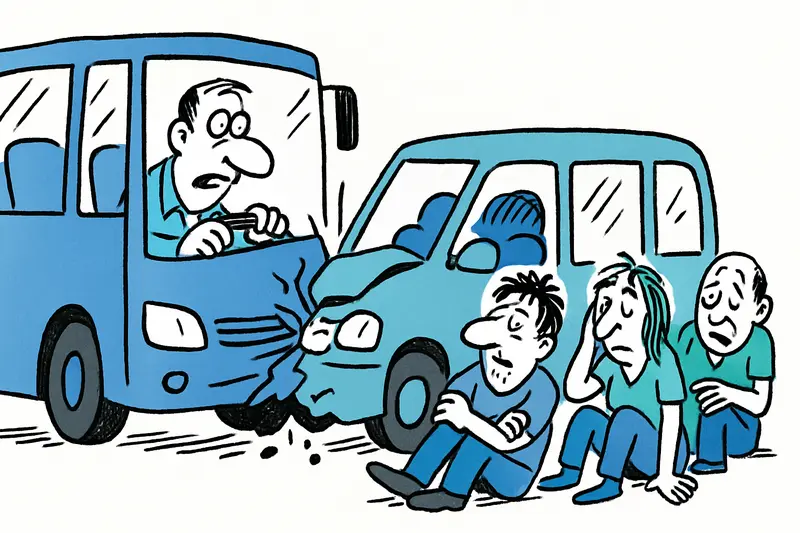
Serious accident near Porto Cristo: Head-on collision on the Ma-4010 – several tourists injured
A TIB intercity bus collided head-on with a minivan near Porto Cristo in the morning. Seven to nine people, including German holidaymakers, were injured. Investigations are underway — and the question remains: Why is the Ma-4010 repeatedly dangerous?
Head-on crash near Porto Cristo: A loud bang, then chaos
Early on Saturday morning, around 9:40 a.m., a piercing bang broke the otherwise sun-warm, slightly dim coastal air of the Ma-4010 near the roundabout leading to the access road to Cala Anguila. Eyewitnesses report screeching tires, the shriek of hydraulic rescue tools and the restless buzzing of cicadas at the roadside. A TIB intercity bus collided head-on with a passing minivan – Grave accidente de autobús en Porto Cristo: Varios turistas heridos – a scene you rarely want to see by the sea.
Driver trapped, quick rescue
The impact was so severe that the minivan driver became trapped. Firefighters used hydraulic tools to open the crumpled metal and freed him after minutes of hard work. Paramedics from the SAMU 061 emergency service treated several injured people at the scene; ambulances transported the victims to various hospitals on the island. According to official statements, seven to nine people were injured, including several German tourists. Some suffered serious, but according to current assessments not immediately life-threatening, injuries.
Major operation, long closure
Fire brigade, Guardia Civil de Tráfico and several ambulances were deployed; the road remained blocked for hours and traffic backed up towards Porto Cristo. Commuters and day-trippers traveling on that late summer morning experienced significant delays. At a nearby petrol station a woman sat with a half-drunk coffee and said quietly: 'I first heard only the screeching of tires, then that impact. It looked terrible.' Such scenes stick with you – and raise questions.
The central question: Why does the Ma-4010 remain an accident hotspot?
The Guardia Civil recorded the scene and questioned those involved and witnesses (Colisión grave de autobús en Porto Cristo: varios turistas heridos). Initial indications point to failure to yield or ignoring a traffic sign in the curve area. But that's only the superficial answer. The deeper question is: Why do dangerous situations repeatedly occur at this spot? The answer has several layers.
Underestimated factors: geometry, signage, tourist behaviour
Locals describe the section as a 'tight curve with little room to manoeuvre' – combined with heavy holiday traffic. In the summer months, rental cars, motorcycles and buses narrow the carriageway. Added to that many visitors are driving the route for the first time, navigation screens cause distraction and language barriers prevent important warnings from being understood. Visibility conditions also change quickly here: morning sun glare from the sea, shadows under olive trees – small factors that are noticed too late.
Which measures help concretely?
There are practical and comparatively quick measures that could reduce the risk:
1. Visible, multilingual signage: Additional warnings in German and English on this tourist route, reflective signs and larger advance notices before the curve.
2. Physical speed reduction: Rumble strips before the curve, temporary speed limits during the high season or a narrowing of the carriageway to naturally reduce speed.
3. Technical controls: Mobile checks by the Guardia Civil, traffic mirrors or, where possible, stronger guardrails to prevent head-on collisions.
4. Awareness campaigns: Information campaigns at rental car stations and in hotels about dangerous road sections and multilingual advice to exercise extra caution on coastal roads.
5. Long-term planning: An audit of the Ma-4010 by the Consell de Mallorca in cooperation with traffic engineers and local municipalities to plan lasting structural improvements.
What is often overlooked
Public debates often focus on assigning blame after an accident – important, but too narrow. Rarely is the question asked how the rescue chain is organised: How quickly do emergency services reach remote coastal sections? Are hospitals adequately prepared during peak times? Here, smaller investments in coordination and equipment are often more efficient than subsequent finger-pointing.
A call to drivers and authorities
The Guardia Civil's investigations are ongoing; only afterwards will it be clear whether formal charges will follow. Regardless, this is a serious wake-up call: The Ma-4010 demands increased attention – from locals and visitors alike. A little slower, a bit more distance, a second look at signs and bends can save lives. And at the institutional level: it's time to take the warning voices from the villages seriously and implement concrete traffic-calming measures.
Summer in Mallorca offers many beautiful mornings – it would be a shame if one ended in a chorus of sirens. Drive carefully, especially where the road leaves no room for mistakes.
Frequently asked questions
Is the road near Porto Cristo on the Ma-4010 difficult to drive?
What should visitors know about driving in Mallorca during the busy summer months?
Why do accidents sometimes happen on coastal roads in Mallorca?
What happens after a serious road accident near Porto Cristo?
How long can the Ma-4010 be blocked after an accident?
What can drivers do to stay safe on Mallorca’s narrow country and coastal roads?
Can tourist behaviour make road safety worse in Mallorca?
Which areas near Porto Cristo are most important to watch when driving?
Similar News
Masked Images, Real Panic: When Social Media Aesthetics Alarm Neighbors
Five German content creators filmed on a recently vacated detention site using deceptively realistic props. The result: ...
Why the Striped Breams in Cala Pí Should Be a Wake-up Call
Once again bathers in Cala Pí were surrounded while swimming by small, nippy fish — some wounds bled. Time for clear rul...
Daily from New York: How Palma's Air Traffic Is Growing — and What Must Change
United will increase the Newark–Palma service to daily flights in 2027 (Boeing, 231 seats). Strong tourist numbers clash...

When Love Ends in Shards: Destruction in Son Vida and the Questions That Remain
In Son Vida a relationship dispute escalated: a woman destroyed furniture in a luxury villa, later pressed a panic butto...

Who Bears the Burden? Mallorca Between Tenant Protection and Landlord Fears
Madrid's new housing decrees strengthen tenant rights — but on Mallorca concern is growing: will the law drive small lan...
More to explore
Discover more interesting content

Can Cap de Bou

Townhouse Lleo 72
