
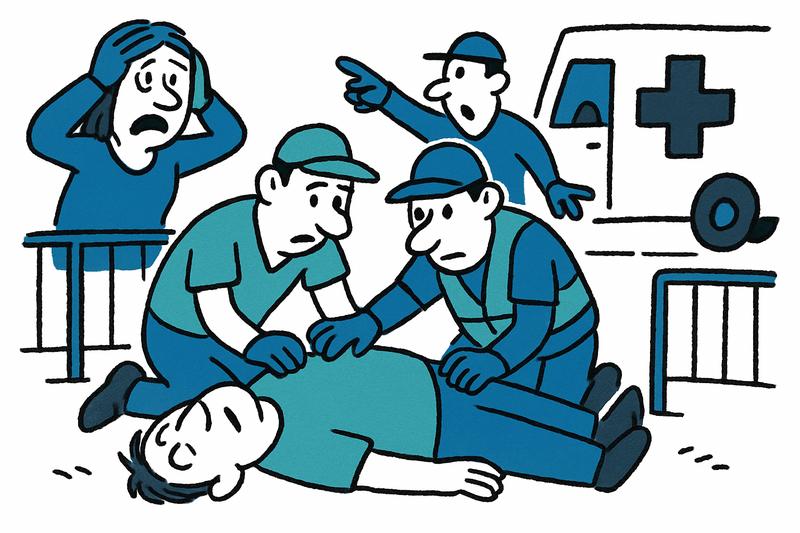
Serious Fall in Son Moix: Who Is Liable for the Safety Gaps?
A spectator fell from the stands about eight meters during the friendly match Real Mallorca – HSV and is in critical condition. Son Moix is back in the spotlight: How safe are the stands, and what measures must follow now?
Serious Fall in Son Moix: Who Is Liable for the Safety Gaps?
Saturday evening, shortly after kickoff, the ordered hum in Son Moix turned to shock: from the away fans' section a man apparently lost his balance and fell about eight meters from a stand, as reported in Mallorca victory marred by serious fan fall. On site: piercing sirens, the hiss of fire hoses still in the ears, and the low, nervous murmuring of people – no more cheering, only faces searching for answers.
The facts we know – and those that are missing
The injured person was treated in the stadium and taken to Son Espases hospital with lights and sirens. He is on the intensive care unit in critical condition. Police and stadium management are investigating the incident; so far, according to authorities, there are no indications of third-party involvement. But: what exactly happened remains unclear. Was it an unfortunate misstep, a weakness in the barrier, a gap in the safety concept?
The key question forces itself: could this fall have been prevented? This is not an academic question but a local, urgent one: Son Moix is a stadium with steep tiers, narrow aisles and areas where at peak times dozens of people are packed closely together. A wrong step, a crush or a missing handrail cover can quickly lead to tragedy.
What is often overlooked in public debate
After incidents the discussion quickly focuses on individual blame or isolated cases; early reports offered initial relief but raised many questions, as seen in initial report: German spectator stable. We, however, must also ask structural questions: How are entrances and exits regulated? Who decides on upgrades to railings and parapets? How often are stewards trained, and how quickly is medical first response available on site? And not least: how well coordinated are the stadium, police and Son Espases hospital when intensive medical help is needed within minutes, a topic explored in fan on the road to recovery?
Another, less noticed point is the use of away sections during friendlies and training matches. Are visitor flows managed differently there than for league matches? Often attention is lower at friendlies – but that must not mean that safety standards drop.
Concrete measures that make sense now
We are not engineers, but from a crowd-safety perspective several concrete steps can be named that should be checked at short notice:
1. Visual inspection of all parapets and handrails: An independent expert could identify critical weaknesses within days and immediately recommend measures – from reinforcement to temporarily closing dangerous areas.
2. Clear routing and fewer standing places at high occupancy: Especially in away sections escape routes should be marked and kept clear. For friendlies with large crowds, assigning seats rather than standing places can reduce risk.
3. More intensive steward training: Not just reading rules, but practical exercises for rapid evacuation and first-aid scenarios – ideally in cooperation with Son Espases.
4. Strengthen medical presence: A dedicated ambulance on site during matches and a coordinated alarm plan that prioritizes the route to the hospital can save minutes.
5. Transparency and monitoring: Video recordings and a clear reporting process ensure that lessons are learned quickly after an incident and not just investigations carried out.
Chance for modernization
Every painful incident also holds an opportunity: the discussion about Son Moix could provide the necessary impetus to systematically modernize the stadium infrastructure. This is not cheap, but investments in safety are investments in the sport itself – and in the assurance that Mallorca remains a reliable host, whether for training camps, friendlies or league matches.
In the evening fans from both sides helped each other, made calls, offered comfort and gathered information. That shows: the football culture on the island is not only rivalry, but often solidarity. Now authorities, the club and stadium management must reflect that attitude and take responsibility.
Our thoughts are with the injured man and his family. We call for a swift, transparent clarification and hope that the investigations will lead to concrete steps to improve stadium safety. Further information will follow as soon as authorities or the clinic provide more details.
Frequently asked questions
How safe is Son Moix Stadium for fans in Mallorca?
What happens if someone is seriously injured at a football match in Mallorca?
Could a fall from the stands in Mallorca have been prevented?
What safety checks should a stadium like Son Moix carry out after an incident?
Why are away sections at Son Moix a safety concern?
When should stadiums in Mallorca use seat-only arrangements instead of standing areas?
What role does Son Espases hospital play in a stadium emergency in Mallorca?
Do friendly matches in Mallorca need the same stadium safety standards as league games?
Similar News
Popular AIDA Stella Leaves Palma – a Quiet Autumn at the Harbour
The AIDA Stella has left Palma and is heading across the Mediterranean toward Antalya – a long transfer to Asia begins. ...
New Rain Alert in Mallorca: Where Danger Looms and What We Should Do
Aemet reported strong rain on Sunday in the Serra de Tramuntana and in the north and northeast — up to 20 l/m² in one ho...
Taking Off Differently: Pilot, Pere Garau Resident and Rock Musician
Andreas Thiele flies an Airbus A320 for Lufthansa, has an apartment in Pere Garau — and will release an alternative-rock...
Palma takes to the streets: Thousands demand 'Housing as a Right'
Around 3,000 people marched through Palma on Saturday to demand affordable housing. The protest followed the rejection o...
Beatings in Palmanova: Two British tourists injure taxi drivers — what needs to happen now
In Palmanova, two taxi drivers were attacked at night by apparently drunk tourists. One suffered severe facial injuries ...
More to explore
Discover more interesting content

Can Cap de Bou

Townhouse Lleo 72
