
Shots in Son Banya: Driver Arrested with Weapon, Drugs and Cash – What's Missing in Tackling the Problem?
In Son Banya a man was arrested after shots were fired, a police chase and the seizure of weapons, drugs and cash. The suspect is linked to a fatal accident at the roundabout near Mercapalma. An assessment — and the question of what would need to change.
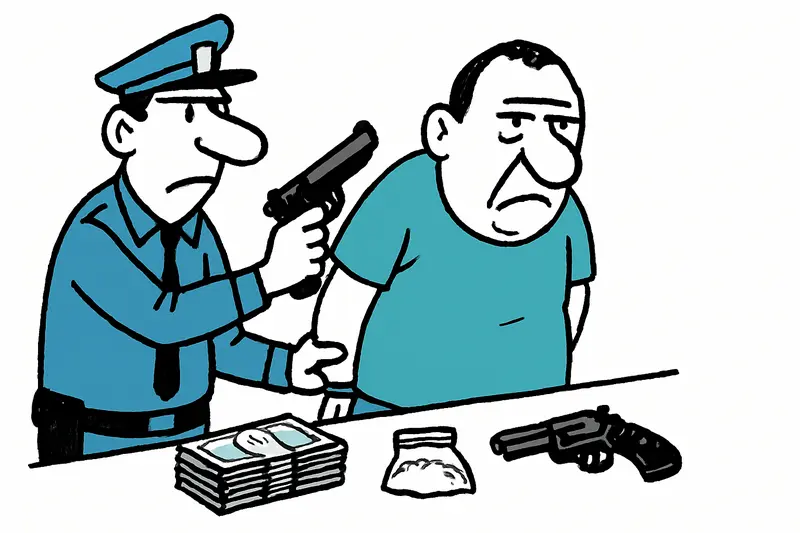
Shots in Son Banya: Arrest after chase and weapons discovery
A morning in the settlement, a pursuit and a man behind bars
On a Tuesday morning around ten o'clock police sirens interrupted the usual sounds around Son Banya: engines, dogs barking, voices of residents. Narcotics investigators noticed shots had been fired and immediately secured the area. Shortly afterwards a vehicle was pursued after its driver evaded a check. Raid in Son Banya: Suspected Leader in Pretrial Detention — and What Now? During the subsequent arrest around €2,100 in cash, spent shell casings and a firearm hidden in a lunchbox with two magazines were found in the car. In a nearby hut known to police as a distribution point, officers also secured a katana, quantities of marijuana and cocaine, and loose change worth just over €240.
Key question: Why, despite Major raid in Son Banya: Arrest of the alleged drug boss — and then? and clear indications, is it not possible to permanently break the spiral of violence, weapons possession and street crime in and around Son Banya?
The arrested man — a person who already had a driving ban — is also linked to an accident in which a 31-year-old man was fatally struck at a roundabout near Mercapalma and whose hit-and-run is being investigated by police. The pattern is disturbing: traffic offenses, illegal economies and armed confrontations converge here.
Critical analysis: The arrest shows that police and investigators can respond and secure evidence. At the same time the incident reveals structural gaps. The repeated presence of the same person in serious incidents raises questions about the effectiveness of measures intended to prevent escalation — for example enforcing driving bans, checking vehicles suspected of criminal activity and curbing weapons in the settlement.
What is often missing in public debate: an honest separation between police work and the social causes that drive residents into illegal economies. It is not enough to temporarily remove individual actors from the streets; as long as poverty, lack of job prospects and informal markets persist, violence returns in waves. There is also insufficient discussion about judicial procedures, swift convictions or preventive measures that could stop repeat offenders early.
Everyday scene from Mallorca: Anyone who drives along the Vía Alemania toward the airport in the morning knows the traffic junction at Mercapalma; lorries and commuters mix there. And only a few kilometers further is Son Banya — simple wooden huts, sandy paths, the smell of exhaust and grilled food, children riding bicycles here and there. The dividing line between tourist infrastructure and neighborhood distress is visible and palpable. For residents, every police operation also threatens already scarce incomes — a breeding ground for tension.
Concrete solutions that must be discussed now:
1) Strengthen criminal consequences: When a person repeatedly commits serious offenses, courts and public prosecutors should seek closer coordination with the police to consider preventive measures such as restraining orders, electronic monitoring or accelerated procedures.
2) Traffic controls and vehicle immobilization: When a driving license is revoked, measures for immediate vehicle immobilization should be considered — this can prevent dangerous situations at the roundabout.
3) Combating weapons: Targeted seizures, official inspections of known distribution points and information campaigns about reporting channels can reduce the risk of armed confrontations.
4) Social alternatives: Jobs, vocational training, low-threshold drug treatment offers and neighborhood mediation centers reduce dependence on illegal trade.
5) Community policing: More plainclothes presence, trust-building measures and fixed contact persons create channels for tips from the population without immediately resorting to repression.
That does not mean police operations are unnecessary — on the contrary. But without accompanying social measures every arrest remains an entry in the statistics and nothing more. The seizure of the pistol, the magazines, the katana and the drugs documents criminal offenses; whether they lead to less long-term violence depends on whether administration, justice and society act together. For example, efforts that briefly removed illegal shelters are described in Police stop new drug shacks in Son Banya — residents briefly breathe a sigh of relief, illustrating the temporary nature of some interventions.
Pointed conclusion: The recent arrest near Son Banya is a success for the forces deployed — and at the same time a warning. Those who only react manage the problem; those who act in a networked way have a chance to reduce it. For Mallorca this means: clear lines in law enforcement coupled with realistic offers to people on the ground. Otherwise the sirens remain a recurring echo.
Frequently asked questions
What is the weather like in Mallorca in early summer?
Can you swim in Mallorca in late spring?
What should I pack for Mallorca in spring?
Is Mallorca busy in summer?
What is Sóller like for a day trip in Mallorca?
Why do people visit Port de Pollença in Mallorca?
Is Alcúdia a good place to stay in Mallorca?
When is the best time to visit Mallorca for beach weather?
Similar News

Who Benefits from the Half‑Hourly Flight on the Edge? Aena, Investments and the Island's Interests
Almost one billion euros is flowing into Son Sant Joan. The figures show the scale of investment and expected beneficiar...

Are the Balearic Islands the Southern Border of Europe? A Reality Check on Immigration
The Balearic Islands are again calling for EU aid after a sharp rise in arrivals by sea. Conflicting priorities between ...

"Expensive chaos" and many open questions: What clients can do when a lawyer suddenly stops responding
Several clients complain that a well-known German lawyer in Mallorca has been unreachable for months. Key question: What...

TV tip: 'The Last Problem' — Mallorca as the setting of a classic crime
A classic whodunit on Mallorca: A new miniseries set in spring 1959 brings storm, an isolated hotel and a dense web of s...

Nipping Sea Creatures: Why Bathers in Cala Major and Elsewhere Should Be Cautious
In Cala Major, bathers have reported being nipped by small fish. What is behind it, how can problems be avoided — and wh...
More to explore
Discover more interesting content

Can Cap de Bou

Townhouse Lleo 72
