
Transparency in Glass Recycling: The Glass Container at Pere Garau — Symbol or Starting Point?
Transparency in Glass Recycling: The Glass Container at Pere Garau — Symbol or Starting Point?
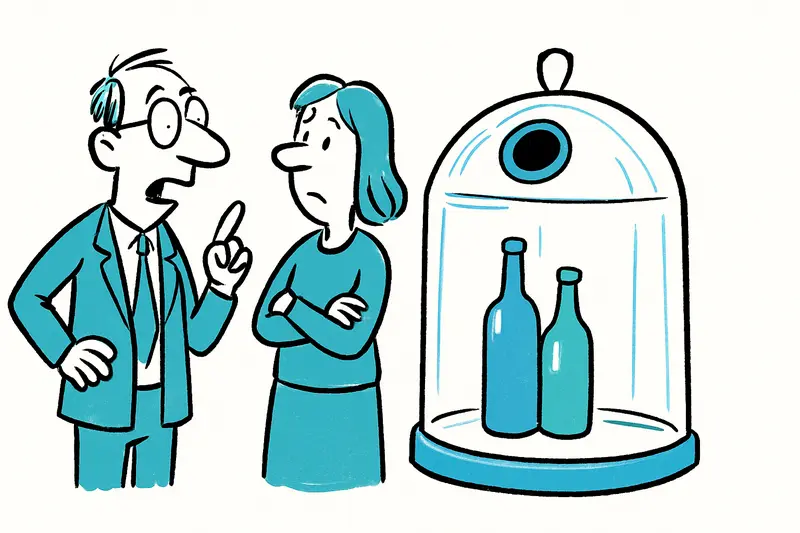
A transparent glass recycling container stands at Plaça del Mercat de Pere Garau until May 22. A good idea — but is visibility alone enough to improve recycling?
Transparency in Glass Recycling: The Glass Container at Pere Garau — Symbol or Starting Point?
Main question: Does a transparent glass container really help strengthen people’s trust in recycling — or does the action remain a sunny PR moment on the market square?
At Plaça del Mercat de Pere Garau, between the scent of freshly brewed coffee, the clatter of fruit crates and the occasional whistle of a bus driver, there is a new, unusual neighbour: a glass recycling container. It will remain there until May 22 and was installed by the municipal waste services together with a recycling company; similar local initiatives have been reported, for example Yellow Box in the Olivar: Sustainability Gimmick or Real Win for Recycling?. The idea is simple: if people can see what goes inside, they are more likely to trust that the collected material will actually be recycled.
The argument for transparency is understandable. Last year Palma collected more than 10,500 tonnes of separated glass. That’s a respectable figure to be proud of. Still, it remains unclear how much such one-off actions change behaviour in the long term. Visibility can be a motivator, but it is rarely enough on its own to replace lacking knowledge, the availability of collection points or entrenched habits.
On closer inspection questions arise. A figure mentioned in a statement is confusing: allegedly "around 83 glass containers per inhabitant." That sounds wrong — most likely a different unit was intended. Such inaccuracies weaken trust rather than strengthening it. Those who call for transparency must also be precise with numbers.
The action is also time-limited and focused on a busy market square. That is smart for attracting attention. But many neighbourhoods without central squares, housing estates with older residents or working-class districts rarely see such measures; local debates about capacity and collection points also appear in Pere Garau: 45 new trash bins – will they make the streets cleaner?. A single look into a container proves that glass is being collected — but it does not show whether separation at home improves, whether collections are picked up on time, or how much material is actually recycled in the end.
What is missing so far in the public debate is clear traceability and concrete numbers after the pilot. How much additional glass was collected during the days of the action? Were there fewer wrong items (ceramics, stones)? Who takes responsibility for follow-up communication? Also left out are questions of cost, cleaning and safety risks. A transparent container is more vulnerable to vandalism or, in strong sunlight, may cause odour problems — practical details that influence local acceptance.
A scene from the square: a shopkeeper at the market pushes his pallet of tomatoes aside in the early morning, greets briefly and says dryly: "Good for the show, but will the same truck come tomorrow to take everything away again?" A retiree stops, looks into the container and frowns — she asks whether she may leave glass bottles with caps in there. Such small uncertainties often decide whether people behave correctly.
Concrete solutions that go beyond a transparent container would be easy to implement: first, extend the experiment and repeat it in several locations to obtain comparative figures; second, publish simple metrics (additional kilos, wrong items, collection frequency) and make them publicly accessible; third, offer information at the market — short info in several languages and a QR code on the container explaining what is recycled and how it reaches the processing plant. Fourth, involve schools and neighbourhood associations in Pere Garau — an area under discussion in From the Metropolitan to the Neighborhood Center: Palma's Plans for Pere Garau Under Scrutiny — so the action creates participants rather than just spectators.
In addition, the city should rethink the metrics it uses. Statements like "83 containers per inhabitant" must be converted into verifiable measures, for example kilograms per capita or the number of permanently available collection points per 1,000 inhabitants. Only with clean data can transparency be communicated credibly.
Conclusion: A glass container is more than a gimmick — it is an impulse. But by itself it is not enough. For the action to have an effect beyond photos and curiosity, it needs clear numbers, repeated measures and accompanying education. Otherwise Plaça del Mercat de Pere Garau will remain a pleasant spot for curious glances, but little more than a photo opportunity for an afternoon.
Frequently asked questions
When is the best time to visit Mallorca for warm weather and swimming?
Can you swim in Mallorca in spring or autumn?
What should I pack for a trip to Mallorca?
Is Mallorca still good to visit outside the main summer season?
What is the weather like in Palma de Mallorca during the year?
Is Sóller a good place to stay in Mallorca for a relaxed trip?
What is special about Valldemossa in Mallorca?
Is Port de Pollença suitable for a family holiday in Mallorca?
Similar News

More water than last year: Mallorca's reservoirs breathe easier
September rain refilled the Tramuntana's reserves: overall fill around 35 percent, Cúber at 40.42 percent, Gorg Blau at ...
Three Luxury Hotels in Banyalbufar: Lots of Money, Many Questions
A Danish investor plans three exclusive accommodations in Banyalbufar — including the historic Son Valentí. The announce...
2.1 tonnes of cocaine on sailing yacht off Spain's coast – a reality check for the coastguard
A 14-metre yacht was seized with 2.1 tonnes of cocaine. Who monitors the ports, how does the international hunt succeed ...

Heat Bonus in Mallorca: 100 Euros Extra for Outdoor Staff at MarSenses
MarSenses pays employees who worked outdoors in August an extra €100 as recognition. Lighter uniforms, reduced hours for...
Renovating in Mallorca: What You Really Can Do Without Neighbour Consent
Many think they can do whatever they want in their apartment. That's partly true — but only as long as structural elemen...
More to explore
Discover more interesting content

Can Cap de Bou

Townhouse Lleo 72
