
Yellow Box in the Olivar: Sustainability Gimmick or Real Win for Recycling?
A bright yellow box in Mercat de l'Olivar is causing discussion: innovative incentive or digital barrier to proper recycling? A critical look at opportunities, risks and possible solutions.
A yellow box, a lot of attention – and a simple question
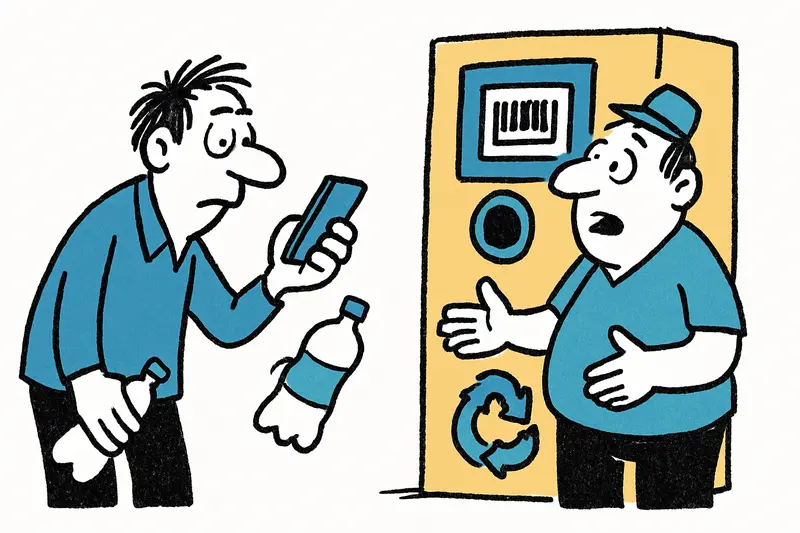
On a wind‑still morning in Mercat de l'Olivar, familiar sounds mix: the calls of the fishmongers, the clinking of deposit crates, the occasional honk of a delivery van in the courtyard. For a few weeks now a new motif has been added – a bright yellow box that looks more like a reverse vending machine than a trash bin. It doesn't ask for coins, but for a smartphone. The central question is: does this digital incentive box actually increase recycling — or does it just shift effort, oversight and problem solving into the cloud?
How the system works — and where it gets stuck
The principle sounds simple and appealing: scan the packaging, collect points in the Reciclos app, upload a photo of the container as proof and later win rewards or trigger donations. Politicians and operators cited avoidable tons of CO2 and reforested areas the size of football fields at the presentation. Such figures are impressive — but they only tell half the story. Who pays for the infrastructure, who verifies the entries, and how reliable is the link to the city's waste logistics? Such accountability is vital — as highlighted in Binissalem Suffocates in Waste: Who Cleans Up - and Who Pays?.
Problems that are being overlooked
Economic question: Behind the colorful box is a cost model. Maintenance, data storage, app upkeep and marketing are not free. Is this financially sustainable if participation is low or if providers change their business models? And who really benefits: the municipality, the start‑up or advertising partners?
Digital exclusion: At the market a fishmonger dryly remarked: “Fine if there's less waste — but who has time to photograph every can?” In fact, app‑based solutions mainly reach users who are already digitally active. Older people, occasional market visitors and many market workers risk being left out.
Risk of manipulation: The system relies on self‑reporting and photo evidence. That opens the door to mistakes or deliberate deception: multiple accounts, photos from others, or repeatedly uploading the same container. How rigorously are data checked? And how long are location data and photos stored?
Why location alone doesn't solve everything
The visibility of the box in the market hall is a smart PR move. But recycling happens outside — in street containers, at beach access points or in industrial areas. The bridge between app verification and proper disposal must be transparent and robust. Instances where separated bags ended up in the same truck underline the gap between collection and proper recycling, as reported in Marratxí: When separated bags end up in the same truck — video causes uproar in Carrer Major. Otherwise the yellow box remains an attractive showcase without real influence on waste flows.
Concrete opportunities — but with common sense
The project is not a total failure. With some improvements the idea can provide local benefits. Three practical approaches that could be implemented immediately:
1. Offer hybrid solutions: Not everyone needs or wants an app. NFC cards, QR cards for older market visitors or small stations run by market staff lower the entry barrier and bring more people into the system.
2. Transparency on numbers and costs: The city of Palma should demand regular, verifiable reports: How many registrations actually led to verified disposal? What are the operating costs and where do revenues go? Only then can the ecological added value be properly calculated.
3. Local incentives instead of abstract prizes: Points for discounts with market vendors, public transport vouchers or grants for local social projects create direct, tangible benefits — and increase acceptance among people who are not interested in big sweepstakes.
4. Prevent abuse: Technical checks, spot inspections by municipal services and clear rules on the storage of photos and location data are necessary to build trust and reduce privacy risks.
Conclusion: A start — but not a self‑starter
The yellow box in Mercat de l'Olivar is more than an eye‑catcher. It brings the topic of recycling back into the conversation, right into the noise of the market. Whether this turns into real progress depends, however, on the connection to municipal waste services, fair cost models, low‑threshold access and honest transparency. Without these building blocks the project risks becoming a digital nice‑weather solution: good for photos, bad for the trash can.
On your next visit to Olivar it's worth taking a look at the box, trying it out — and asking questions: of the operators, of city representatives, in short: of those who bear responsibility. The people of Mallorca deserve results, not pretty PR.
Frequently asked questions
Does the yellow recycling box at Mercat de l'Olivar really help reduce waste in Mallorca?
How does the Reciclos system work in Mallorca?
Is an app-based recycling system practical for older people in Mallorca?
What are the main concerns about the yellow box at Mercat de l'Olivar?
Where in Mallorca does recycling need better control beyond the market hall?
What kind of incentives would work best for recycling in Mallorca?
How can Mallorca prevent abuse in digital recycling schemes?
Is the recycling box at Mercat de l'Olivar just a publicity stunt?
Similar News

Release after bloody attack in Palma: Why the court's decision raises questions
An 18-year-old who allegedly inflicted a serious neck injury on a man at Plaza Gomila using a wristwatch wrapped around ...
Kidnappings in Inca: Three young men forced into car trunks and abused in the forest – a reality check
In Inca, three 18-year-old men were forced into car trunks by masked assailants at the Plaça des Bestiar, taken to a for...
Spreading Massification: The Brake That Still Has Much Work to Do
Marga Prohens announces limits on volume tourism. The measures sound harsh — but are they enough to save everyday life, ...

Through the Keyhole onto the Party Yacht: How Daniela Katzenberger Is Planning Her 40th on Mallorca
Daniela Katzenberger turns 40 and wants to celebrate it on the island — likely with a boat, cake and her mother. A relax...
By Boat Instead of the Road: Palma's Water Bus — a Reality Check
The 'Bus Nàutic' launches in two stages — but questions remain over interim operations, fares and environmental requirem...
More to explore
Discover more interesting content

Can Cap de Bou

Townhouse Lleo 72
