
Adiós Café Barocco? When Palma's game café faces closure
Adiós Café Barocco? When Palma's game café faces closure
Café Barocco near Parc de Ses Estacions is up for transfer: a new operator is being sought until May 3. An assessment of what the disappearance of such a meeting place means — and what could help now.
Adiós Café Barocco? When Palma's game café faces closure
Key question: Why are places in Palma that sell not just coffee but a sense of community closing — and how can this be prevented?
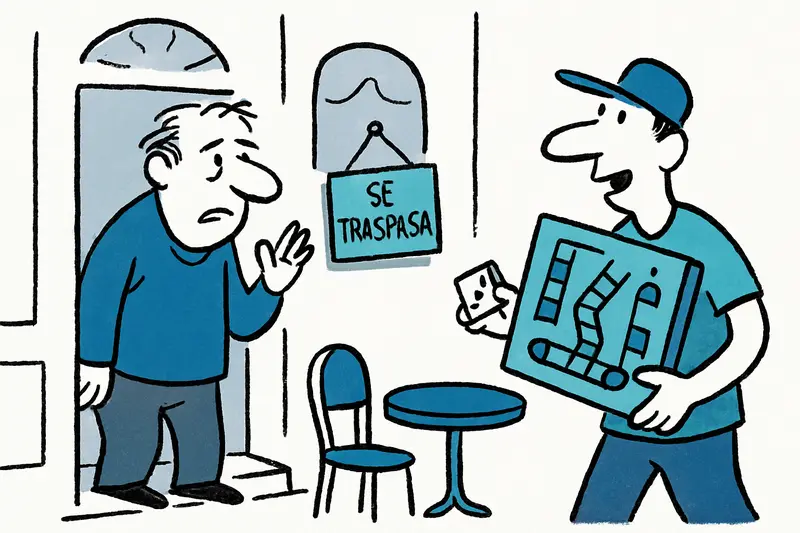
On Carrer Margalida Caimari, right by Parc de Ses Estacions, a familiar sign now hangs: "Se traspasa." The operators of Café Barocco announced on their social media channels that they want to hand over the venue. One final date is looming: if no one is found by May 3, the café will close its doors.
The Barocco is not just any coffee spot. Since 1992 the venue has been part of Palma's everyday map: board games on the tables, evening magic shows and occasional hypnosis nights — events you rarely find elsewhere. For many regulars a visit meant more than a drink; it was a set appointment, an anchor in the neighborhood.
Why this is threatened now cannot be pinned to a single date. It helps to name the question openly: which forces make such meeting places vulnerable? Possible reasons often heard on the island include rising rent and operating costs (for example, an iconic pizzeria in Palma's Lonja facing closure after a massive rent increase), changing consumption habits, the burden of recent years on small businesses and the difficulty of arranging a succession (Can Comas on Aragón Street closes after 29 years). All of this hits smaller cultural and hospitality venues particularly hard — especially those without a large franchise behind them.
Another often overlooked component is visibility for potential successors. A "Se traspasa" sign alone does not automatically reach the right people. In many cases a practical guide is also missing: what does taking over a venue mean legally, economically and organizationally? Who helps with taking over the till, transferring permits, or contacting suppliers?
What is often missing in public discourse: the role of everyday meeting places as social infrastructure. It's not just about turnover or aesthetics. A café like the Barocco functions as a meeting place, as a space for practice and exchange — a place where neighborhoods take shape. The disappearance of such places weakens the local network of encounter opportunities in ways that are not immediately visible as a loss; similar neighborhood losses have been noted in other recent local closures, including cases where municipal standards affected small kiosks (Palma's new kiosks closed again after refurbishment).
Concrete suggestions that could help now can be distinguished between short-term, pragmatic steps and medium-term, structural measures. Short term: anyone interested should contact the operators directly via their social media presence; the Barocco is still open for visits and inspections. Local initiatives could mediate pop-up operators or project groups that run a transitional model until a permanent solution is found.
In the medium term, offers are needed to make takeovers easier: practical checklists for traspasos, showcases for potential operators on municipal channels, and advisory services on financing and administration. Models such as cooperative takeovers or time-limited lease agreements with fixed graduated rents have worked elsewhere; they would also increase the chance here that a socially significant place is preserved.
And one more thing: the neighborhood itself has tools at its disposal. Regulars can show up in the short term — a visit, a post, a recommendation — and thus increase visibility. Organized collections for initial financing or an open evening for interested parties create attention and turn a sequence of visitors into a visible sign: the venue is needed.
A small everyday scene: Toward evening, when the lights in the park dim and the street lamps on Carrer Margalida Caimari come on, you hear the clack of game dice, the quiet laughter of people unpacking a card game, and the ticking of an old till. These are details that shape the city. They are not a luxury extra but part of the city's sound — and you only notice when it's gone.
Conclusion: The fate of Café Barocco is more than a single shop change. It is an indicator of how Palma deals with its everyday cultural spaces. The clock is ticking until May 3. Anyone who wants to act has the opportunity now: go there, ask, create visibility — or consider whether a community takeover is possible. In the long term structural support is needed so that it is not always only the brave owners who must decide whether a piece of urban culture survives.
Note: The operators announced their intention via social media channels and the venue remains open for the time being. Interested parties are asked to use the operators' entries to make contact.
Frequently asked questions
Why is Café Barocco in Palma facing closure?
What kind of place is Café Barocco in Palma?
How can someone contact Café Barocco if they are interested in taking it over?
What does a 'Se traspasa' sign mean in Mallorca?
Why are small cafés and meeting places in Palma closing?
Can community support help save a café like Barocco in Palma?
Where is Café Barocco located in Palma?
What can help preserve social meeting places in Mallorca like Café Barocco?
Similar News
Released with Conditions: The Plus Ultra Suspicion and a Mallorcan Finca as Residence
A Dutch entrepreneur, sought in connection with the Plus Ultra case, was extradited to Spain after his arrest in Germany...
Haute Nuit in Puerto Portals: Fashion, Art and Indulgence by the Water
On October 2 the Lobster Club in Puerto Portals will be transformed into a stage for curated fashion, art and culinary e...
Magaluf: Watchtower Alarm – Lifeguards Pull Unconscious Beachgoer from the Water
After a drama in the late afternoon, two lifeguards at Magaluf beach rescued an unconscious 44-year-old man. He was stab...
Turquoise in the City: How dangerous is the color play of the Sa Riera?
The Sa Riera in Palma suddenly turned turquoise — a pretty motif, but behind the effect lies a discharge of saline waste...

Jeckliner at Sunnesching: Cologne spirit sets sail from Palma
In September 2027 the Mein Schiff 2 briefly becomes a floating carnival stage: four days with Cologne bands, comedy and ...
More to explore
Discover more interesting content

Can Cap de Bou

Townhouse Lleo 72
