
Raid in Calvià: Reality Check on the Villas of a Putin-Linked Businessman
Four luxury villas searched, cash and expensive cars seized, two arrests: We ask how assets can be concealed systematically — and what is missing in Mallorca to prevent this.
Raid in Calvià: Reality Check on the Villas of a Putin-Linked Businessman
Key question: How could apparently large assets be parked for years in luxury properties in Mallorca without earlier warning signs triggering action?
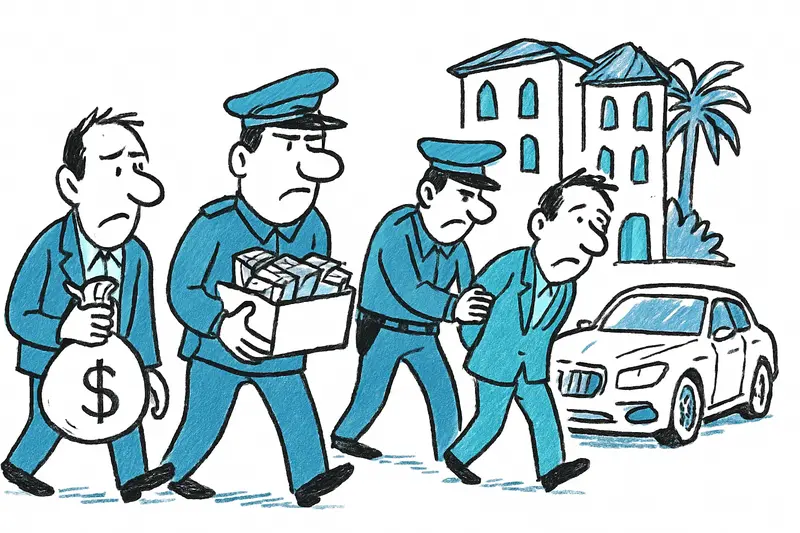
On Monday morning several vehicles of the National Police drove through Calvià, not far from the yachts in Portals Nous. Officers stopped at villas with high walls and colorful oleanders, entered courtyards and searched rooms. According to official statements, cash and high-value vehicles were seized in four properties. Similar seizures were reported in other operations such as Major Raid in Palma: What the Investigations Mean for the Island. Two people were arrested: a lawyer of Moldovan origin and the wife of a former employee of a real estate company from Portals Nous. The allegations range from money laundering and tax offenses to alleged participation in a criminal organization. The suspected economic background: a 69-year-old businessman from the defense industry, to whom several properties in Mallorca are attributed.
These facts raise concrete questions. Investigators assume that at least five properties on the island are linked to the same economic actor and that complex corporate structures as well as transfers to family members — including a 71-year-old sister and minor children — were used to conceal assets. A Russian anti-corruption organization estimated the total value at around €18 million. Additional reporting on follow-up operations is available in New Raid in Mallorca: More Arrests — But Are the Roots of the Problem Untouched?. The accused lawyer denies knowingly participating in money laundering; investigators say she initially acted as a translator and later as an attorney-in-fact in purchase contracts.
Critical analysis: On paper such constructions are legally possible. Companies, trust arrangements and formal powers of attorney allow transfers that at first glance appear legal. Banks review transactions, notaries certify contracts, land registries record owners. But especially with cross-border, complexly nested structures gaps emerge: Who is the beneficial owner? Who really owns the money? When properties are purchased through companies and then transferred to relatives, the trail can be blurred. It becomes particularly sensitive when minors or elderly relatives are registered as formal owners — this complicates the assignment of the economic benefit.
What has so far been underrepresented in public debate: the role of local service providers in the triangle between buyer, bank and notary. A lawyer can arrange many things; they sit at key junctions. Real estate agents, lawyers, trustees and other intermediaries are often the first to notice unusual flows. This role was highlighted in reporting such as Major Raid in Palma: What the Searches of Law Firms Mean for the Island. But interchangeable identifications, missing due diligence obligations regarding complex ownership structures and inconsistent approaches by banks create an environment that rewards concealment.
A scene from everyday life: On the afternoon after the raid a cafeteria on the plaza in Portals Nous is full of people whispering about what happened. The scent of espresso mixes with the sound of scooters on the coastal road. A neighbor says she noticed unusual deliveries and frequent changes of cars months ago but did not dare to report anything. This is typical: mistrust or uncertainty prevents local clues from turning into investigations.
Concrete solutions: First, a mandatory register of beneficial owners that also applies to property purchases and carries clear sanctions for false declarations. Second, tightened due diligence obligations for notaries, lawyers and agents: where there are signs of suspicion they must be able to report to the financial authority without fear of reprisals. Third, banks must scrutinize cross-border payments for real estate transactions more strictly and apply uniform standards for risk cases across the Balearic region. Fourth, cooperation between municipalities, the National Police and tax authorities must become faster and more transparent: temporary account freezes, tax audits and checks of municipal permits can be coordinated more effectively.
At the municipal level, reporting points for neighbors could also be set up, with clear guidance on what to look out for — without putting private individuals in unsafe situations. The goals: increase transparency, improve the detection of pattern cases and raise the barriers to money laundering so that Mallorca does not become a safe haven for unclear asset flows.
Concise conclusion: The raid in Calvià is more than an isolated police operation; it is a test of the system’s resilience against concealed asset flows. If the trail indeed disappears into corporate structures and family transfers, a single search is not enough, as prior operations showed in Major raid in Mallorca: Arrest of an alleged clan leader raises big questions. Binding rules for transparency are needed, stronger due diligence obligations for intermediaries and a low-threshold reporting culture on the ground. Only then can the island prevent large fortunes from remaining invisible behind palms and walls — and stop Mallorca from becoming a mailbox for international avoidance schemes.
Frequently asked questions
Why was there a police raid in Calvià, Mallorca?
How can luxury properties in Mallorca be used to hide assets?
What do banks, notaries and lawyers check in Mallorca property transactions?
Can properties in Mallorca be registered in the names of relatives or children?
What should neighbours in Mallorca do if they suspect suspicious activity at a property?
Why are Portals Nous and Calvià often mentioned in Mallorca property cases?
What happens to seized cash and vehicles in a Mallorca police investigation?
Why is money laundering such a concern in Mallorca’s property market?
Similar News

Record season, empty coffers: Who really benefits from the tourism boom?
Full hotels and more flights: the numbers sound impressive — yet many locals feel no benefit. A reality check with an ev...

Pool ordered for €46,000 – €23,000 paid, no work carried out: A fraud case in Palma
A homeowner in Palma transferred €23,000 for the construction of a pool. Weeks later it emerged that no building applica...

Summer greetings from the Pitiusas island: Gottschalk and Krüger enjoy the sun on Ibiza
A friendly photo of Thomas Gottschalk and Mike Krüger on Ibiza evokes memories of their shared film years and shows that...
Occupied in a Few Days: When Property in Mallorca Turns into a Dispute
Six young men were arrested in Palma after homeowners returned and could no longer open their own door. A case that rais...

Serious fall at Port d’Andratx: Who protects cyclists on this route?
A 66-year-old German cyclist fell between Port d'Andratx and Camp de Mar, hit his head and was taken to hospital. One ac...
More to explore
Discover more interesting content

Can Cap de Bou

Townhouse Lleo 72
