
Sineu: Three Minors Arrested After String of Burglaries — How Safe Is Our Neighborhood?
Sineu: Three Minors Arrested After String of Burglaries — How Safe Is Our Neighborhood?
After a tip from the neighborhood, the Guardia Civil arrested three youths in Sineu. The burglary spree, which also affected a hotel, raises questions about prevention, youth services and neighborhood safety.
Sineu: Three Minors Arrested After String of Burglaries
A neighborhood tip changes things — but what remains unresolved?
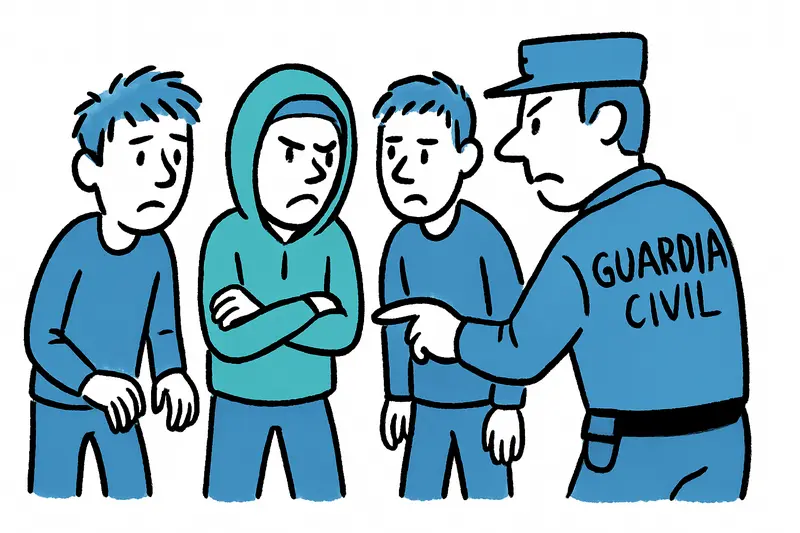
Late in the morning, when the church bells in Sineu still echo and traders are preparing their stalls for the weekly market, a plainclothes car of the Guardia Civil drove through the narrow alleys. After a tip from the neighborhood, the officers stopped three teenagers aged 15 to 17. During the check they apparently found stolen jewelry and around 3,000 euros in cash. The young people were handed over to the juvenile public prosecutor's office and are now in the socio-educational youth center Es Pinaret.
Key question: How could it happen that minors apparently spent months breaking into private homes and even a hotel, and what responsibility does the municipality bear?
The bare facts are brief: since January there have reportedly been several burglaries in Sineu, affecting private apartments and a hotel, and this resembles other cases, such as Eight Break-ins in One Week: Arrest in Palma — and What's Still Missing. Neighborhood vigilance led to the arrests. Two things can be inferred without speculation: the police took action, and the local community was a decisive factor in solving the case. What the report does not reveal is the why — and that is where the real debate begins.
A critical view shows that security issues and youth welfare often overlap. An empty house, poorly lit streets, a hotel with inadequate security measures — all of this creates opportunities. At the same time, young people who stand out often sit at the intersection of school problems, family strain and a lack of recreational offers. On an island like Mallorca, where the daily rhythm is shaped by tourism and seasonal work, young people in particular can fall into riskier patterns when they lack stable anchors; similar night-time incidents in nearby towns, for example Night-time Break-ins in Can Picafort: Caught — What Now?, underline this vulnerability.
What has been missing so far in public discourse: prevention does not only mean more policing. It also means social work at the grassroots level, better cooperation between schools, police stations and youth centers, and a systematic focus on places where opportunistic crime arises. If it is true that a neighbor provided the tip, this shows both solidarity and a failure of preventive structures — neighbors have to step in because other safety nets do not hold.
An everyday scene from Sineu helps to anchor this: Tuesday morning, the market fills the Plaça, the scent of freshly brewed coffee and fried fish mixes with the smell of citrus fruit. Older men sit at the tables, teenagers pass by on skateboards. The village is closely knit; nevertheless, that very familiarity can be misleading when attention is only occasional and not organized systematically. Unusual behavior may only be noticed once things are already missing.
Concrete solutions can be identified that are also practical. First: a local safety and prevention network that regularly brings together police, municipality, schools, businesses and neighborhood representatives. Second: targeted programs for young people — from afternoon activities and career orientation to low-threshold mentoring projects. Third: simple security measures for hotels and private homes that cost little but increase routine and visibility, such as improved exterior lighting, open reporting systems for suspicious observations and information sheets for seasonal businesses.
It is also worth looking at the Es Pinaret youth center: facilities like this are important, but they need resources for individual support, media education and conflict resolution. When minors are involved in theft, a mix of education, restitution and psychosocial support can often achieve more than purely punitive measures.
Those now calling for a quick security fix often overlook the scarcity of public funds. But prevention costs less than the permanent repair of trust and property. A simple prevention plan for Sineu could look like this: one week of diagnosis (identify at-risk locations), a pilot program for lighting and neighborhood patrols, plus a three-month youth program in cooperation with Es Pinaret. Evaluate, adjust, expand.
Pointed conclusion: The arrests end a string of burglaries, but they do not remove the causes. Sineu has shown both neighborhood vigilance and institutional gaps; as other reports show, short-term arrests can offer relief but not necessarily long-term safety, for example Nighttime Break-ins in Palma: Arrest Stops the Spree — But How Safe Is the Old Town Really?. If the municipality and its partners now not only talk but create concrete offers and visible security measures, this episode could become a turning point. If not, the quiet worry remains: the next gap is already waiting in a dark alley.
Frequently asked questions
Is Sineu considered safe for residents and visitors after the burglary arrests?
What can residents in Mallorca do to help prevent burglaries?
Why are empty houses and poorly lit streets such a problem in Mallorca towns?
What role do neighbors play when there is suspicious activity in Sineu?
What happens to minors arrested for burglaries in Mallorca?
Is Sineu a good place to visit for the weekly market despite the recent break-ins?
What security steps can hotels in Mallorca take to lower burglary risk?
What does the Sineu case say about youth support in Mallorca?
Similar News

Bendinat as a meeting place: Padel Cup brings together nearly 120 players
Three days of padel at the Bendinat Urban Country Club: organized by El Económico and Borbalán, with around 120 particip...
Large-scale Anti-Tourism Graffiti at Cala Mendia: Protest or Vandalism?
On the morning walkers discovered an approximately 50-meter-long slogan against tourism on the wall above Cala Mendia. W...
Bomb threat before Jet2 flight in Tenerife: A reality check for security protocols
A passenger reported a bomb in luggage shortly before departure in Tenerife. Evacuation, baggage checks, delays — and ma...

Who is stripping Mallorca's coast bare? Why entire slopes are being removed for villas
On Mallorca steep slopes are again being removed to make way for luxury construction sites. Who bears the responsibility...

Robber Falls While Fleeing in Sant Agustí: Who Takes Responsibility?
During a purse-snatching in Sant Agustí, a non-commissioned officer chased the suspect; the man jumped from a bridge and...
More to explore
Discover more interesting content

Can Cap de Bou

Townhouse Lleo 72
