
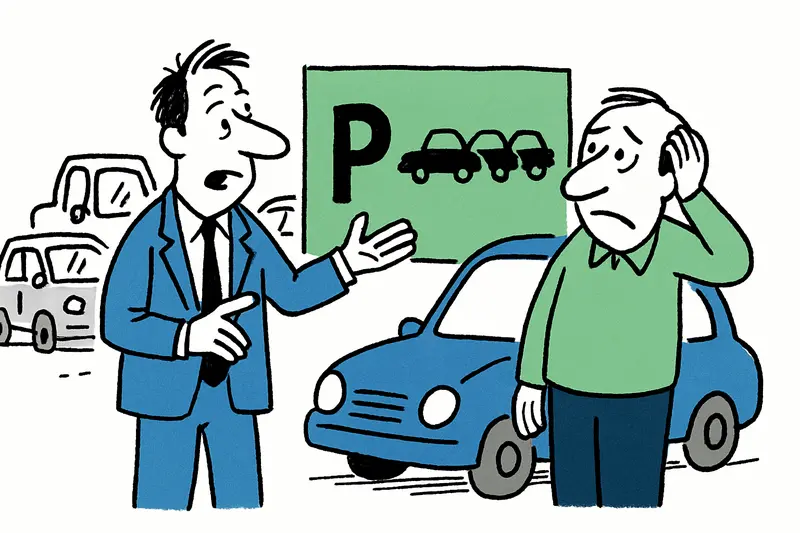
Sóller wants to tame the parking chaos: Three parking lots and 300 resident spaces — is that enough?
Traffic jams in front of the church, delivery vans in the alleys and frustrated residents: the town hall plans three new parking areas and 300 parking spaces reserved exclusively for residents. A step in the right direction — but the problem runs deeper.
When the main street becomes a one-way of patience
If you travel through Sóller at rush hour, you know the picture: cars inch along at a snail's pace, the church bells ring, and somewhere a tram scrapes over the tracks toward Port de Sóller. Especially between 5:30 and 7:00 p.m. vehicles queue in front of the Plaça, pedestrians step onto the curbs, and delivery vans desperately search for a gap. The town hall has reacted — on paper at least. Three new parking areas at different points in the town and 300 parking spaces reserved exclusively for residents are meant to ease the traffic chaos, as reported in a local report on three new parking areas and 300 resident spaces. But is that enough?
An overview of the proposals
Planned in addition to the three parking areas is an extension of the low-emission zone in the centre and resident parking permits. Internally, officials say studies and surveys would start in the autumn, followed by implementation. Budget range: around €1.1 to €1.3 million. The figure already sparked heated debates at town hall — and raised legitimate questions that have not all been answered so far, even considering European Commission guidance on low-emission zones.
The central question
Can a one-time investment in additional parking solve the conflicts permanently, or does it merely shift the problem? That is the guiding question that is often missing from the debate. Creating more spaces provides short-term relief. In the long term, however, transport researchers and municipalities have repeatedly observed: more supply attracts more demand — the spaces fill up, the search and therefore the congestion return.
What is often insufficiently considered
First: displacement effects. If residential streets are relieved, searching parking traffic can overflow into neighbouring towns — Port de Sóller, Deià or the access roads to the MA-11 could experience additional strain, as echoed by a case study on new parking spaces in Andratx. Second: operation. 300 resident spaces sound good, but how will they be allocated? Long-term parkers from holiday rentals, second cars of residents, or true permanent residents? A fair allocation system needs criteria, enforcement and regular adjustment; the municipality's decision to convert a parking lot into social housing at Plaça de les Teixidores shows how competing priorities can complicate proposals.
Adjustment levers that should still be turned
Some concrete proposals: clear restriction times for tourist buses in bottlenecks, time-limited delivery zones (mornings until 10 a.m.), digital parking indicators at the town entrances and a phased test phase with measurement points — not only on market Saturdays but over several months. A real shuttle from the main car park to the centre, coupled with cheap parking times, could redirect visitors. And: variable tariff zones — short stays cheap, long-term parking expensive — can steer behaviour.
What residents say
"On Saturdays after the market I can't find a spot anymore," says María from Carrer de sa Mar, while the children play with a ball on the pavement. "People park for hours because they want to go to the beach or a restaurant." Voices are split: some welcome the protective measure, others fear a burden from enforcement costs and bureaucratic hurdles. The Policia Local wants to step up checks at the start — but personnel capacities are limited.
Business and visitors: winners or losers?
For visitors the new rules mean more patience. Those without a permit will still have to search or use peripheral zones. This can hit shops and gastronomy in the old town. On the other hand, better living quality in residential streets could lead guests to stay on foot rather than driving into every narrow alley. In the short term: without good information (signage, apps, shuttles) frustration looms.
A pragmatic timetable would make sense
Instead of implementing everything at once, a pilot with clear success criteria would be advisable: How quickly do the new parking areas fill up? Does the extension of the low-emission zone have visible effects on through-traffic? Are the checks sufficient, or are technical solutions such as cameras or digital permits needed? Transparent interim reports from town hall would strengthen trust — because many here prefer the tram rattling and the scent of orange blossom to endless debates in the council chamber.
Conclusion: A step, but not a panacea
The planned three parking areas and 300 resident spaces are an important instrument. But the puzzle is bigger: displacement, allocation rules, enforcement, traffic management and information must fit together. If Sóller manages to combine the measures smartly — with test phases, digital support and stricter rules for buses and delivery traffic — life in the residential streets could become noticeably calmer. And that is the goal amid the charm of the narrow lanes and the sound of the tram: more quality of life instead of a permanent parking war.
Frequently asked questions
Why is parking in Sóller such a problem at rush hour?
Will three new parking areas solve Sóller’s parking chaos?
What are the 300 resident parking spaces planned in Sóller?
How could the low-emission zone in Sóller affect drivers?
Where could parking pressure spread if Sóller adds more spaces?
What would help Sóller’s parking problem besides building more spaces?
Will visitors still be able to park in Sóller if the new rules go ahead?
Is Sóller likely to test the parking changes before making them permanent?
Similar News
First Day, First Consequences: What Palma's Rent Freeze Really Means
A new decree stops a planned eviction in Palma — but what really changes for tenants and landlords? A reality check with...

When Housing Becomes a Matter of Survival: Mallorca Between Rental Frenzy and Everyday Life
The case of 87-year-old Maricarmen showed that on Mallorca many people's lives are poised between affordable and uninhab...
Autumn in Mallorca: When Melancholy Gets a Window
Why autumn quietly tightens here — and how to make use of the mood: walks, culture, candles and the light from Palma to ...
Near-miss on Lanzarote: Landing Ryanair Jet and Iberia Takeoff — what really went wrong
On Lanzarote there was a dangerous incident: A Ryanair flight (FR5910) from Dublin landed on runway 03 while an Iberia E...

Eurowings introduces new Premium Business seats on Mallorca routes
From December 1, selected Eurowings flights to Palma and other destinations will feature eight particularly generous sea...
More to explore
Discover more interesting content

Can Cap de Bou

Townhouse Lleo 72
