
Sóller introduces low-emission zone: Good intention, half a solution?
Sóller introduces low-emission zone: Good intention, half a solution?
From Friday, 27 February (11 pm) a comprehensive low-emission zone will apply in Sóller's historic centre. Residents and permitted exceptions remain allowed — tourists in rental cars must use peripheral parking or switch to bus, tram and bicycle.
Sóller introduces low-emission zone: Good intention, half a solution?
Main question: Does the new LEZ really improve air and everyday life — or does it just shift the problem?
From Friday, 27 February, at 11 pm a new low-emission zone (Zona de Bajas Emisiones – ZBE) comes into force in Sóller. The message is clear: the historic centre of the valley of oranges should be freed from through traffic. Residents, authorised cars, electric vehicles, bicycles, e-scooters, taxis and emergency vehicles are therefore allowed; certain delivery vehicles, people with reduced mobility, hotel guests and shop owners are also exempt from the restrictions. Anyone entering the zone without authorisation risks a fine of up to 200 euros, and enforcement challenges have been highlighted elsewhere, for example in Why Palma's Environmental Cameras Unsettle Tourists and Part-Time Residents.
The idea behind the measure is plausible: fewer exhaust fumes, less congestion, more space for pedestrians among the orange trees. In practice, however, the question quickly arises: who actually benefits from the rule? Sóller — together with the port area Port de Sóller — is regularly overcrowded in the high season; on weekends you can hear bus engines on the access road in the morning and taillights for kilometres in the evening. On cloudy days additional day visitors arrive who would otherwise have been at the beach. It is precisely these excursionists whose access is to be made more difficult in future. Whether that will be enough remains open, and similar measures elsewhere have had side effects, as reported in Palma locks out holidaymakers: Low-emission zone with side effects.
Concrete facts that must not be overlooked: three new parking facilities with a total of 300 paid spaces have been created on the edge of town. In addition, around 1,000 green-marked parking spaces are reserved for residents and intended only for locally registered vehicles. The exceptions for locally registered cars are a double-edged sword: they protect residents, but could also mean that old, heavily polluting cars still enter the centre daily — reducing the expected air quality gains.
Critical analysis: the measure remains only half the battle if it is not implemented with clear accompanying rules. Important questions remain unanswered or are given too little attention in the public debate. How will success be measured — with which air quality data and over what period? Will the 300 parking spaces be sufficient when hundreds of day visitors arrive on sunny days? How will it be prevented that traffic simply shifts to neighbouring villages? Nightly closures and detours can change traffic patterns significantly, as discussed in Nightly Closures in the Sóller Tunnel: Commuting, Detours and Smart Solutions. And what happens in the evenings when restaurants and bars need their guests? If many aspects rely solely on exemptions, the zone risks creating more administrative leeway than actual relief.
What is missing from the discourse: transparent goals and numbers. So far there is no official information on by what percentage fine particulate matter or NO2 values are expected to fall. It is also unclear which controls or measurements will be carried out in the coming months. Tourist stakeholders — car rental companies, hotels, drivers — also need clear, communicated procedures in good time: How can hotel guests reach their accommodation without registration? Will landlords be required to register licence plates for short stays?
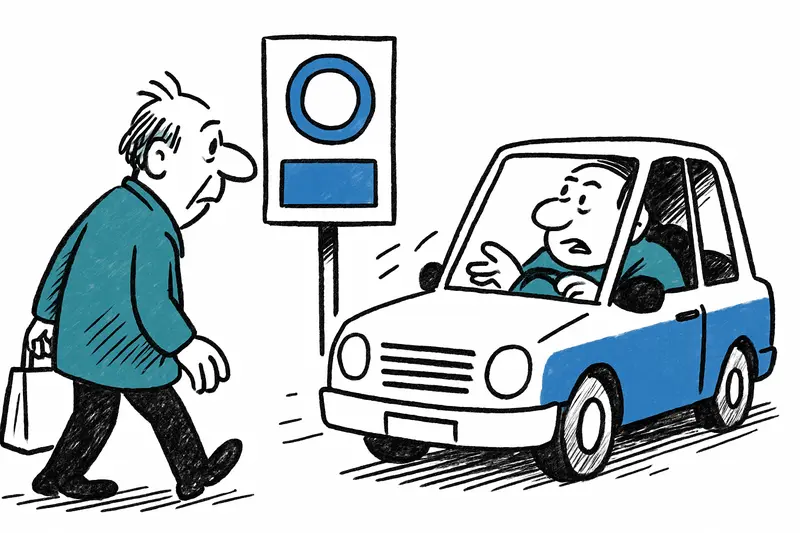
A scene from everyday life that illustrates the dilemma: on a sunny morning you see delivery vans manoeuvring into the narrow Carrer alley, the tram is stopped in front of the café, an elderly man with a shopping bag struggles up the curb. In the harbour the seagulls cry and the scent of oranges drifts down from the mountains. The new signs are freshly installed, tourists look puzzled at the symbols. It feels like a transition — good intentions in the middle of a habitual rhythm that will not change by itself.
Concrete solutions that are now important:
1) Parking and shuttle concept for visitors: The 300 parking spaces at the town edges should be linked to a shuttle bus on peak arrival days. An affordable day ticket for Park+Shuttle would sensibly guide visitors.
2) Temporary guest permits: Hotels and holiday accommodations could register limited day access for guests via a digital portal so arrivals and departures do not end in fines.
3) Delivery windows and loading zones: Clear time windows for deliveries reduce stop-and-go at midday and lead to fewer blockages.
4) Consider emissions-based exemptions: Rather than favouring locally registered vehicles across the board, a tiered approach by emissions class would be fairer — it encourages clean technology instead of protecting vested ownership interests.
5) Transparent measurement and reporting obligations: A measurement plan with before/after values should be public so that politicians and citizens can follow the effect.
Conclusion: Sóller has done something unavoidable: the town is setting limits for car through-traffic in the historic core. That is bold and necessary. But success depends on details: how consistently exemptions are handled, how visitors are guided and whether there is honest evaluation. Without these accompanying measures the LEZ risks being more symbolic than a tangible gain for air and quality of life. Those who live here quickly notice: good rules alone are not enough — they must work when the tram toots and the orange trees are in bloom.
Frequently asked questions
What is the new low-emission zone in Sóller?
Who is allowed to drive into Sóller’s low-emission zone?
What happens if you enter Sóller’s low-emission zone without permission?
Where can visitors park in Sóller now?
Will the low-emission zone in Sóller actually improve air quality?
How will day visitors reach Sóller without causing parking problems?
Can hotel guests still reach their accommodation in Sóller by car?
Why are some people in Mallorca critical of Sóller’s new traffic rules?
Similar News

The Maricarmen Case: Why an Eviction Is Forcing Spain's Housing Debate
Images of an 87-year-old woman on a stretcher have sparked a debate in Spain that also runs deep in Mallorca. Who protec...
Parking dispute in Els Hostalets: When a gap leads to violence
A parking dispute on Calle Aragón escalated into a mass brawl at night. Why do trivial conflicts here turn bloody so qui...

Bodycams in Palma: More clarity needed so surveillance doesn't become the norm
Palma's local police equip UII officers with Axon Body 4 cameras. Useful for evidence collection — but specific rules on...
When the Bread Door Closes: Why Maria de la Salut Lost Its Last Bakery
The only bakery in Maria de la Salut, a sales outlet of Forn de ca'n Joan Terès from Palma, has permanently closed. What...

Ancient Piece Brought to Light: Guardia Civil Recovers Roman Anchor Fragment off North Coast of Mallorca
Divers from the Guardia Civil recovered a massive iron piece from Roman times off Mallorca's north coast. The roughly 35...
More to explore
Discover more interesting content

Can Cap de Bou

Townhouse Lleo 72
