
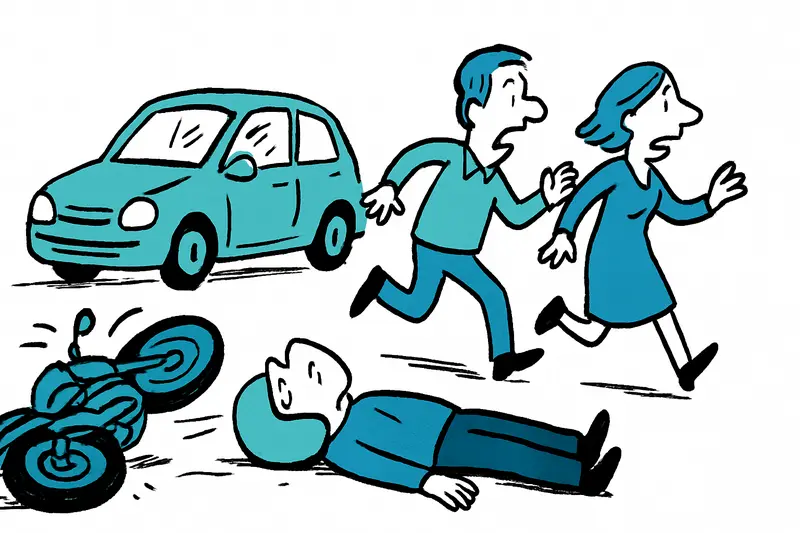
Flashpoint Son Castelló: Why occupants fled — and what the municipality must do now
A motorcyclist dies in a burning collision at the Son Castelló roundabout. The occupants of a rental car fled the scene on foot, and questions about infrastructure and prevention are shaping the debate.
Morning fog, sirens and a roundabout that leaves questions open
Around 05:20 a.m. the shriek of sirens tore the silence at the edge of Palma. At the access to Sóller, at the Son Castelló roundabout next to the TÜV station in Son Castelló, firefighters, the emergency services and the Guardia Civil waited for the first light. On site: a motorcycle and a car on fire, the bitter smell of burning rubber hanging in the cool morning air, seagulls circling as if they had seen the scene for years.
One person is dead — and the occupants' flight raises questions
The motorcyclist, according to investigators around 30 years old and of Argentine origin, died at the scene. Emergency doctors were unable to save him. For the neighborhood—many of whom are early commuters or cyclists—the shock runs deep. What is additionally unsettling: the occupants of the car apparently left the vehicle on foot before it burned out completely and ran away. Witnesses report people fleeing in the direction of the access roads; later investigators found only remnants of the rental license plate.
Key question: Why did they flee — and what does that say about the safety of the location?
The pressing question is not only “Who were the people?”, but above all: Why did they leave the vehicle? Was it sheer panic in the face of the flames, a terrible fear for their own safety — or an attempt to avoid responsibility because something else was going on? Such flight reactions complicate the investigation and leave relatives and residents with a sense of exposed insecurity.
Technical and structural problems that are seldom discussed aloud
When an accident occurs at twilight, several factors mix: reduced visibility, possible speeding at the roundabout, the design of the access road and the quality of the street lighting. In Son Castelló the access is not a narrow village street but an entrance that can encourage high speeds. An audible bang, reported by residents around 05:15 a.m., then smoke and fire — in those seconds crucial traces are often lost.
In addition: burning vehicles destroy evidence. Paint traces, brake marks, small metal parts — everything can be erased by the heat. That turns forensic work into detective work, where expert angle measurements and video recordings quickly become decisive.
Concrete measures: What would help in the short term
Discussions about blame are human, but in the long run they only help if linked to concrete measures. Some pragmatic suggestions:
Better lighting at entrances and roundabouts, especially along commuter routes. Even a few additional floodlights can significantly improve the visibility of motorcyclists at dusk.
Targeted speed controls in the early morning hours: mobile measurements and spot checks break the habit of accelerating at the roundabout.
Structural adjustments such as narrowed access lanes or additional traffic islands: small changes to a roundabout’s layout reduce typical overtaking and acceleration maneuvers.
Protection for motorcyclists: awareness campaigns, more visible protective clothing and lighting checks at driving schools and business parks — this is not a fashion tip, but often lifesaving in poor light.
Tighter rental-car company obligations: rental firms should record complete contact details at handover and make them more readily available to authorities so that after accidents it is faster to identify who last used the vehicle.
Video surveillance with rules: cameras at traffic junctions speed up investigations; sensibly used and compliant with data protection they can help identify fleeing people and license plates more quickly without sliding into blanket surveillance.
Why witnesses are important now — and how the municipality should respond
The Guardia Civil explicitly asks for information: anyone who saw vehicles at the roundabout shortly before 05:20 a.m., observed people running in a particular direction or noticed a vehicle with distinctive features can be crucial. Often it is small details — clothing items, a color, a direction of travel — that provide an investigative lead.
For the municipality this means: not only mourning, but acting. In the short term additional light sources and mobile speed monitoring stations could be installed. In the medium term council committees should examine whether the roundabout should be redesigned or equipped with technology that prevents accidents or documents them better.
My view at the police tape: smell, voices, the duty to act
I stood at the police tape; the flames had gone out, only the smell remained — burning rubber, melted plastic. The voices of the emergency crews were muted, the first sunbeams fell over Son Castelló. Such images stay with you. They must not, however, leave us paralyzed. They should provoke questions: about prevention, about transparency and about concrete changes at places we pass every day.
Our sympathy goes to the relatives of the deceased. The Guardia Civil is receiving tips; every observation can help to find answers — not out of sensationalism, but out of the desire to make future mornings safer.
Frequently asked questions
Why is the Son Castelló roundabout in Mallorca considered a risky spot?
What should drivers in Mallorca do when visibility is poor early in the morning?
What are the main causes of motorcycle accidents at roundabouts in Mallorca?
Why do investigators ask witnesses to come forward after a crash in Palma?
What should Mallorca councils do to improve safety at dangerous roundabouts?
Can better street lighting really reduce accidents in Mallorca?
What happens when a vehicle burns after a crash in Mallorca?
What should a witness do after seeing a serious accident in Mallorca?
Similar News

Maribel: Five Decades of Service – Housekeeper from Peguera Celebrated with a Special Honor
Over 50 years in the hotel business: María Isabel “Maribel” Molinos was honored in Palma at the Nit del Turisme by Unive...
Orange Alert over Parts of Mallorca: Are We Prepared?
Dark clouds and an announced wet spell have triggered an Orange alert in parts of Mallorca. A reality check: what's miss...

Sundair & Co.: Sale speculation and what it could mean for Mallorca
Rumors about a possible sale of the airlines Sundair and Fly Air 41, which belong to Schauinsland-Reisen — and whether b...
Anne Wünsche in Mallorca: A job offer with a catch — who fits the role of personal assistant?
Influencer Anne Wünsche has left Berlin and is urgently looking for a full-time personal assistant in Mallorca. Why the ...
Daily from New York: Palma Between Boom and Strain
United will increase the Newark–Palma route to daily flights in 2027 using Boeing aircraft (231 seats). What does the in...
More to explore
Discover more interesting content

Can Cap de Bou

Townhouse Lleo 72
