
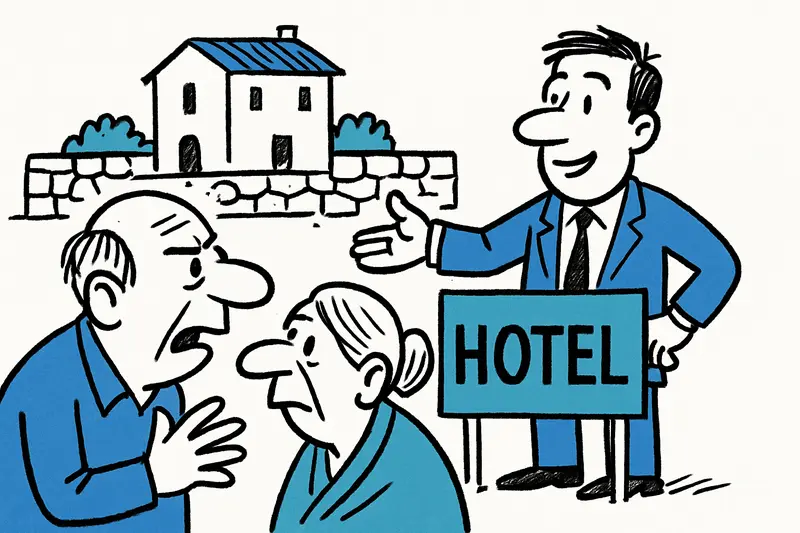
Son Fiol Becomes a Hotel: Consensus, Conflict and the Future of the Island's Interior
Son Fiol Becomes a Hotel: Consensus, Conflict and the Future of the Island's Interior
A forgotten estate in the center of Consell is to be turned into a boutique hotel. Why the decision is more than a real estate deal and which questions about the village center remain unanswered.
Son Fiol Becomes a Hotel: Consensus, Conflict and the Future of the Island's Interior
Consell feels different this week: on the Plaça, where the weekly market usually carries the echo of voices and vegetable carts, older residents at the café talk about walls that should be opened. In the village center lies the old Son Fiol estate — a stone-walled complex with around 1,750 square meters of built area and more than 16 hectares of land. It is now clear: the owners plan to convert it into a boutique hotel with about 20 rooms and 25 bathrooms. After a two-year process, the authorities have granted the permits.
Key question
What does the transformation of Son Fiol from a secluded property into a tourist address mean for the people who live here — and for the character of the village?
Critical analysis
At first glance, the project fits into an ongoing development: the island's interior is gaining tourist attention, as seen in Son Macià Negre and Son Sales receive tourism status, the vineyards around Binissalem are in demand, and investors see potential in authentic village structures. But several levers turn at the same time: land long used for agriculture comes under tourist pressure; infrastructure such as parking, water and wastewater must be upgraded; the daily life of a place changes when rooms rather than houses are rented out short-term.
The heritage value of the building fabric is important, and it is positive that protected elements are to be preserved, as recent debates over the sale of Es Molí in Deià illustrate. But preservation alone does not guarantee the social and ecological sustainability of a project. An estate in the village center means more pedestrian and car traffic on narrow streets, changes in prices and rents, and potential loss of publicly usable spaces — aspects that are often handled technically in the approval process but become noticeable in the everyday life of the neighborhood.
What's missing in the public discourse
Public debate often focuses on architecture and bed counts; less on water consumption in dry periods, on local employment instead of external service providers, and on the long-term impact on the housing market. Also rare is the discussion about how such projects can be linked to the agricultural heritage: Will part of the 16 hectares continue to be actively farmed? Who benefits from grapes, olives or carob trees?
Everyday scene from Consell
On Saturday morning in front of the church, the smell of fresh bread mixes with the sense of a day's work done: vintners in oilskin jackets load small vans, an elderly woman hangs out freshly washed laundry, a delivery driver maneuvers his van down the Carrer Major. Such scenes are at stake when a large hotel is built in the middle of the village — not because hotel guests spoil the Plaça, but because infrastructure and economic dynamics shift; similar tensions are visible where historic hostals fall into disrepair, as in Decay by the Sea: Who Will Solve the Mystery of the Hostal in Alcúdia?.
Concrete solutions
1) Land-use obligations: Part of the adjacent 16 hectares should be required to remain in agricultural use (vineyards, olives). That preserves the landscape and produces local products for the hotel; 2) Local jobs and training: Agreements to prioritize hiring local residents and to finance hospitality training create acceptance; 3) Water and energy plan: Limited water allocations, modern recovery systems and photovoltaics on flat roofs reduce the burden on the municipality; 4) Traffic and parking concept: A shuttle to the periphery, bicycle parking and defined delivery times relieve narrow streets; 5) Community fund: A percentage of revenue should flow into the municipal fund for infrastructure and social housing.
Conclusion
The conversion of Son Fiol is more than a new hotel; it is a test of what we understand by sustainable development in the island's interior. If the project only increases the number of beds, Consell will lose a piece of everyday life. But if it strengthens agricultural traditions, brings jobs and fairly regulates infrastructure, the project can become a model. The decision does not rest solely with investors or heritage protectors — it also rests with us, who still sweep the Plaça in the mornings.
Frequently asked questions
What does the conversion of Son Fiol into a hotel mean for Consell?
Why are boutique hotels in Mallorca’s interior becoming more common?
Will Son Fiol still keep its agricultural land if it becomes a hotel?
How could a new hotel affect water use in Mallorca’s inland villages?
What happens to traffic and parking when a hotel opens in a village center like Consell?
Is Son Fiol protected as a historic building in Consell?
How could the Son Fiol hotel project affect jobs in Mallorca’s interior?
Is Son Fiol in Consell likely to change the character of the village?
Similar News

Rental Car Theft in El Arenal: What This Incident Reveals About Our Gaps
A teenager steals a running rental car in El Arenal, flees on foot, climbs over walls and is caught by the Guardia Civil...
Red Rope in Palma's Library: What Helps Against Selfie Tourism — and What's Missing
Palma's city library cordoned off an area with a red rope to keep selfie tourism away from reading and working activitie...
Fort San Carlos: Museum, Harbor Dispute — and a Conflict That Demands Answers
The military museum at Fort San Carlos sits right on Palma's harbor, with unexpectedly quiet rooms filled with cannons a...

Old Town Under Pressure: When a Doorway Becomes a Sleeping and Shower Place
For months a woman has been living with a parasol, a clothes rack and personal belongings next to the social welfare off...
When Shopping Weighs Heavier: Mallorca Demands a Tax Pause on Food and Fuel
Rising prices are putting pressure on households and agriculture. The Balearic Islands are calling for temporary tax rel...
More to explore
Discover more interesting content

Can Cap de Bou

Townhouse Lleo 72
