
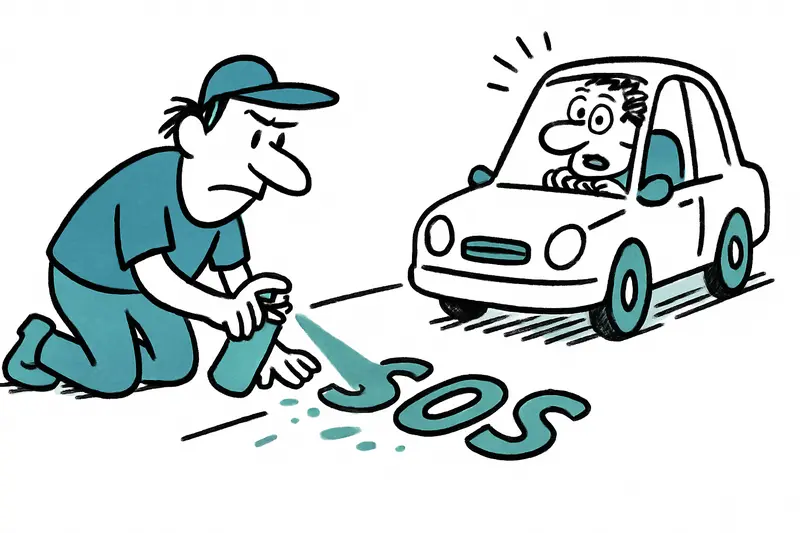
"SOS Mallorca" on the Ma-10: protest slogans on asphalt or dangerous provocation?
"SOS Mallorca" on the Ma-10: protest slogans on asphalt or dangerous provocation?
On the Ma-10 between Deia and Sóller, slogans like "SOS Mallorca" and "Stop Tourism" have appeared. What do these graffiti say about the situation on the island — and how should the island respond?
"SOS Mallorca" on the Ma-10: protest slogans on asphalt or dangerous provocation?
Key question: Do slogans painted on the road help the cause — or do they harm the island and public safety?
The Ma-10 winds through the Tramuntana like a scar on the island: narrow curves, steep cliffs, tourist buses, delivery vans and cycling groups that have to share the carriageway. These days something new has appeared on the asphalt between Deia and Sóller — large English-language messages: "SOS Mallorca", "Stop Tourism". They are painted so that drivers, hikers and cyclists cannot miss them.
Such graffiti hit right into everyday life. I see it in the morning at a bakery in Deia: a delivery van stops, a tourist snaps photos, children play in the square, and behind the church tower you can hear the clacking of bicycle chains. The messages on the road crash into this scene like an unexpected, loud voice.
In short: the slogans signal frustration. The high season increases traffic load, parking is scarce, narrow lanes become photo backdrops with ugly jams. The Ma-10, especially the section at Llucalcari, is one of the most heavily burdened routes on the island — and you can see that in such protest actions.
Critical analysis: graffiti as an expression are not a new phenomenon. But on a mountainous coastal road it's not only about opinion but also about safety. Paintings on the carriageway change the attention of road users, can complicate liability in accidents and add cleaning costs. Politically, they may reach precisely the wrong people: many viewers are visitors who stay briefly on the island and have little influence on policy decisions.
What is missing from public discourse: there is much talk about slogans, demonstrations and isolated incidents — see Palma after the Protest: How Freedom of Expression and Everyday Life Can Be Balanced — but the voices of residents, restaurateurs, bus drivers and farmers who live with the effects of visitor flows every day are hardly visible. Equally lacking are concrete numbers and comparative values: how much traffic can a road like the Ma-10 really handle? What peak loads occur on weekends? And who pays for cleaning, cordoning off or compensation if intent and act can be proven?
The recent incidents are not isolated. In towns like Santa Maria del Camí there have also been attacks on buildings in recent days, including real estate agencies. Such actions show that discontent takes many forms — from insulting messages, as reported in New xenophobic graffiti at Playa de Palma – How is the island reacting?, to clearly criminal property damage. With all empathy for frustration: escalation rarely helps, and it polarizes neighbourhoods.
Concrete solutions that would make sense now:
Short-term: Rapid removal of markings at dangerous locations so that road safety is not compromised; transparent communication by municipalities (where was cleaned, who covers costs); and locally organized community meetings where residents and businesses can present their problems.
Medium-term: More controls on the Ma-10 during peak times, targeted traffic management through shuttle services to popular viewpoints, designated parking areas with clear capacity limits and better tactile signage for pedestrian and cycling paths so visitors do not detour onto the carriageway.
Long-term: A binding master plan for the Tramuntana that links visitor management, landscape protection and the local economy; an honest debate about the role of short-term rentals in places with narrow streets; and a fund, financed by targeted levies, for maintenance and cleaning of public infrastructure.
An everyday scenario often forgotten: a bus driver who must pass through Deia's narrow lanes early in the morning gets stuck at a snail's pace because delivery traffic and parked rental cars block his way. His delay affects not only tourists but also commuters and schoolchildren. Such small delays add up to frustration — and frustration can lead to impulsive actions.
What police and authorities should consider: investigations into property damage are important. Nevertheless they must not become the only response. A mix of enforcement, prevention and communication works better: publicly visible measures that show concerns are taken seriously, combined with practical alternatives for visitors.
Punchy conclusion: graffiti like "SOS Mallorca" are a loud cry for help, but a cry delivered in a dangerous way. The message is understandable — the method is problematic. Those who want real change must seek dialogue, fund visitor management measures and clearly name local capacity limits. Otherwise the message will remain only paint on the road and trouble in the village.
Frequently asked questions
What is the weather usually like in Mallorca in winter?
Can you swim in Mallorca outside the summer season?
What should I pack for Mallorca in the cooler months?
Is winter a good time to visit Mallorca?
What is Sóller like to visit in winter?
What can you do in Palma de Mallorca in winter?
Is Formentor worth visiting when the weather is cooler?
What is the best way to plan a Mallorca trip if the forecast looks mixed?
Similar News

When the Tap Only Runs Sometimes: Why Municipalities in the Balearic Islands Are Now Rationing Water
Deià, Valldemossa, Esporles, Sóller and several places on Menorca are scaling back water supply. Who is responsible, why...
Battle for the Ramp: Why Cala Gamba Needs More Than Enforcement
The Guardia Civil intervened in Cala Gamba — residents breathed a sigh of relief, but unease remains. Key question: Are ...
He dances at the Duty-Free: How an airport employee brings a smile to Palma
A Duty-Free employee at Palma Airport created a viral TikTok with dancing breaks. Why the scene is more than just an int...
Stolen Motorcycle in Palma: Fatal Crash in Coll d'en Rabassa Shortly After Theft
A motorcycle parked on Plaza Miquel Dolç in Son Gotleu was reportedly stolen in the early hours. Hours later two men cra...
When More Guests Mean Less: Mallorca's Restaurants at the Limit
Despite record visitor numbers, the revenues of many restaurants are shrinking. Why more visitors don't automatically me...
More to explore
Discover more interesting content

Boat Tour with BBQ along Es Trenc Beach

Private transfer from Mallorca Airport (PMI) to Pollensa
