
He dances at the Duty-Free: How an airport employee brings a smile to Palma
He dances at the Duty-Free: How an airport employee brings a smile to Palma
A Duty-Free employee at Palma Airport created a viral TikTok with dancing breaks. Why the scene is more than just an internet clip — and beneficial for the island.
He dances at the Duty-Free: How an airport employee brings a smile to Palma
A short dance between perfume shelves becomes a viral greeting from the island capital
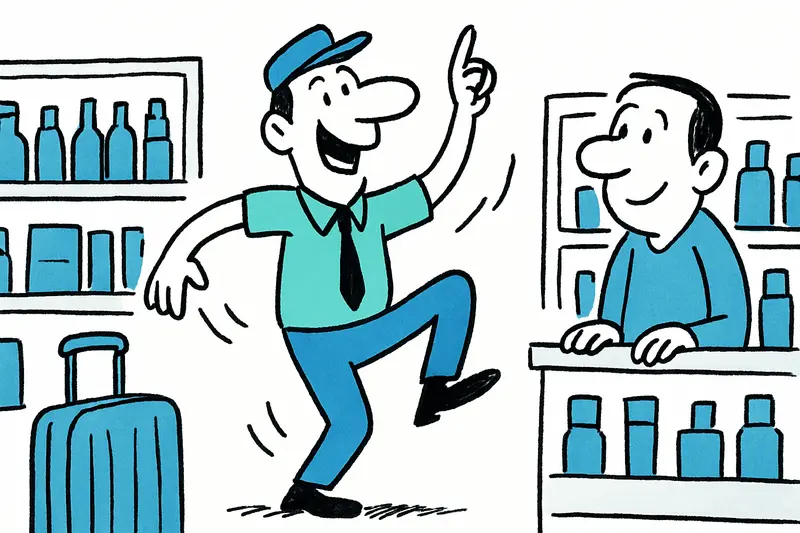
In the departure hall of Palma sometimes exactly what you hope for on a holiday flight happens: someone unexpectedly spreads good cheer. A TikTok clip recently shows an employee of a duty-free shop dancing during his shift. The video spread quickly and now has around 13,000 likes — enough for people beyond the island to pause for a moment and smile.
Anyone who has ever hauled luggage across Palma's quayside toward the terminal knows the soundscape: the rattle of suitcases, announcements in Spanish, Catalan and English, and the smell of espresso and fresh croissants from the cafés at the gates. It is in this setting, between shelves of sunscreen and spirits, that the clip unfolds. The man moves unobtrusively, with that slightly silly exuberance that only genuine good spirits produce. Colleagues watch him, passengers stop for a moment, some film — nothing staged, more a spontaneous, human moment.
Scenes like this work online because they feel authentic. In times full of travel warnings, changing flight schedules and long queues, a short dance does two things: it reminds us of life's unpredictability and that places like airports can also be small stages. For locals it is a piece of Mallorca they'd happily show — not a polished postcard, but a mood you can sense if you listen and look closely.
The island also gains a few pleasant side effects. First: it sends a friendly impression out into the world — travelers share the video and suddenly Palma stands for something everyday and likable. Second: it gives a face to the people who work with tourists daily; they often remain invisible behind controls and counters. A viral clip shows that there are people with humor and personality working there. Third: guests who see such a video arrive with different expectations — a smile rather than only the purpose of transit.
Of course there are rules at the airport, safety procedures and clear routines. The same applies to the daily work of shop staff. In practice, however, small performances like this can be fitted into a shift without disrupting procedures: a few seconds of music, a quick move between the shelves, and then back to the receipt. Colleagues say nothing dramatic in the clip; they react with a pat on the shoulder or a quiet laugh — much like neighbors admiring a well-kept geranium balcony.
The scene also has a simple but effective lesson: mood is contagious. A stressed passenger who was just grumbling about misplaced luggage exhales, looks up and smiles. It is a small everyday contribution to the island's harmony. In the cafés along the Avenida mopeds roar, tour guides chirp along Passeig Mallorca, and at the gate a quiet bit of music from a video clip suddenly plays — a moment that brightens the day for many.
What remains? Perhaps the idea that joie de vivre doesn't have to wait for big events. Mallorca thrives on such small encounters: a seller with humor, a server with conversation, a neighbor watering the olive tree. Next time you're passing through the airport and hear the suitcases roll, look out for the people behind the counters. A smile costs nothing, but it can shorten the wait.
If the dancer uses the shelves as a stage again, he may be recognized more often. Whether that opens career opportunities or simply provides a cheerful moment — either would be charming. For the island, it is a reminder that Mallorcan hospitality doesn't only happen in hotels but also between duty-free shelves, on the way to the gate and in the brief encounters we have along the way.
Frequently asked questions
What is the best time of year to visit Mallorca for a beach holiday?
Is the water in Mallorca suitable for swimming throughout the year?
What should I pack for a trip to Mallorca in spring or autumn?
What are good family-friendly activities to do in Mallorca?
How can I get around Mallorca without a car?
Which parts of Mallorca are best for scenic views and photography?
Are there easy day trips from Mallorca's main towns?
What should I know about Mallorca's weather patterns and wind?
Similar News

When the Tap Only Runs Sometimes: Why Municipalities in the Balearic Islands Are Now Rationing Water
Deià, Valldemossa, Esporles, Sóller and several places on Menorca are scaling back water supply. Who is responsible, why...
Battle for the Ramp: Why Cala Gamba Needs More Than Enforcement
The Guardia Civil intervened in Cala Gamba — residents breathed a sigh of relief, but unease remains. Key question: Are ...

Stolen Motorcycle in Palma: Fatal Crash in Coll d'en Rabassa Shortly After Theft
A motorcycle parked on Plaza Miquel Dolç in Son Gotleu was reportedly stolen in the early hours. Hours later two men cra...
When More Guests Mean Less: Mallorca's Restaurants at the Limit
Despite record visitor numbers, the revenues of many restaurants are shrinking. Why more visitors don't automatically me...
Ballermann 2026: Heat, crowded promenade and rising prices – how much longer?
Bright sunshine, over 35 degrees in the shade and busy venues at Playa de Palma: Tourists enjoy the parties, restaurateu...
More to explore
Discover more interesting content

Boat Tour with BBQ along Es Trenc Beach
Private transfer from Mallorca Airport (PMI) to Pollensa
