
Debris by the Pool, Fear in the Streets: What to Do About the Squatted Hotel in s'Arenal?
Debris by the Pool, Fear in the Streets: What to Do About the Squatted Hotel in s'Arenal?
For weeks people have been living in a vacant hotel on Rua Girona in s'Arenal. Trash, noise and insecurity plague residents. Key question: Why does the building remain open?
Debris by the Pool, Fear in the Streets: What to Do About the Squatted Hotel in s'Arenal?
Key question: How can a half-decayed building in a busy holiday area remain occupied for weeks?
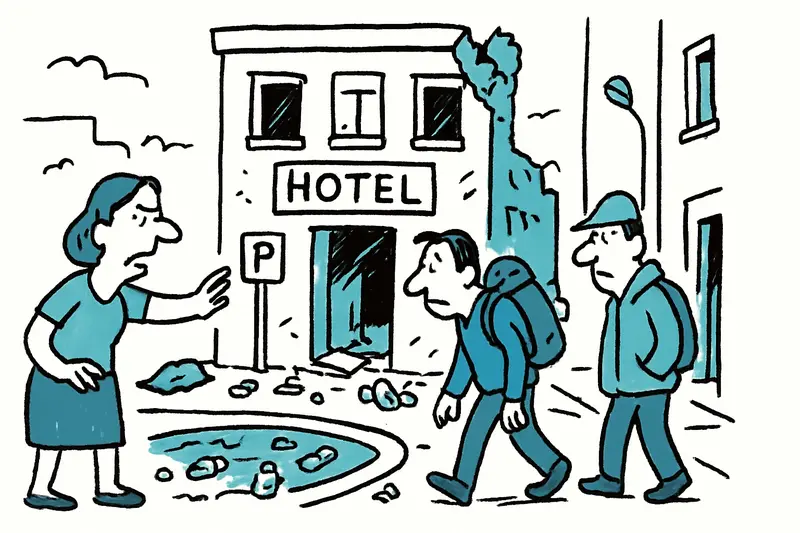
The scene is hard to miss: an abandoned hotel on Rua Girona in s'Arenal, a pool piled with cans, clothing and debris, signs with prices in pesetas, a decommissioned elevator and a makeshift opening through which people come and go. Local resident M. (name changed) says that people have been living in the sparse rooms for about a month. For parents, shopkeepers and employees nearby this is not an abstract problem: schools and shops are within walking distance, and the daily unrest is palpable. Residents have also complained about broader municipal waste issues in other reports such as Garbage Heaps in s'Arenal: Hoteliers Demand Rapid Help — and Turn Up the Pressure.
Anyone passing by can hear the clatter of a shopping cart, the tinkling of glass, occasionally a quarrel. At night the building often lacks water and electricity; light comes only from scattered mobile phones or external lamps. The people living there describe different profiles: job seekers, travelers, people with drug dependencies, but also those who have simply found a makeshift, homeless-like shelter. This mix creates a feeling of insecurity among neighbours. Overflowing containers and citizen protests have been part of the wider context, as covered in Trash Chaos in s'Arenal: Residents Mobilize — Demonstration in Front of the Town Hall.
In short: the situation is messy, noisy and vulnerable. And yet the gate stands open. The question everyone asks: why does no one intervene more decisively — police, municipality, owner?
Critical analysis: the situation arises from several converging causes. On the one hand, there appears to be a lack of reliable owner responsibility: a vacant hotel without basic protections invites squatters. On the other hand, the legal paths to eviction are often lengthy. Even when the police or Guardia Civil appear on site, immediate forced intervention is in many cases legally limited as long as there is no acute criminal offence. Thirdly, there is a lack of visible coordination between security forces, social services and local government: homeless people often need more than just control, and neighbours expect protection and quick solutions. Comparable problems with squatters have been reported elsewhere, for example Who Acts First? Squatters in Santa Margalida Cause Trouble in Half-Finished Housing Blocks.
What rarely appears in the public debate is the owner's responsibility. Local households pay the price: increased insecurity, noise, littered green spaces. At the same time the social dimension is neglected. Who are the people in the building, what led to their situation, what health and care needs exist? As long as these two sides — property protection and humane support — are not considered together, persistent problems will arise. Examples of neglected squatted complexes underline the stakes, see Enough is enough: Can Picafort's neglected squatted Espigol Beach complex and the failure of those responsible.
Everyday scene from s'Arenal: a schoolchild hurries along Rua Girona with a backpack on their back, a pile of disturbed rubbish is passed by, and a conversation drifts from a side street at half volume. In the bar opposite the owner mumbles about nighttime noise. The sun hangs low and the smell of the sea mixes with that of stagnant water in the pool. These scenes are small, but they add up to a noticeable exhaustion in the neighbourhood.
Concrete solutions that could take effect immediately:
1) Compel owners to secure properties: The municipality should examine whether existing local regulations can be enforced to obligate owners to lock up vacant buildings and remove hazards. Fines for non-compliance would be a lever.
2) Fast, legally compliant eviction procedures: Police, Guardia Civil and city administration need coordinated, expedited procedures so clear criminal offences or dangerous situations can be cleared quickly without delaying processes for months.
3) On-site social intervention: Mobile social work teams should visit the building regularly to establish identities and assess care needs. Those who need support must be offered help instead of being simply turned away.
4) Prevention through municipal reuse concepts: Vacant tourist properties could be temporarily activated for social housing projects, craftsmen's workshops or municipal storage instead of being left to decay unguarded.
5) Neighbourhood hotline and regular information duties: Residents should be informed about measures; a reporting point with clear feedback reduces the feeling of being left alone.
What is missing from the debate is a clear plan for who bears responsibility — and a timeframe. Many complaints remain as exchanges of words; the damage continues to grow. The mix of social need and neglected property demands a dual strategy: protection of public space and concrete help for those in need.
Pointed conclusion: An open hotel in a holiday zone is not only an aesthetic issue; it is a focal point for security concerns and social fractures. Those who now rely only on short-term police presence overlook the causes. But those who offer only charitable measures ignore the legal duties of the owner. The solution lies at the intersection: binding security obligations, accelerated eviction procedures and practical social work on site. Until that happens, Rua Girona will remain a part of Mallorca where neighbours do not like to look out of their windows at night.
Frequently asked questions
What’s going on with the abandoned hotel on Rua Girona in s'Arenal and why is it worrying neighbours?
What should residents in Mallorca know about dealing with squatters and vacant buildings?
How do eviction procedures work for squatted properties in Mallorca?
What role do social services play when a vacant hotel attracts people in Mallorca?
Should owners be required to secure vacant properties in Mallorca?
Is there a plan to reuse vacant tourist properties for social housing in Mallorca?
What can neighbours do to stay informed and feel safer around a squatted building in Mallorca?
What wider safety considerations should families in Mallorca think about near vacant hotels?
Similar News

Disguised Thieves on Palma's Shopping Street: Who Protects Shops and Shoppers?
For about eight months traders around Sant-Miquel have reported daily thefts, disguises and threats. Why do existing mea...

Long Weekend in Mallorca: Sun Returns, Sunday Nearly Summery
After several rainy days, Aemet brings relief: isolated showers on Friday, then milder, sunnier weather — Sunday up to n...

Ketamine, rTMS and Short-Term Intensive Therapy: A Critical Look at the Dr. Scheib Concept
A new treatment package combines ketamine-assisted psychotherapy, rTMS and neurofeedback in a two-week intensive phase. ...

When the Golf Swing Aches: Help from Palma for Back, Knee and Shoulder
Many people head to the tees in Mallorca – but a sharp pain can end the round. An orthopedic clinic in Palma combines di...

Finally Rain on Mallorca: Lluc and Llucmajor Lead — and Why It's Good for the Island
Heavy rain hit the Tramuntana hinterland around Lluc on Wednesday. Figures, everyday impressions and a pragmatic outlook...
More to explore
Discover more interesting content

Can Cap de Bou

Townhouse Lleo 72
