
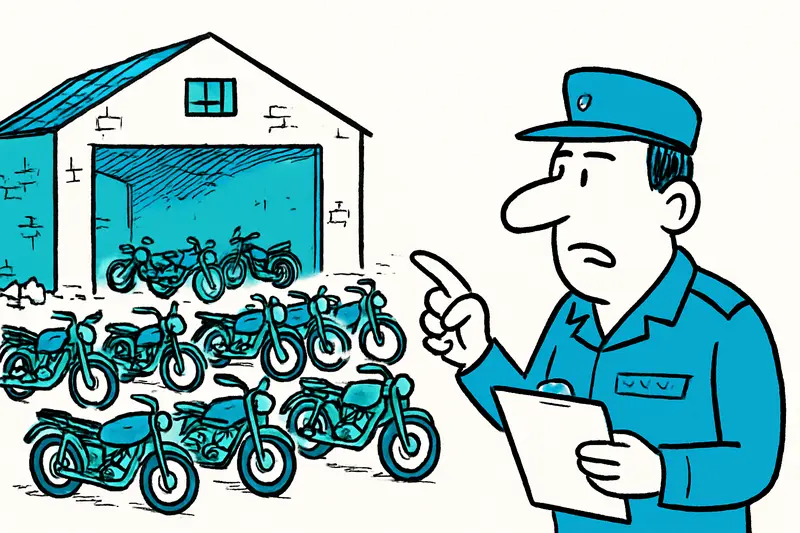
Stolen motorcycles in vacant factory: Guardia Civil finds 19 vehicles
In Inca, investigators discovered 19 motorcycles stolen between April and June. In an abandoned factory near Selva, many vehicles were found dismantled and ready for export. One person was arrested.
Stolen motorcycles in vacant factory: Guardia Civil finds 19 vehicles
Suspicion: Parts are being dismantled and shipped abroad
The Guardia Civil seized a total of 19 motorcycles in a vacant factory on Mallorca that had been stolen in Palma between April and June. The operation, called 'Blackmotor', also led to the arrest of one person suspected of storing and tampering with the vehicles. Investigators found many machines fully or partially dismantled, apparently prepared for shipment abroad.
Key question: How could thefts on this scale be systematically organized on a mid-sized island – and what is missing to stop similar networks earlier?
Brief analysis: The available facts point to a division of labor and a targeted approach. These are not isolated incidents but a series of thefts over several months, with small motorcycles particularly in the focus. The storage in an abandoned factory near Selva and the partial dismantling of the vehicles suggest that the perpetrators sought not only quick profit from local resale but organized an export route. Such structures require transport routes, interim storage and buyers – and they emerge more easily when police, dealers and port authorities do not collaborate closely enough.
What is often missing in public debate: the perspective of those affected in everyday life. For many scooter owners, a theft means not only a material loss but also restrictions in daily life – commuters, delivery riders, and families who rely on affordable mobility. At the same time, it often goes unexamined how building plots, vacant industrial halls and lack of checks at unloading points can become logistics hubs for illegal exports.
An everyday scene to put it in context: On a hot afternoon in Palma, at 32°C, you can hear market traders at the Plaça Major talking, suppliers swearing because their replacement scooter is missing, and in Inca the dull clack of boots outside the Guardia Civil building. On the way to Selva you pass vacant lots where factories once stood – places that can quickly turn into problematic storage sites if no one looks closely.
Concrete solutions:
- Better coordination between authorities: police, port and airport controls, and municipal monitoring of vacant industrial sites should systematically share information to detect suspicious shipments earlier.
- Registration and security: rules for safety equipment on scooters (better and registerable locks, visible markings) and support programs for particularly vulnerable groups can have a preventive effect.
- Checks at export points: targeted spot checks and increased inspections of unusual vehicle exports would make shipping dismantled machines more difficult.
- Raising neighborhood awareness: reporting chains for vacant properties and incentives for owners to secure or report derelict halls so these places do not serve as interim storage.
Conclusion: The seizure of 19 motorcycles is a success for local investigators, but the case raises questions that go far beyond a single factory hall. If thefts occur systematically and are dismantled on site, a rethink is needed: more prevention, better communication between agencies, and the reclamation of vacant spaces as part of a security strategy. Otherwise the problem will simply move from one hall to the next.
Investigations are ongoing; whether further arrests or forensic evaluations will follow remains open. For affected scooter owners this means for now: stay vigilant, report unusual activity and secure your vehicles as well as possible.
Frequently asked questions
What is the best time of year to visit Mallorca for outdoor activities and beach days?
What should I pack for a Mallorca trip in terms of clothing and essentials?
Is it safe to swim at Mallorca’s beaches, and what should I watch for?
What are some must-do activities for a first trip to Mallorca?
What is Mallorca's weather like through the year, and how should I dress?
Is a day trip to Palma worth it for a first visit to Mallorca?
Are Mallorca’s beaches suitable for families with young children?
How accessible are hiking trails in the Serra de Tramuntana for beginners?
Similar News

Storm in Majorca: 75 Responses, Uprooted Trees and Beached Boats – Who Will Draw the Lessons?
A sudden thunderstorm swept over the islands on Thursday evening, leaving uprooted trees, damaged boats and disrupted su...

Daily new boats: Mallorca and the Balearic Islands under pressure from rising arrivals from Algeria
For months, arrivals of boat migrants from Algeria have remained at a high level. Places are lacking, unaccompanied mino...

Who Belongs at Ballermann? The Dispute Between Mia Julia and Isi Glück and What It Reveals
The public exchange between two Megapark singers exposes gatekeeping, accusations of bullying, and the problem of unrequ...

At 16 to Palma: How a German Padel Talent Seeks His Opportunities on the Island
Jonas, 16, will move to Palma at the end of August to train at a padel academy and complete his Abitur at the German sch...

Why €62,890 in a suitcase at Palma airport is a problem — and what we must learn from it
The Guardia Civil and customs seized nearly €63,000 in suitcases. The story is more than a criminal case: it raises ques...
More to explore
Discover more interesting content

Boat Tour with BBQ along Es Trenc Beach

Private transfer from Mallorca Airport (PMI) to Pollensa
