
Why €62,890 in a suitcase at Palma airport is a problem — and what we must learn from it
Why €62,890 in a suitcase at Palma airport is a problem — and what we must learn from it
The Guardia Civil and customs seized nearly €63,000 in suitcases. The story is more than a criminal case: it raises questions about controls, information policy and the role of cash in Mallorca.
Why €62,890 in a suitcase at Palma airport is a problem — and what we must learn from it
A controlled seizure in Palma is a reason for a closer assessment
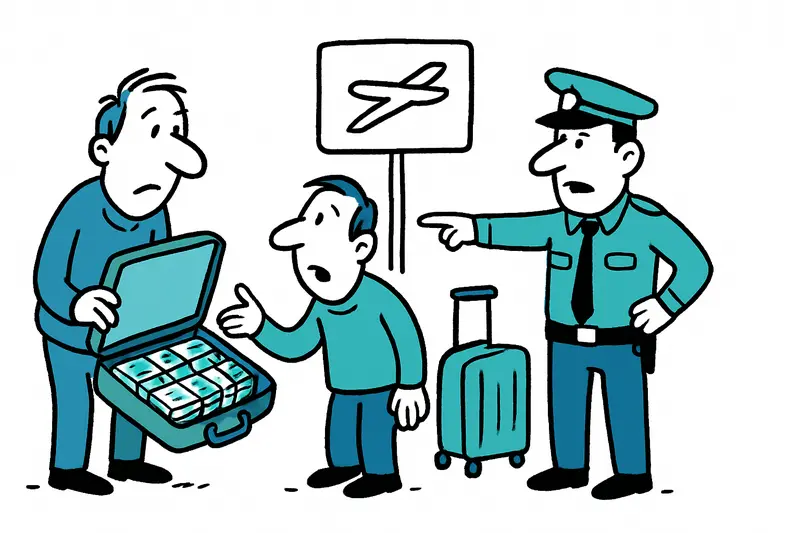
The Guardia Civil and customs recently stopped two travelers at Palma airport and found a total of €62,890 in cash in their suitcases, wrapped in plastic and hidden among personal items. The men had arrived on a flight from the Dominican Republic via Madrid and apparently tried to leave the terminal immediately without declaring the amount as required. The facts are simple; the background is less so. (See Arrests at Palma Airport: Two employees detained after alleged thefts.)
Key question: What does this discovery say about the effectiveness of our controls, the reasons people move such large amounts of cash, and how well protected Palma is as an entry and exit point for illicit money flows?
At the level of immediate action, everything went as intended: trained officers noticed anomalies — hurried steps, evasive answers — and responded. A baggage carousel, an overcrowded information sign, the clatter of wheels on tiles: everyday sounds at the airport until routine is interrupted by a careful question. That X-ray images revealed the sum shows that the technical means work. But detection alone is only the beginning.
Critical analysis: The discovery of large cash amounts confirms that physical control is still necessary. At the same time, the case reveals weaknesses. Cash remains anonymous and mobile; it does not pass through the regular financial system and is therefore harder to trace. The fact that the sum was hidden in luggage suggests a deliberate circumvention of reporting obligations — a practice that can lead to separate criminal and financial investigations. It remains unclear where the money came from and what it was intended for. Without transparent follow-up investigations, the discovery remains a moment, not a narrative.
What is often missing in public discourse is context: the reporting threshold for cash when entering and leaving the EU is €10,000. That's a clear rule — but no one talks enough about it where many travelers pass by: at check-in, at baggage claim, at the taxi rank. It is equally rare to explain why cash movements can be problematic: they enable tax evasion, black market payments, and the financing of illegal activities. (See Accidentally Detained: When a Wrong Turn After Returning from Mallorca Becomes Costly.)
Another blind spot is the economic perspective. In Mallorca, an island that lives off tourism, there are legitimate reasons to carry cash: payments in countries of origin with weak infrastructure, supporting family members, errands on site. These everyday scenes should not be criminalized — but they must take place within a framework that prevents abuse. (See After Cash Robbery in Playa de Palma: What the Risky Escape in a Stolen Rental BMW Reveals About Mallorca's Security Gaps.)
Everyday scene: Imagine the baggage claim in Palma, belt 7, next to the small café where the smell of strong coffee wakes the travel-weary. Two men push their trolleys, hurry past the information desk. The driver at the taxi rank looks up, already on his way to his next fare. The check happens quietly, calmly. For most travelers the day remains normal. For the authorities, a paperwork war begins that nobody in the departure lounge wants to see. (See Disguised as a Tourist: How an Alleged Thief Stole Suitcases and Watches in Palma.)
Concrete solutions, pragmatic and local:
1) On-site prevention: Clear notices at entrances and exits about the reporting obligation from €10,000, in German, Spanish and English. Short info brochures at check-in could achieve more than subsequent controls.
2) Targeted checks instead of blanket hustle: Risk profiling that is based not only on country of origin but on behavioral observation, luggage anomalies and travel routes — without discrimination.
3) Cooperation across borders: Exchange with departure and transit authorities, here with Madrid, in the Dominican Republic and with financial supervisors, to make the origin and destination of sums traceable.
4) Strengthen alternatives to cash: Promote secure digital transfer methods and information campaigns for travelers and small businesses operating in two currencies.
5) Aftercare and transparency: When money is seized, follow-up investigations should be systematically documented and published anonymously in frequency reports. This builds trust and provides data for better prevention.
Sharp conclusion: The discovery of almost €63,000 was not a stroke of luck, but the result of functioning controls. It is also a wake-up call: Mallorca needs greater clarity in information, smarter opportunities for prevention and stronger networking among authorities — not only to prevent crime but to avoid unnecessarily burdening travelers and honest traders. Those standing at the baggage carousel want to go on holiday or return home. The island's task is to enable both: security without harassment.
Frequently asked questions
When is Mallorca's weather most pleasant for a beach break?
What should I pack for a trip to Mallorca?
What are the top beaches in Mallorca and what should I expect?
Which areas in Mallorca are good for families?
How can I get around Mallorca without a car?
Is it good for swimming outside peak summer?
What should I wear in Mallorca evenings?
What are good day trips from Mallorca?
Similar News
When a Taxi Fare Dispute Turns Violent: What the Magaluf Case Reveals About Safety and Prevention
In Magaluf a 2023 dispute over a taxi fare escalated: an 18‑year‑old British man is accused of seriously injuring a taxi...
Bloody clash in Canòdrom Park: What is missing in addressing violence on Mallorca's streets?
At midday on October 23, an 18-year-old man was critically injured in Canòdrom Park in Palma. The attack raises question...
Palma raises bus fares: Who pays the bill for public transport?
Single tickets rise from €2 to €3, airport trips have a reference price of €4.50. It remains unclear whether residents w...
Palma's New Indoor Pool: Sea View, Sunbeds and Space for Everyone
At Aigua Dolça, near the Paseo Marítimo, Palma has a new municipal indoor pool. For a small fee people can now train, re...
How Four Burglars Emptied Ten Houses with a Simple Trick — and What It Means for Mallorca
Four men used the impressioning technique, posed as delivery workers and accepted two years in prison. A reality check f...
More to explore
Discover more interesting content

Can Cap de Bou

Townhouse Lleo 72
