
When the Sand Is No Longer Home: Campos Bans Pets at Es Trenc
The municipality of Campos has excluded dogs, cats and horses from beaches and bathing areas from March to October — including the natural beach Es Trenc. A reality check from everyday island life explains what this means in practice, which questions remain open and which solutions are possible.
When the Sand Is No Longer Home: Campos Bans Pets at Es Trenc
Key question: Does the ban protect nature — or simply shift a problem without offering alternatives?
This summer there is a clear signal in Campos: dogs, cats, horses and other pets are no longer welcome on all beaches and bathing spots from March to October. The decision is contained in the "General Ordinance on Public Order," with Article 38 as the legal basis. Guide dogs for the blind remain exempt. In addition, the municipality requires the picking up of dog waste, forbids feeding on public streets and regulates noise disturbances from barking dogs on terraces and courtyards.
At first glance that sounds simple and for some even reassuring. In the early morning, when the fishing boats still rock in the port of Colònia de Sant Jordi and the sand of Es Trenc is still freshly raked by the wind, you see dog owners with their routines: short walks, a water bottle, waste bags. For them many things now change. Es Trenc, long a place where people and animals jumped into the sea side by side, is blocked off from March — at least on paper.
Critical analysis: The ordinance does not automatically protect the coast. It raises several practical and legal questions. First: The definition of "bathing area" is very broadly drawn — it is enough that people regularly bathe in a coastal section during the season. Does that mean even small, remote coves without signs are suddenly off-limits? Who decides that? Second: How will it be enforced and sanctioned? A general ban is difficult to enforce across the board without personnel on site or a constant police presence. Third: The municipality refers to hygiene and health — but publicly accessible figures on complaints, washed-up waste or concrete incidents that would justify a complete closure are missing.
What is missing in the public discourse: transparency and alternatives. There is a lack of open dialogue with residents, dog owners, conservation organizations and the tourism sector. Also missing are tested alternative options for pet owners: Where should dogs be allowed outside the restricted hours? Which beaches are suitable? A map with designated dog sections, drinking water points or disposal stations is missing. And: there are hardly any reliable statements about how the ban connects with the boundaries of the Es Trenc-Salobrar de Campos Natural Park, which are set by royal decree — in other words whether existing protection rules are simply being overridden or whether the municipality is only complementing them.
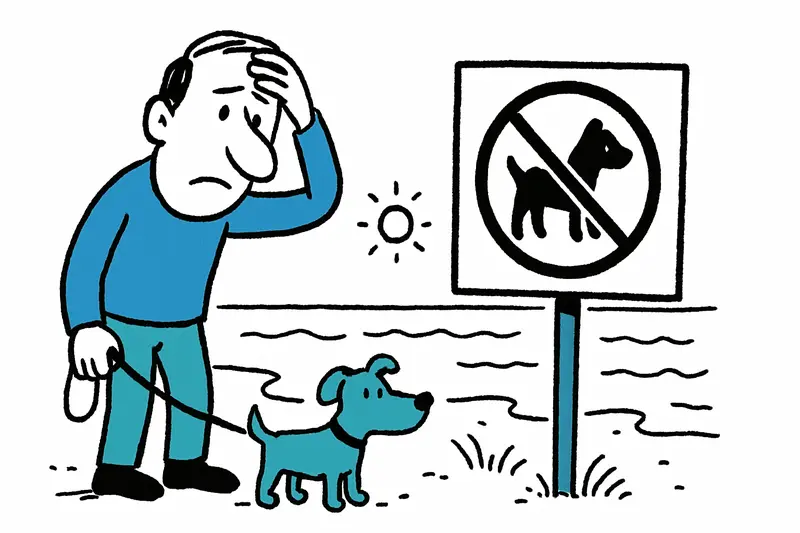
Everyday scene from Mallorca: On the PM-10, shortly before Colònia de Sant Jordi, cars with rattling bike racks often stop in the morning. An older man with a pinscher gets out, looks at the beach in the distance, then at the prohibition sign at the access. He puts his hand to his forehead, sighs, rolls up the windows and drives along the coastal road — the dog on a leash, not knowing where to go. Scenes like this are likely to become more frequent: dog owners oscillating between breaking the rules, losing leisure opportunities and wanting to be considerate of others.
Concrete approaches — how Campos could regulate better:
1) Designated dog times and areas: Instead of a blanket restricted area, certain sections could be opened to pets at limited times (early morning, late evening) or small designated dog zones could be created with clear signage.
2) Infrastructure: Water points, waste bins, free dog-waste bag dispensers and signs with behavioral rules reduce conflicts and make enforcement less necessary.
3) Transparent data and communication: Campos should publish figures on complaints, incidents and ecological measurements and explain which concrete problems the ban is intended to solve.
4) Transition periods and guidance: Residents and holiday guests need lead time. Information campaigns, an implementation timeline and contact points build acceptance.
5) Cooperation with conservation authorities: If ecological damage is proven, measures must target the areas where animals disturb the most sensitive zones — for example bird nesting sites or dune systems.
6) Fines and targeted enforcement rather than blanket bans: If violations take concrete forms, fines and targeted checks should be applied. Blanket prohibitions often seem disproportionate.
Bottom line: A ban looks at first like quick and clear order policy. In practice, however, the municipality risks losing legitimacy if the measure is not explainable, not well thought out and remains without alternatives. Es Trenc is a coastal area worth protecting — few dispute that — but protection does not automatically mean excluding pets; it means smart spatial and temporal planning, communication and practical offers for dogs and owners. Campos is now under obligation: to justify, to explain and above all to offer solutions before the next sunrise leaves another frustrated walker by the roadside.
Frequently asked questions
What does the Campos pet ban at Es Trenc mean for dog owners this summer?
Why did Campos ban pets at Es Trenc and what are the concerns?
What defines a 'bathing area' under the Campos ordinance for Es Trenc?
How will enforcement work for the Campos pet ban at Es Trenc?
Are there pet-friendly alternatives or designated areas near Es Trenc?
What practical tips can help dog owners during the ban at Es Trenc?
Does the Es Trenc ban relate to the Natural Park boundaries?
What are the community voices around the Campos Es Trenc ban?
Similar News

Sunset Society: Rooftop Evening at Aethos Brings Together House Beats, Sea Views and Neighbors
A warm August night at the RAIG Rooftop Bar: house music, white outfits and an audience of holidaymakers, residents and ...

Alarm at the Blue: Why Large Predators in the Balearic Sea Leave Almost No Traces
An eDNA study off Cabrera found hardly any traces of mako, hammerhead or great white sharks. Why the result concerns not...
After the Death of the Main Defendant: What Happens Now in the International Fraud Case
The 64-year-old main defendant in the alleged fraud network has died unexpectedly. For the victims in Mallorca and Swede...

Ibiza: Motorcyclist killed in Sant Josep after collision with car – a wake-up call for the roads
A 35-year-old motorcyclist died in a collision with a car in Sant Josep on Ibiza. The Guardia Civil is investigating. Wh...

Fatal accident at S'Estanyol: Who bears responsibility for license-free rental boats?
A 69-year-old man died when a 4.5-meter boat that can be rented without a license capsized off S'Estanyol. The Guardia C...
More to explore
Discover more interesting content

Boat Tour with BBQ along Es Trenc Beach

Private transfer from Mallorca Airport (PMI) to Pollensa
