
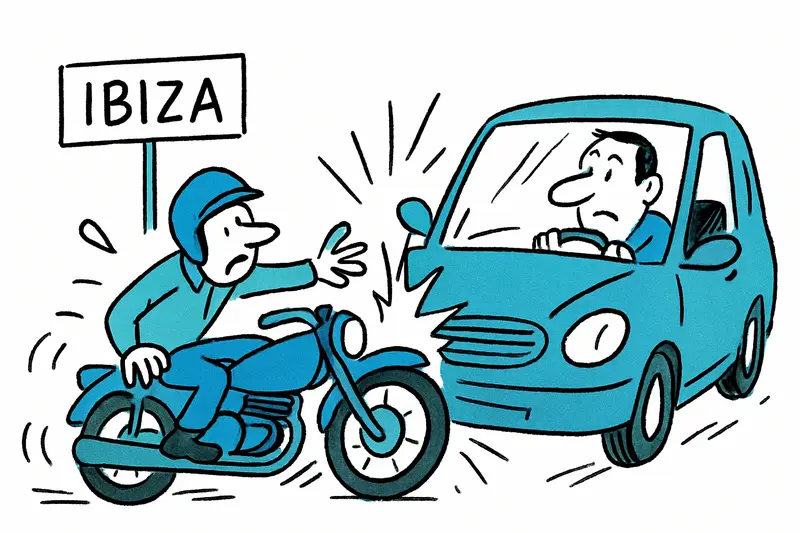
Ibiza: Motorcyclist killed in Sant Josep after collision with car – a wake-up call for the roads
A 35-year-old motorcyclist died in a collision with a car in Sant Josep on Ibiza. The Guardia Civil is investigating. Why such accidents still end so brutally is the central question.
Ibiza: Motorcyclist killed in Sant Josep after collision with car – a wake-up call for the roads
An early accident, open questions and concrete demands
On Tuesday morning a sharp accident occurred on Ibiza: a 35-year-old motorcyclist collided with a car in the municipality of Sant Josep de sa Talaia. Emergency services arrived shortly after the emergency call, and an advanced life support unit was involved. Despite the quick arrival of paramedics and police, the responders could only confirm the rider's death. The traffic unit of the Guardia Civil has taken over the investigations and regulated traffic around the scene of the accident.
Key question: Why do collisions between two-wheelers and cars on our islands still so often end in death, even though checks and rescue systems exist, as highlighted in More traffic fatalities in the Balearic Islands?
At first glance, these are the known facts: a collision in the morning hours, the rider was thrown several metres through the air after the impact and succumbed to his severe injuries. Beyond that, nothing definitive is yet known about the cause of the accident, speed or visibility conditions. This is exactly where the problem begins: media reports and initial police information provide the fragments, but the big questions remain open, a pattern also visible after other high-profile collisions such as Why Are So Many Motorcyclists Dying on Mallorca? A Reality Check after the Llucmajor Accident.
From the perspective of a local resident, it quickly becomes clear how vulnerable motorcyclists are in the villages. In Sant Josep, when the baker opens and the last night revellers return from the beach, delivery vans, tourist scooters and commuter cars mix on narrow roads. At some junctions a clear right-of-way rule is missing, and in other places signs are barely readable because of sun and dust. The sound of a passing ambulance or the chirping of cicadas is part of everyday life – and occasionally the screech of brakes, before an accident abruptly stops everything.
An objective analysis points to several recurring factors that make such accidents more likely: confusing junctions in village centres, missing or weathered road markings, inappropriate speed, lack of separation between motorised traffic and pedestrians, and the poor visibility of motorcycles in dense morning traffic. The behaviour of individual road users – risky overtaking manoeuvres, distraction, misjudgement of speed – also plays a role, but cannot be determined without thorough investigations, as seen in cases like the Fatal accident near Capdepera: motorcycle collides with microcar on MA-4040.
What is often missing in the public debate are preventive, locally applicable measures that go beyond appeals to drive more carefully. Instead of relying solely on fines, municipalities and the island government need tangible interventions: clearer reflective markings at junctions; additional 30 km/h zones in village centres; protected waiting islands and lowered curbs at narrow spots; more mobile checks during times with high two-wheeler traffic; information campaigns specifically aimed at motorcyclists – not moralising, but practical: visibility, distance, defensive riding techniques.
The emergency chain can also be optimised: precise location markers on popular routes and access roads to coves, training for first responders in busy tourist centres and cooperation with local businesses (hotel porters, taxi drivers) so that initial measures can begin faster. Technically, better GPS-supported reporting systems for island roads are also conceivable so that rescue services can be directed more precisely to the accident site.
Concrete, short-term implementable proposals for Sant Josep and similar places on the islands:
1) Increase visibility: reflective road markings, new signs and controlled removal of obstructive vegetation at visibility triangles.
2) Calm junctions: where possible, create small roundabouts or clearly marked right-of-way rules.
3) Speed controls on main roads near towns and targeted checks during commuter times.
4) On-site education: workshops for motorcyclists in cooperation with driving schools and local clubs.
5) First-aid initiatives: defibrillators in public places and training of staff in tourism businesses, a need underlined by incidents such as the Serious accident near Santa Eugènia.
What counts now is less sentiment than precision: the Guardia Civil must reconstruct the sequence of events; only then can targeted lessons be drawn. For the people on site, however, it means not waiting. The combination of simple infrastructure maintenance, targeted traffic planning and locally anchored safety offers can significantly reduce the danger for motorcyclists.
Conclusion: This death is tragic and painfully close — a 35-year-old life ended in a single collision. It should serve as an alarming prompt: we need no blanket accusations, but concrete, verifiable steps at the places where people travel daily. Sant Josep and the other municipalities in the Balearics would do well to address the well-known weaknesses of the roads quickly, before the next report comes.
Frequently asked questions
What is the best time to visit Mallorca for pleasant weather?
Can you swim in Mallorca year-round?
What are the best ways to get around Mallorca?
What should I do in Mallorca if I want outdoor activities?
Which areas are best for family-friendly beaches in Mallorca?
What should I pack for a summer trip to Mallorca?
What are essential sights in Palma, Mallorca for a short visit?
Are there any safety tips for beach days in Mallorca?
Similar News

Who will clean up? Illegal rubbish heaps on the highway near Son Gual drive residents onto the streets
For months, construction debris and household waste have piled up along the highway between Palma and Manacor near Son G...

Amundi takes over Bikini Island & Mountain Port in Sóller – many questions remain open
The French asset manager Amundi has acquired the four-star Bikini Island & Mountain Port hotel in Sóller from an Austria...

Silvia was allowed to see the sea once more – a small farewell in Port de Soller
A team from the Balearic health service IB-Salut fulfilled a terminally ill woman's wish: one last trip to the water in ...
Magaluf: Imprisonment for Beach Club Employee after Theft of a Bag — What the Ruling Overlooks
A former dishwasher received a one-year prison sentence for stealing a Louis‑Vuitton bag. The appellate court upheld the...

Road collapse at Port de Valldemossa: Who will pay for the next wave of damage?
A section of the MA-1131 near Port de Valldemossa slipped after heavy rains from cold front "Adam". Residents are strand...
More to explore
Discover more interesting content

Can Cap de Bou

Townhouse Lleo 72
