
Who will clean up? Illegal rubbish heaps on the highway near Son Gual drive residents onto the streets
Who will clean up? Illegal rubbish heaps on the highway near Son Gual drive residents onto the streets
For months, construction debris and household waste have piled up along the highway between Palma and Manacor near Son Gual. Residents complain about the stench, traffic hazards and unclear responsibility — a coordinated response is missing.
Who will clean up? Illegal rubbish heaps on the highway near Son Gual drive residents onto the streets
Who owns the ditch and who takes responsibility for health and traffic safety?
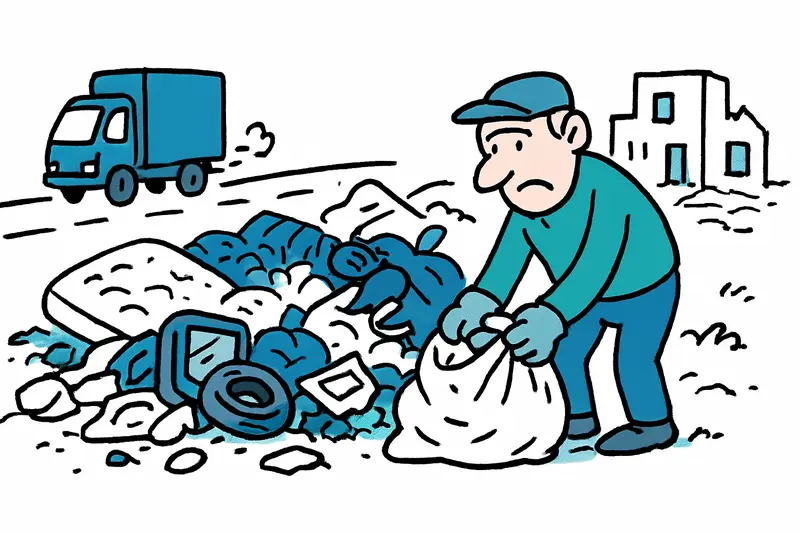
Early in the morning, when commuters pass the spot between Palma and Manacor at reduced speed, you first notice it: small plastic bags, then whole trailer loads of construction waste, finally mattresses and electrical appliances — all at the edge of the highway, just before the abandoned building that once served as a restaurant. Residents of Son Gual describe a musty smell after rain and the fine dust that stirs up when vehicles drive by. For many, this is no longer a temporary annoyance but a permanent condition.
Main question: Why does it take so long for a lasting, effective countermeasure against these illegal deposits to take effect? The situation looks like a classic case of gaps in responsibility. Locally, people name Emaya, the Algaida municipality and the island council as possible addresses for complaints; however, no clear, visible responsibility is assumed; similar disputes over responsibility and payment have arisen in other towns, for example Binissalem Suffocates in Waste: Who Cleans Up - and Who Pays?.
Critical analysis: Illegal deposits along roads do not arise by chance. It is often a combination of insufficient monitoring, a lack of disposal options for bulky or mineral waste and low chances of perpetrators being prosecuted. Where it pays to get rid of something quickly — for example, construction debris after renovations — a market for illegal transport emerges. As long as the cleanup is not immediate and permanent, an attracting effect sets in: where there is one bag today, there will be two tomorrow, and soon a whole pile. Similar large-scale illegal dumps have been reported elsewhere, such as Son Reus: Massive Dump on Finca Puts the Island's Responsibility to the Test, and this attracting effect is also visible in tourist areas, for example Garbage Heaps in s'Arenal: Hoteliers Demand Rapid Help — and Turn Up the Pressure.
In the public debate, the perspective of practical organization is often missing: Who clears away what and how often? Who pays for the removal of hazardous materials? How are residents supposed to document violations without a camera and without legal knowledge? These questions are discussed too little; instead, outrage over the sight dominates. Yet concrete procedures and assignments of responsibility are precisely what can make change possible.
A typical scene from everyday life: A van slows down, unloads something and disappears. An older man from Son Gual picks up paper blown from the embankment with gloves and complains that new loads keep appearing. The deserted façade of the former eatery — you can still make out the faded letters — thus becomes the silent witness to a neglected spot.
Concrete solutions: First, there needs to be a clear allocation of responsibility between municipal services, the local council and the island council — in writing, with a contact person and a response deadline. In the short term, rapid action helps: mobile cleanup teams that arrive within 48 hours to remove new deposits. In the medium term, intensified controls should follow: visible signs with reporting instructions, targeted checks of vans at entry and exit points and heavy fines for repeat offenders. Technically useful are also camera-monitored hotspots and a hotline through which residents can easily send photos with geotags. The island needs a cheaper and more accessible disposal option for construction waste — often it is not financially worthwhile for small contractors or private individuals to dispose of it legally.
In addition, preventive measures are important: information campaigns in building and garden centers, cooperation with local craft businesses and regular cleanup days involving municipalities, volunteers and neighborhood associations; similar civic mobilizations have occurred, see Trash Chaos in s'Arenal: Residents Mobilize — Demonstration in Front of the Town Hall. A joint action plan by all involved authorities would create clarity and pool resources.
What must be sharply criticized: without sanctions and without visible and repeated cleaning, any action plan remains purely symbolic. Those who have dumped illegally once expect the situation to calm down by itself — and it does not. So control plus consequences are needed.
Conclusion: It is no longer just an aesthetic problem. The deposits on the highway endanger traffic safety, burden the living environment of Son Gual and can affect public health if pollutants enter the soil. What we see here is a piece of administrative blindness manifested in piles of rubbish. A clear, easily reachable plan with responsibilities, mobile teams and controls would change a lot. And if the authorities cannot deliver that, the municipalities should jointly apply pressure — publicly and loudly, as the people along this route are slowly becoming.
Frequently asked questions
What is the best time of year to visit Mallorca for good weather and fewer crowds?
Is it safe to swim in Mallorca, and what about sea conditions?
What should I pack for a beach holiday in Mallorca?
How accessible is Mallorca by public transport for a first-time visitor?
Which beaches are family-friendly in Mallorca?
What should I know if I plan a day in Palma and the old town?
Are there scenic drives or hikes in the Serra de Tramuntana to consider?
What cultural tips or language basics help when visiting Mallorca?
Similar News

Amundi takes over Bikini Island & Mountain Port in Sóller – many questions remain open
The French asset manager Amundi has acquired the four-star Bikini Island & Mountain Port hotel in Sóller from an Austria...

Silvia was allowed to see the sea once more – a small farewell in Port de Soller
A team from the Balearic health service IB-Salut fulfilled a terminally ill woman's wish: one last trip to the water in ...
Magaluf: Imprisonment for Beach Club Employee after Theft of a Bag — What the Ruling Overlooks
A former dishwasher received a one-year prison sentence for stealing a Louis‑Vuitton bag. The appellate court upheld the...

Road collapse at Port de Valldemossa: Who will pay for the next wave of damage?
A section of the MA-1131 near Port de Valldemossa slipped after heavy rains from cold front "Adam". Residents are strand...
Pollença manages Cala Molins itself: Who pays — and what will it look like in the end?
Pollença town hall takes over planning for a coastal plot in Cala Sant Vicenç that has been used informally. The area is...
More to explore
Discover more interesting content

Can Cap de Bou

Townhouse Lleo 72
