
Storm in Majorca: 75 Responses, Uprooted Trees and Beached Boats – Who Will Draw the Lessons?
Storm in Majorca: 75 Responses, Uprooted Trees and Beached Boats – Who Will Draw the Lessons?
A sudden thunderstorm swept over the islands on Thursday evening, leaving uprooted trees, damaged boats and disrupted supplies. A critical assessment: what do we know, what's missing — and what needs to happen now?
Storm in Majorca: 75 Responses, Uprooted Trees and Beached Boats – Who Will Draw the Lessons?
Key question: Is our preparedness for such severe weather really sufficient?
On Thursday evening the sky over the islands turned into a short but intense backdrop of lightning and thunder. The state weather agency AEMET had forecast the thunderstorm front: it reached Ibiza around 21:00, moved on to Majorca around 23:00 and was over Menorca by about 01:00. In ports like Port d'Andratx eyewitnesses and measuring instruments had already recorded strong gusts earlier.
The raw numbers: the emergency center reported a total of 75 responses across the archipelago by Friday at 6:00. 31 of these were on Majorca. Reported incidents included 19 trees that had fallen onto roads, 14 trees that toppled away from streets, seven fallen traffic signs, five cases with obstacles or spilled liquids on roads and four hazards caused by landslides. In addition, boats suffered damage along stretches of coast such as Santa Ponça and Caló d'en Pellicer.
Does it sound like "storm over and move on"? Not quite. In the morning thirteen incidents were still open: interruptions to basic services in places such as Formentera, Felanitx, Sant Llorenç, Ses Salines, Es Mercadal and Mahón; some urban items still lay dangerously in public areas; four trees remained uprooted and one building was still flooded.
Critical analysis: many damages were caused less by rain than by wind. Storm gusts tear off branches, topple poorly anchored trees and set unsecured boats in motion. The pattern is known — and repeats itself. Sources of error are visible: poor tree maintenance in municipal areas, insufficient securing of small pleasure boats before the season, and inconsistent responsibilities between municipalities, island governments and private harbour operators.
What is underrepresented in public debate: long-term infrastructure checks and the budget question. It is not enough to clear up after every storm in the short term. Who pays for regular tree inspections along country roads and promenades? Who inspects moorings outside large marinas? How is coordination organised when a storm hits several islands in quick succession?
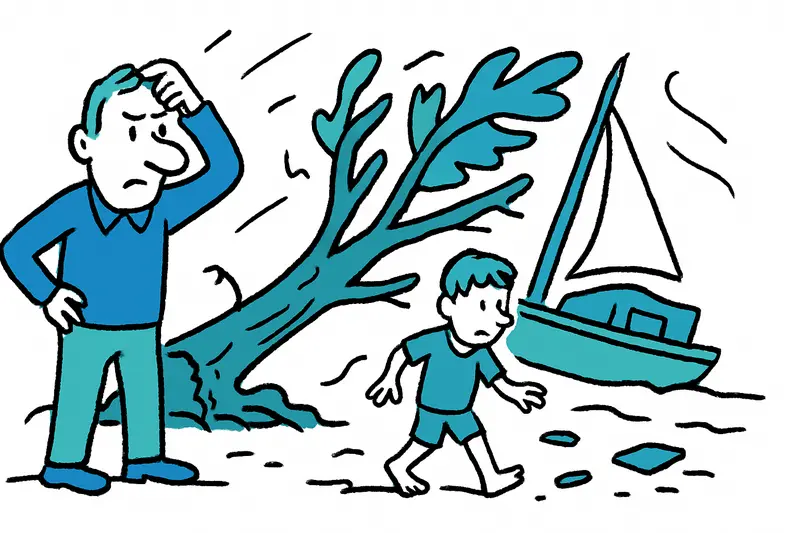
Everyday picture: early the morning after the storm you drive the coastal road towards Santa Ponça. Sand lies in thin stripes on the asphalt, a sailboat rests at an angle on the shore and children balance barefoot among small pieces of driftwood. From a bar at the beach you hear dishes clinking while local utility workers try to clear a road with chainsaws. Scenes like these remind us: the island goes on because people on site improvise — but improvisation is no substitute for planning.
Concrete solutions: 1) regular tree inspections and a priority plan for particularly exposed avenues and parks; 2) mandatory harbour and berth checks before the storm season, including for private boats; 3) targeted funding for drainage and slope stabilization work on vulnerable municipal roads; 4) a clear communication plan between emergency centers, municipalities and power grid operators so service interruptions can be located and fixed more quickly; 5) local information campaigns to encourage boat owners and residents to take precautions (securing lines, sandbags, avoiding waste that can easily get caught).
Another tool would be an island-wide inspection plan: uniform standards for tree checks, joint contracts with towing and salvage services for peak season and a reserve of equipment (chainsaws, mobile pumps) that can be moved quickly from island to island.
Finally: make responsibility visible. If an uprooted tree blocks a road, it should be clear who is responsible and which deadlines apply. Transparent responsibilities reduce panic and prevent responses from being planned twice or being left undone.
Pointed conclusion: the storm was severe and many damages were avoidable. Majorca has good emergency services, but the real work lies beforehand — in maintenance, planning and clear responsibilities. If we do not just clean up after such events but improve structures, there will be less work for the chainsaw and more safety for everyone at the next thunderstorm.
Frequently asked questions
Why are storms in Mallorca more dangerous than ordinary rain?
How should boat owners prepare their vessels for a storm in Mallorca?
What drainage and road maintenance measures could help Mallorca cities cope with storms?
Who should coordinate storm response responsibilities in Mallorca?
What happened in Santa Ponça during the storm and what lessons can be learned?
What should Port d'Andratx authorities consider to reduce storm impacts?
Why is an island-wide inspection plan important for Mallorca?
How can Mallorca improve communication during storms to reduce service interruptions?
Similar News
Stolen motorcycles in vacant factory: Guardia Civil finds 19 vehicles
In Inca, investigators discovered 19 motorcycles stolen between April and June. In an abandoned factory near Selva, many...
Daily new boats: Mallorca and the Balearic Islands under pressure from rising arrivals from Algeria
For months, arrivals of boat migrants from Algeria have remained at a high level. Places are lacking, unaccompanied mino...

Who Belongs at Ballermann? The Dispute Between Mia Julia and Isi Glück and What It Reveals
The public exchange between two Megapark singers exposes gatekeeping, accusations of bullying, and the problem of unrequ...
At 16 to Palma: How a German Padel Talent Seeks His Opportunities on the Island
Jonas, 16, will move to Palma at the end of August to train at a padel academy and complete his Abitur at the German sch...
Why €62,890 in a suitcase at Palma airport is a problem — and what we must learn from it
The Guardia Civil and customs seized nearly €63,000 in suitcases. The story is more than a criminal case: it raises ques...
More to explore
Discover more interesting content

Boat Tour with BBQ along Es Trenc Beach

Private transfer from Mallorca Airport (PMI) to Pollensa
