

So much for new modesty: Why Mallorca could still be busier in 2026 — and what it means
So much for new modesty: Why Mallorca could still be busier in 2026 — and what it means
The war in the Middle East is shifting travel flows toward Spain. A critical assessment: who benefits, what risks lie ahead — and how Mallorca can distribute the burdens fairly.
So much for new modesty: Why Mallorca could still be busier in 2026 — and what it means
Key question: Does a geopolitical push change the structure of our tourism — and at whose expense?
You can hear it in the morning on the Passeig del Born: delivery bikes ring their bells, a delivery van brakes with a snort at the plaza, cups clink in a café. The figures indicate that these everyday scenes could get louder in the summer. Industry data show that Spain recorded real growth in the tourism sector at the beginning of the year and that associations expect significantly rising demand for the second quarter. The Balearic Islands are therefore seen as an alternative destination for travelers from Europe who avoid insecure regions, as noted in Balearic Islands quieter — Mallorca stays crowded — a circumstance that is neither pleasant nor voluntary.
Critical analysis: In the short term, the increases look tempting, and Mallorca is heading for a record year. A revenue gain of around six percent in the second quarter and more than five percent in the first quarter are concrete magnitudes, not just sentiment. But behind the percentages there are fractures: on Mallorca and in Palma, revenue per room has recently fallen — partly due to bad weather, partly because of shifts in demand; this vulnerability is highlighted in Tourism 2025: More visitors — but August reveals weaknesses. At the same time, the supply of holiday apartments is shrinking due to tighter regulation; the market is changing on several fronts at once.
What is too often missing: public debate focuses on overall growth and peak revenues, but rarely on distribution effects. Rising visitor numbers lead to more work and higher wages in the tourism sector — that is welcome, but not evenly distributed. The number of employees recently rose to more than 2.2 million (+2.5%), and wages increased by an average of 3.4%. These statistics say nothing about whether towns like Alcúdia, Cala d'Or or the Raval lanes of Palma benefit equally — or whether they will collapse under the strain.
Another blind spot is the fragility of the assumptions: forecasts are partly based on the expectation that the conflict will be temporary. If it lasts longer, rising energy prices and higher input costs could trigger a second wave of burdens. Industry associations estimate the direct economic effects of the conflict in the billions — a signal that gains and risks go hand in hand.
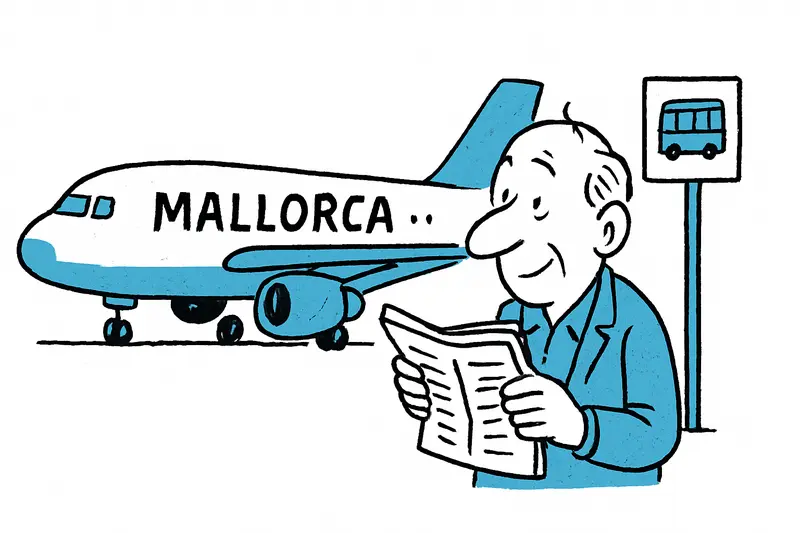
Local scene: In the late afternoon the windy Tramuntana sweeps over the Passeig de Mallorca, campers on the hard shoulder prepare, ship horns from the harbor mix with the murmur of beach bars. At a bus stop in Palma, locals push the door open when a bus arrives from the tourist districts; there is a crackle of discontent when capacities are insufficient. These everyday scenes show that heavy crowds mean not just sales figures, but also overcrowding, noise, pressure on infrastructure and housing, a paradox noted in Mallorca in August: Fewer Regular Visitors, but the Cash Registers Are Ringing.
Concrete solutions: First: capacity management instead of blind increases. Municipalities should consider short-term local visitor controls (e.g. limited landings in sensitive coves, tiered boat booking systems) to prevent sea and beach infrastructure from collapsing. Second: relieve commuters and staff by expanding local public transport links at main travel times; this reduces car traffic and facilitates shift changes. Third: mitigate energy and fuel risks through strategic stockpiling and cooperation agreements with energy providers to dampen price increases. Fourth: protect the housing supply for locals — for example by more clearly separating tourist use from permanent housing when granting new permits. Fifth: reliable support for transport companies currently feeling additional costs, for instance through short-term subsidies or flexible airport fee models so capacities do not collapse.
Politics and business must also think more regionally: the source markets remain predominantly the UK and Germany; dependence on a few markets increases shock risks. Diversifying target groups and more promotion for early- and late-season offers could reduce peak-season pressure and spread income across the year.
What the discourse urgently needs: a realistic stress scenario for infrastructure and the environment. If associations identify additional income, there must be parallel accounting: what extra costs arise for waste, water, traffic, nature conservation and security? And who ultimately pays the bill — the local community, businesses or holidaymakers in the form of higher prices?
Punchy conclusion: More visitors are not an automatic gain for the island if the incidental costs and social burden are not managed. Mallorca can benefit in the short term from current geopolitical shifts — but without active management there is a risk of exhausting the quality of life that makes the island an attractive destination. The challenge is therefore not just: more bookings, but smarter bookings.
Concrete next step: launch a joint stress-test program in the short term — city, island council, associations and operators — to define capacity limits and draw up action plans for transport, energy and housing. Those who now rely only on growth risk that today's profits hollow out tomorrow's livelihoods.
Frequently asked questions
Will Mallorca be busier in 2026?
Why are more travelers choosing Mallorca at the moment?
Is Mallorca tourism still growing even if some areas feel overcrowded?
What does more tourism mean for jobs and wages in Mallorca?
How is Mallorca affected by changes in holiday apartment rules?
What should visitors know about Mallorca in a very busy summer season?
Is Palma more affected than other parts of Mallorca when tourism rises?
What can Mallorca do to manage higher visitor numbers better?
Similar News

When the Wallet Becomes a Danger: Attack in Peguera and Lessons for Mallorca
In Peguera, two women are said to have stolen the wallet from a 75-year-old German couple. When the victim intervened, t...
Plata stays Plata: Young people take over, Llonguets remain
A small bar on Carrer de l'Argenteria will continue: Tolo Serra hands the place over to young Mallorcans at the end of t...

Unnoticed in the Luggage Compartment: How a Boy Traveled More Than 100 Kilometers in a Team Bus
A minor traveled in the undercarriage of a team bus for more than 100 kilometers until his cries for help were heard. A ...

Cap Vermell Grand: Second Michelin Key – a Gift for the East
The Cap Vermell Grand in Capdepera has been awarded its second Michelin key. For the region this elevates the luxury off...
Eurowings lets four aircraft carry names – a friendly idea that also reaches Mallorca
Eurowings is launching a campaign: four Airbus A320s are to carry the first names of people who help others in everyday ...
More to explore
Discover more interesting content

Can Cap de Bou

Townhouse Lleo 72
