
At Es Carnatge Beach: Man Undresses — Police Intervene
On Sunday afternoon a man pitched a tent on Es Carnatge beach and then completely undressed in front of other bathers. The local police intervened and opened proceedings for exhibitionism.
At Es Carnatge Beach: Man Undresses — Police Intervene
What happens when beach freedom meets public order?
On Sunday afternoon a quiet stretch of Es Carnatge beach turned into a scene residents and bathers did not expect: a man apparently pitched a small tent in the sand and then undressed completely in the middle of the other visitors. Several people subsequently called Palma's local police, who arrived shortly after, ordered the man to stop his behaviour, expelled him from the beach and filed a criminal report for exhibitionism; similar charges of obscene exposure have arisen elsewhere, for example in Sex at a Hotel Pool in Port d'Andratx: When Vacation Freedom Meets Public Exposure.
Key question: How well does Mallorca balance individual freedom on beaches with the protection of the public — and what often goes wrong in practice? This case is not a dramatic crime, but it clearly shows how quickly discomfort among beachgoers can escalate into a police operation, as other incidents such as Decomposed male body found at Es Carnatge dog beach illustrate.
Critical analysis: The facts are straightforward: a tent, a man, witnesses, police. Nevertheless, such incidents create a burden for everyone involved. For bathers it means a feeling of violation and insecurity, especially when families with children are nearby. For law enforcement it means tying up resources: officers often have to resolve unpleasant situations that are not always clear-cut in criminal law. And for the person involved the episode ends with a charge, the legal consequences of which can vary depending on classification; more serious events and follow-up investigations can be found in reports such as Body in Es Carnatge: Investigations After Discovery on the Shore.
What is missing in the public discourse? Two things. First: practical guidance for people on the beach — what to do when you witness inappropriate behaviour without escalating the situation? A prompt call to the police can suffice, but witnesses often hesitate out of uncertainty. Second: clear, easily accessible information about which behaviours are punishable on public beaches and which are not. Many people understand “nudity” differently — it may be tolerated in some coves but not in other places. This vagueness leads to misunderstandings.
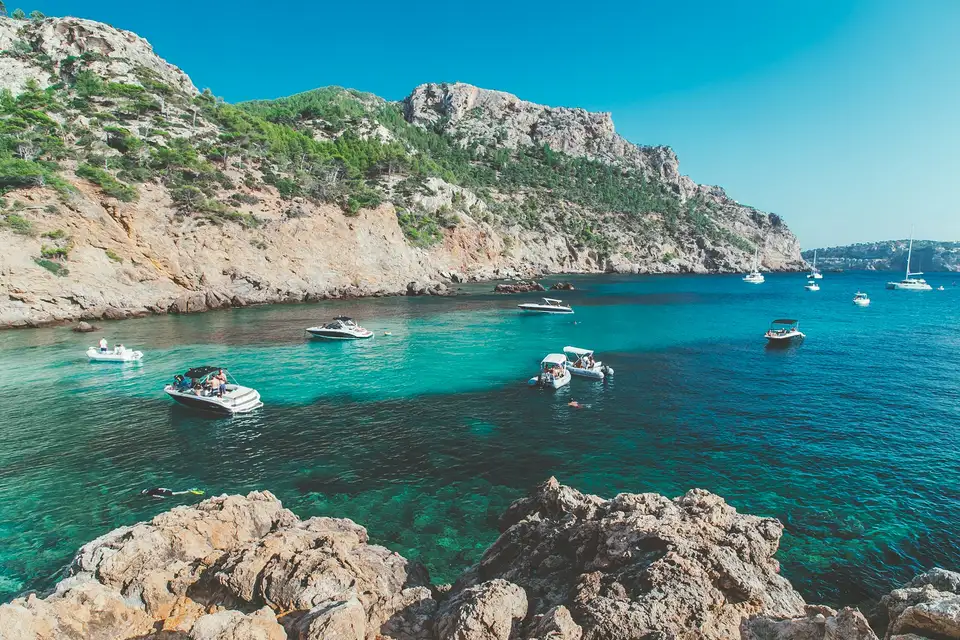
Everyday scene: Anyone who walks along Es Carnatge on a May afternoon knows it: the smell of the sea, the distant hum of boat engines, seagulls screeching over the dunes, the occasional jogger on the shore path, dogs on leashes. Those who lie here want peace or a swim — not to become the awkward centre of an incident they will not soon forget. That everyday calm was interrupted that Sunday.
Concrete solutions: First, better information on site. Signs at the entrances to municipal beaches could explain in simple terms what is allowed and when the police should be called. Second, a locally coordinated emergency-info notice: a visible QR code at beach accesses that opens the correct number and a short guide to reporting incidents. Third, more prevention work through awareness campaigns in multiple languages: tourists and residents should know which rules of conduct apply. Fourth, targeted training for law enforcement in handling sensitive incidents: de-escalation, clear communication with witnesses and affected persons, and guidance on victim protection. Fifth, support for witnesses: anonymous reporting channels so people dare to report an incident without getting involved in confrontations.
Why this matters: Even though the Es Carnatge operation is not among the most serious incidents, it is symbolic. It affects trust in the safety of public spaces. Beachgoers should be able to swim without worry, families should be able to let their children play without concern, and people with unusual behaviour need support — but not necessarily public humiliation.
Conclusion: The incident at Es Carnatge was a clear police intervention in a situation perceived as disruptive by those involved. But it also shows: it's not just about enforcing laws, but about prevention, information and sensitivity. If we want better coexistence on Mallorca's beaches, we need more than just actions after the fact. A few signs, an understandable information campaign and better reporting channels could help ensure that future Sundays are once again marked by the sound of the waves rather than agitated conversations.
Frequently asked questions
What is the weather like in Mallorca in spring?
Can you swim in Mallorca outside the main summer season?
What should I pack for Mallorca in spring?
Is spring a good time to visit Mallorca?
What is Sóller like in spring?
How does Port de Pollença feel in the spring months?
What is the weather like in Palma de Mallorca during spring?
Are Mallorca beaches busy in spring?
Similar News
When the Wallet Becomes a Danger: Attack in Peguera and Lessons for Mallorca
In Peguera, two women are said to have stolen the wallet from a 75-year-old German couple. When the victim intervened, t...
Plata stays Plata: Young people take over, Llonguets remain
A small bar on Carrer de l'Argenteria will continue: Tolo Serra hands the place over to young Mallorcans at the end of t...

Unnoticed in the Luggage Compartment: How a Boy Traveled More Than 100 Kilometers in a Team Bus
A minor traveled in the undercarriage of a team bus for more than 100 kilometers until his cries for help were heard. A ...

Cap Vermell Grand: Second Michelin Key – a Gift for the East
The Cap Vermell Grand in Capdepera has been awarded its second Michelin key. For the region this elevates the luxury off...

Eurowings lets four aircraft carry names – a friendly idea that also reaches Mallorca
Eurowings is launching a campaign: four Airbus A320s are to carry the first names of people who help others in everyday ...
More to explore
Discover more interesting content

Can Cap de Bou

Townhouse Lleo 72
