
Polluted Seabed off Can Pastilla: A Diver Reveals What's Beneath the Surface
Polluted Seabed off Can Pastilla: A Diver Reveals What's Beneath the Surface
Diver Ramón Javier Fernández Barea documents a polluted seabed in the Caló de Son Caios (Clot d’en Bernadet) between Es Carnatge and Cala Estancia. Who is responsible for the underwater environment off Can Pastilla — and what needs to happen now?
Polluted Seabed off Can Pastilla: A Diver Reveals What's Beneath the Surface
In Caló de Son Caios, between Es Carnatge and Cala Estancia, there is more than just sand and buoys
In the early morning, when the first delivery vans on the Passeig Marítim are still rattling quietly and the cafés on the promenade prepare espresso, everything looks like a normal summer on Mallorca. Children build sandcastles at the water's edge, scooters whir by, and sunbeds doze in the shade of the palm trees — the surface appears tidy. But a few meters below the waves the seabed tells a different story.
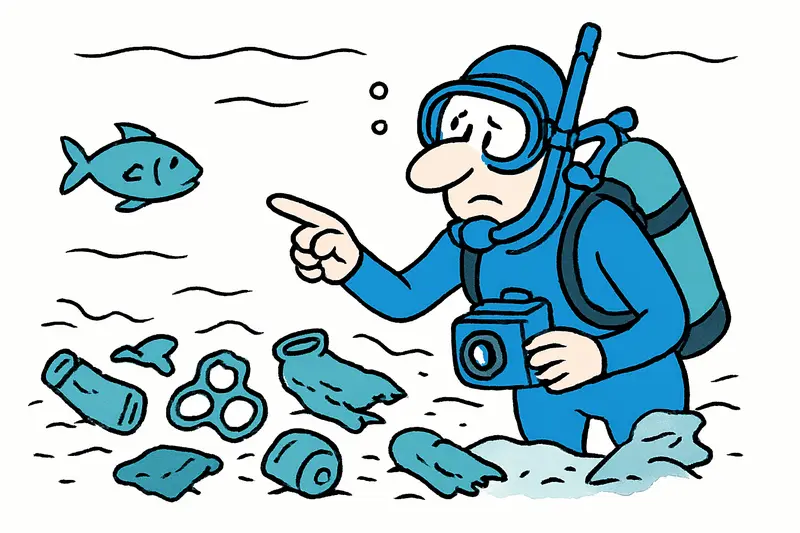
Diver Ramón Javier Fernández Barea has documented with his camera what many do not see, as shown in What Lies Beneath Mallorca's Coast: Trash Slipping Out of Sight: cans, pieces of plastic, caps, packaging remnants and even clothing in the area of Caló de Son Caios (also Clot d’en Bernadet). The site is in close proximity to nightlife spots and a residential area on the edge of Can Pastilla. The picture is not an isolated case, but a symptom.
Key question: Why does the trash remain on the seabed even though the coast is visibly cleaned and many people use the beaches? This question is simple; the answers are more complicated and lie partly in the administrative maze and partly in the everyday behaviour of locals and visitors.
Critical analysis: Surface cleaning and beach-cleaning machines remove what is visible on land. But what is washed in or thrown overboard from boats often ends up on the seabed. Currents collect light items in certain spots; anchoring damages seagrass and exposes buried waste; missing or overflowing trash bins along promenades and nightlife areas mean packaging can find its way into the sea. And: underwater inspections are often missing from regular cleaning plans because they are more expensive and logistically more complex than beach rake operations.
What is missing in the public discourse is a clear line of responsibility for the seabed. Issues that are rarely linked: tourism businesses, the port authority, the municipality and waste management. People talk about "beach cleaning" or "pollution from boats", but seldom about who regularly maps underwater conditions, how hotspots are financed and what sanctions apply when boat crews dump waste into the water.
An everyday scene I often see: at night a venue on the beach closes its kitchen door; in the morning the same guests sit on the promenade with drinks in disposable cups. There may be a bin every few meters — but often without a lid, overflowing, or open in strong wind. When a cup or bottle falls off the quay or the wind snatches a bag, the path to the water is short. What divers later recover remains invisible to many.
Concrete solutions that can be tackled immediately: first, regular underwater inspections coordinated by the municipality together with local dive clubs. These could document hotspots and enter them in a public map registry. Second, mandatory waste management plans for nightlife venues and beach bars: closed bins, more frequent emptying in the high season, clear notices in several languages. Third, clear rules and controls for boats — no disposal of waste overboard, better monitoring of marinas.
Beyond that: a funding program for voluntary seabed clean-ups, supported by tools, insurance and disposal logistics; a deposit-return system for single-use bottles in tourist centres; information campaigns in hotels and at car rental companies advising guests on proper waste disposal. Technically, anchored buoy fields are also conceivable to reduce anchor damage and thus the stirring up of waste.
Legally, transparency is needed: public maps, regular reports on the amount of trash on the seabed and how often diver clean-ups take place. When data is open, responsibilities are easier to assign — and citizens can put pressure. Until then, much of the visible work is done by volunteers, as reported in Who cleans up the sea? Almost eight tons of waste off the Balearic Islands — and the uncomfortable answers, the most visible sign that things can be different.
Conclusion: The photos and videos from Caló de Son Caios are uncomfortable but useful. They challenge the assumption that clean beaches automatically mean a clean sea. Local politicians, businesses and visitors share a common duty: not only to clean what is obvious, but also to protect the places beneath the surface. Otherwise the promenade's idyll is just a façade — and the seabed remains the dumping ground nobody wants to see.
Frequently asked questions
Why can a clean-looking beach hide a polluted seabed around Mallorca?
How can residents and visitors help reduce seabed trash around Mallorca?
Who’s responsible for seabed cleanliness around Mallorca?
What factors drive seabed waste around Mallorca?
Caló de Son Caios near Can Pastilla: what did divers find on the seabed?
How do anchoring and currents affect Mallorca’s seabed near the coast?
What practical steps could Mallorca take to monitor and address seabed pollution?
What everyday habits on Mallorca's promenade are linked to seabed waste, and what can visitors do?
Similar News

When the Wallet Becomes a Danger: Attack in Peguera and Lessons for Mallorca
In Peguera, two women are said to have stolen the wallet from a 75-year-old German couple. When the victim intervened, t...
Plata stays Plata: Young people take over, Llonguets remain
A small bar on Carrer de l'Argenteria will continue: Tolo Serra hands the place over to young Mallorcans at the end of t...

Unnoticed in the Luggage Compartment: How a Boy Traveled More Than 100 Kilometers in a Team Bus
A minor traveled in the undercarriage of a team bus for more than 100 kilometers until his cries for help were heard. A ...

Cap Vermell Grand: Second Michelin Key – a Gift for the East
The Cap Vermell Grand in Capdepera has been awarded its second Michelin key. For the region this elevates the luxury off...
Eurowings lets four aircraft carry names – a friendly idea that also reaches Mallorca
Eurowings is launching a campaign: four Airbus A320s are to carry the first names of people who help others in everyday ...
More to explore
Discover more interesting content

Can Cap de Bou

Townhouse Lleo 72
