
All Lies? Restaurant in Cala Millor Remains Closed – Between a Broken Dishwasher and Labor Allegations
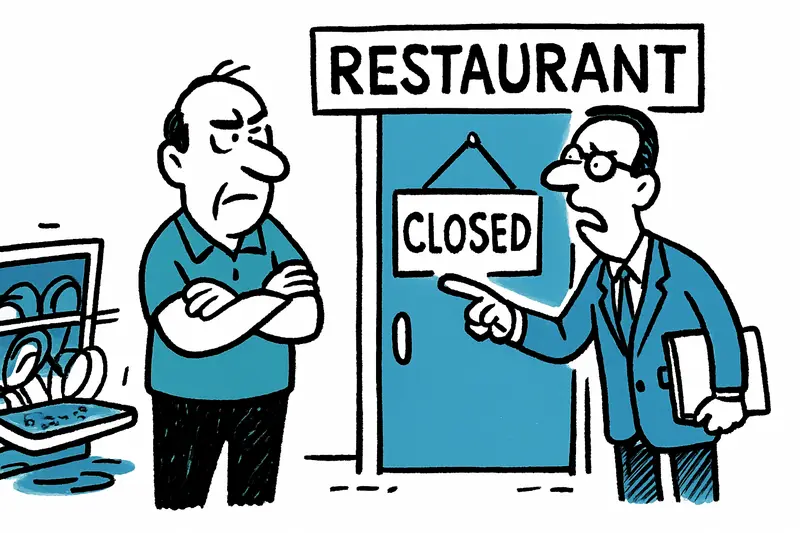
After an inspection in Cala Millor, a restaurant was closed due to serious shortcomings in food safety and working conditions. The operator disputes the allegations and points to a broken dishwasher.
All Lies? Restaurant in Cala Millor Remains Closed – Between a Broken Dishwasher and Labor Allegations
Central question: Is this a case of structural problems or an isolated summer-season drama?
In the morning in Cala Millor, when delivery vans with bakery goods stop along the promenade and tourists in flip‑flops shuffle toward the beach, the world often seems very simple. But behind the facades of bars and restaurants there is more turmoil than the sun loungers suggest. Last Saturday, officers from the local police of Sant Llorenç together with units of the national police from Manacor arrived and ordered the provisional closure of an inn. Authorities cited serious deficiencies in food safety and working conditions as the reason. Salmonella Outbreak at Playa de Palma: How Did It Come to This? The sanctions and closure remain in effect until the identified issues are corrected.
The operator, a man of Chinese nationality, vehemently denies the claims. He says the closure was based on a banal technical defect: the dishwasher is broken and a replacement part is expected; without the machine they cannot open. He also disputes the exploitation allegations: shifts are split (12–16, 19–23), no one works 13 hours straight, and there are midday breaks. At the same time he admits that employees use rooms in the basement and occasionally stay overnight. Plaça Major: Shadows Behind the Menu — Arrests After Alleged Exploitation
Critical analysis
This is an unpleasant contradiction: on one side formal findings by inspectors, on the other the operator’s sharp objection. Who is right? Official inspections follow set criteria for hygiene, storage and working conditions; they document and impose measures when standards are not met. The operator’s statements permit three possible explanations: a) Authorities found actual, provable deficiencies; b) there are misunderstandings or communication problems; c) it is a targeted accusation stemming from rivalry or resentment. None of these options can be verified on the promenade without seeing inspection files, photos and protocols — and without an independent account from the staff. Ceiling Collapse at Plaza de l'Olivar: Questions About Safety and Responsibility
From the fragment of conversation with one of the employees it emerges that some workers are quite satisfied while others note that colleagues occasionally sleep on site. That raises questions about accommodation: Who is the landlord of the basement rooms? Are there contractual arrangements? Do these rooms comply with occupational safety and housing regulations? Such details decide whether these are pragmatic temporary solutions or systematic violations of rights.
What is missing from the public debate
Three voices are too rarely heard in the debate: those of lower‑level employees, the trade supervision authorities in their visit protocols, and the neighborhood, which could contribute everyday impressions. Also barely considered is how routine inspections actually proceed, how quickly deficiencies must be remedied, and what support exists when a business must close at short notice and employees suddenly have no income. It also remains unclear whether temporary closures are documented comprehensively so that other authorities (for example social security, rental oversight) can respond.
Everyday scene from Cala Millor
In the late afternoon a cash register chirps, waiters in T‑shirts balance tapas, and the backyard smells of lemon and olive oil. The neighbor, hanging laundry in the shade of an apartment façade, has already heard that the place is closed. "People come by every day, some are regulars from the village," she says. "If it really is a hygiene issue, I want to know. But if it’s just a dispute, it’s a shame about the jobs." These voices are often missing from headlines but are central to assessing the situation on the ground.
Concrete approaches to solutions
- Transparent inspection reports: Authorities should publish standardized, publicly accessible protocols that name deficiencies concretely and set deadlines. Not everything must go online immediately, but affected neighbors and workers need clear information.
- Protection for employees: Emergency funds or placement services for cases in which staff suddenly lose their jobs can prevent those affected from sliding into precarious situations.
- Clear rules on accommodation: Municipal regulations on which rooms are approved as worker housing, plus mandatory employer notification.
- Mediation instead of escalation: In disputes between owners, staff and authorities, neutral mediation can help clarify facts without unduly harming employees.
- Coordination of controls: Health, labor and immigration authorities should exchange protocols to avoid duplication and ensure consistent measures.
Conclusion
This case is symptomatic of the holiday season: lots of business, little buffer, and entrepreneurs navigating between profit and regulations. The truth lies somewhere between a broken machine, overwhelmed arrangements and possible breaches of occupational safety rules. What is clear: transparency, protection for employees and coordinated inspections are needed so that on the Cala Millor promenade not only the sun loungers but also respect for rights and food safety stand firm again.
Frequently asked questions
What happens when a Mallorca restaurant is temporarily closed for food safety and working conditions?
How are worker housing and safety checked during Mallorca restaurant inspections?
Could a broken dishwasher lead to a Mallorca restaurant closure?
Where can I see official inspection details for Cala Millor eateries?
What support exists for workers when a Cala Millor restaurant closes unexpectedly?
What do Cala Millor residents think about restaurant closures?
What should travelers know about Mallorca weather and planning for Cala Millor in peak season?
How do health, labor, and immigration authorities coordinate inspections in Mallorca?
Similar News

High heel slips, car accelerates: accident on Camí de Son Hugo
A woman lost a high-heeled shoe on the forecourt of the sports facility at Camí de Son Hugo. The car accelerated, mounte...

Phone Scam: How Two Hotel Employees at Playa de Palma Lost Thousands of Euros
One morning in September, two reception employees at Playa de Palma were pressured by alleged alarm-company staff — in t...

When the Wallet Becomes a Danger: Attack in Peguera and Lessons for Mallorca
In Peguera, two women are said to have stolen the wallet from a 75-year-old German couple. When the victim intervened, t...
Plata stays Plata: Young people take over, Llonguets remain
A small bar on Carrer de l'Argenteria will continue: Tolo Serra hands the place over to young Mallorcans at the end of t...

Unnoticed in the Luggage Compartment: How a Boy Traveled More Than 100 Kilometers in a Team Bus
A minor traveled in the undercarriage of a team bus for more than 100 kilometers until his cries for help were heard. A ...
More to explore
Discover more interesting content

Can Cap de Bou

Townhouse Lleo 72
