
Phone Scam: How Two Hotel Employees at Playa de Palma Lost Thousands of Euros
Phone Scam: How Two Hotel Employees at Playa de Palma Lost Thousands of Euros
One morning in September, two reception employees at Playa de Palma were pressured by alleged alarm-company staff — in the end several thousand euros were transferred to an account in Mexico. How did this happen, and what is missing in prevention?
Phone Scam: How Two Hotel Employees at Playa de Palma Lost Thousands of Euros
National Police investigate after a sophisticated telephone trick targeting hotels
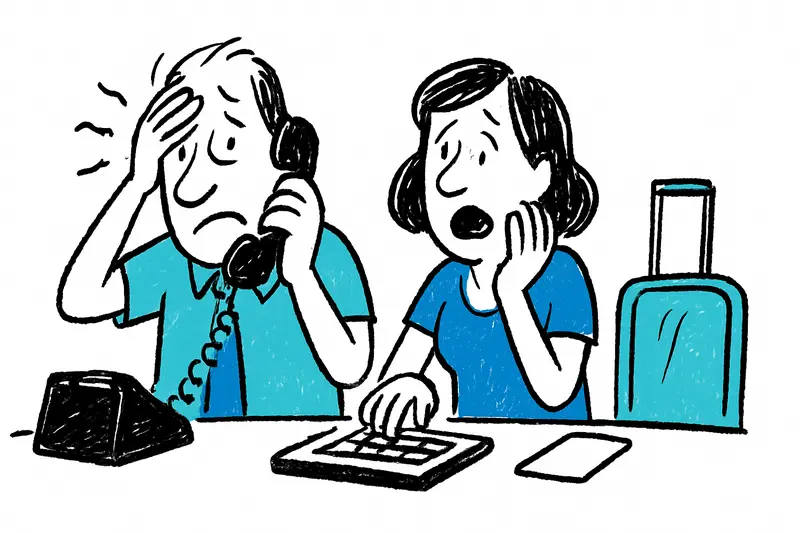
On the morning of September 9, the usual bustle at a hotel reception on Playa de Palma fell out of rhythm: rolling suitcases, distant honking on the coastal road, the hum of the air conditioning — and suddenly a call that threw staff into panic. Two employees followed the instructions of alleged security-company representatives and ultimately transferred money to accounts abroad. The report filed with the National Police mentions a total of €5,650.
The scam was meticulously prepared. A woman first took a call in which a man explained that the hotel was expecting a delivery of security equipment — surveillance cameras, fiber-optic cables, metal brackets and installation tools; only one final payment was missing. Shortly afterwards the supposed transport company called and demanded quick transfer steps via an app. The pressure was reinforced by a threat: otherwise an alleged contractual penalty of €10,000 would be imposed.
The tactic: the perpetrators combined false identities, concrete order numbers and a time limit. The employee followed the instructions, attempted an initial payment and, after input errors, received new instructions, including being told to withdraw €1,900 from the hotel till and deposit it at an ATM. Later she made further payments via an app. A colleague received a similar call shortly afterwards: he executed several transfers and additionally sent a Bizum payment. Only the arrival of the deputy manager exposed the fraud.
Key question: How can hotels and their teams fend off such calls in the future without relying on shaky gut decisions?
Critical analysis: This case shows that personalized, time-critical fraud attempts also work where supposedly trained staff are on duty. The deception relies on two factors: emotional pressure and the appearance of legitimacy. When a caller cites an order number and invokes alleged colleagues or superiors, critical distance decreases. At the same time, mobile payment apps and instant transfers create new attack surfaces. Banks can often no longer stop transfers once the money has reached a foreign account.
What is missing from the public debate: individual incidents are often lamented, but systemic gaps are rarely discussed. Hotel chains and small family businesses differ in their processes; many have no binding two-person rules for payouts or no emergency checks for unusual payment requests. The role of payment service providers is also too often left out: how quickly are transfers halted, what blocking mechanisms exist for Bizum, and how well informed are banks about these schemes?
Everyday scene in Mallorca: On Playa de Palma you often see young receptionists juggling check-ins, beach bookings and ringing phones. The phone rings, tourists ask about sunbeds, suppliers call — it is tempting to mark a call as urgent, especially during high season with the scent of the sea and rolling trolleys outside the door.
Concrete solutions: First: mandatory verification protocols for payment requests — call back using the supplier's official number, not the number given by the caller. Second: financial thresholds that require two signatures or written confirmation. Third: training that runs through realistic telephone fraud scenarios; short, frequent practical refreshers instead of one-off e-learning. Fourth: clear rules for cash withdrawals from the till and restrictions on who has access. Fifth: close cooperation with the bank — provide emergency contacts, precautions for chargebacks and immediate reporting to the Policía Nacional and the bank in case of fraud.
Practically speaking: at the next suspicious call at a hotel reception, a short standard check should run — note names, use genuine callback numbers, inform supervisors personally, never grant app access or disclose passwords. And banks must be better informed about when transfers are suspicious so they can intervene.
Concise conclusion: This incident at Playa de Palma is not a mere isolated mistake but a warning signal. Reception staff stand between guests and logistics — and often between trust and fraud. We need clear procedures, regular practical drills and binding verification steps. These are not bureaucratic games but basic protection for people who handle suitcases by day and are responsible for hotel funds.
Frequently asked questions
What is the best time to visit Mallorca for mild weather and fewer crowds?
What should I pack for a trip to Mallorca?
Is it safe to swim at Mallorca’s beaches?
How should I get around Mallorca efficiently?
What outdoor activities are popular in Mallorca?
What is Mallorca's weather like throughout the year?
What language should I expect and what currency is used in Mallorca?
What’s the dining scene like in Mallorca and typical hours?
Similar News
High heel slips, car accelerates: accident on Camí de Son Hugo
A woman lost a high-heeled shoe on the forecourt of the sports facility at Camí de Son Hugo. The car accelerated, mounte...

When the Wallet Becomes a Danger: Attack in Peguera and Lessons for Mallorca
In Peguera, two women are said to have stolen the wallet from a 75-year-old German couple. When the victim intervened, t...
Plata stays Plata: Young people take over, Llonguets remain
A small bar on Carrer de l'Argenteria will continue: Tolo Serra hands the place over to young Mallorcans at the end of t...
Unnoticed in the Luggage Compartment: How a Boy Traveled More Than 100 Kilometers in a Team Bus
A minor traveled in the undercarriage of a team bus for more than 100 kilometers until his cries for help were heard. A ...

Cap Vermell Grand: Second Michelin Key – a Gift for the East
The Cap Vermell Grand in Capdepera has been awarded its second Michelin key. For the region this elevates the luxury off...
More to explore
Discover more interesting content

Can Cap de Bou

Townhouse Lleo 72
