
Fake Reservation at Playa de Palma: How Hotels Can Protect Their Receptions
A tourist presented a forged payment receipt at Playa de Palma and spent several nights for free. Why such tricks work in summer and how small hotels can respond more effectively.
Suspicion at the reception prevented greater damage — but only just
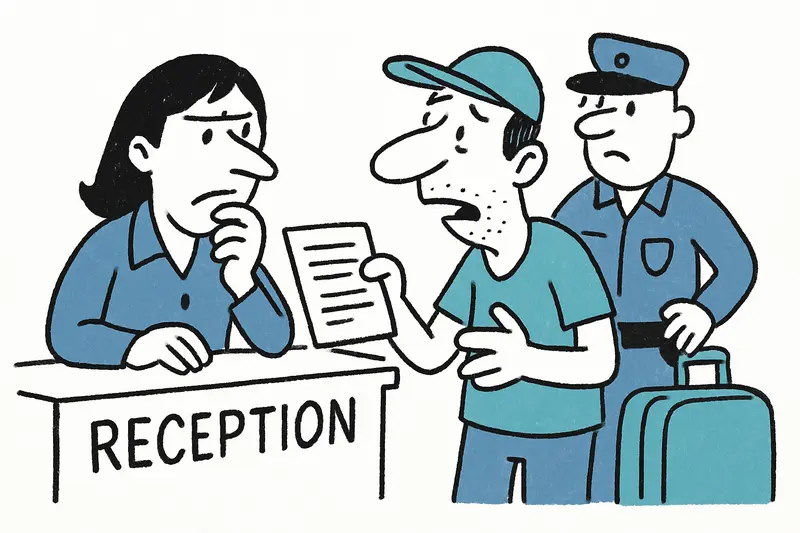
Early in the morning at Playa de Palma: seagulls screech, the air conditioning hums, and at the reception of a small hotel a supposedly paid reservation suddenly sits on the desk. This was how the case of a 28‑year‑old guest began who — by his own account — spent three nights for free before the manager noticed an inconsistency. The invoice, a printed receipt with the logo of a well‑known intermediary, turned out to be a forgery. The Guardia Civil briefly detained the man; a judge later ordered his release without conditions (Arrest in Palma after fake bank transfers to hotels).
The central question: How much verification can a reception demand without alienating the guest?
This incident strikes a nerve during the summer season. On Avenida Alemania, between cries for sangria and rolling suitcases, nobody wants to wait long. At the same time, small hotels with limited staff increasingly fall for tricks: forged PDFs, manipulated QR codes, falsified reference numbers. A second check takes time — and time at the reception can sometimes cost more than a fraud.
Why these deceptions work
On the one hand, perpetrators rely on the hectic atmosphere: arrival day, queues, language barriers. On the other hand, they exploit technical blind spots. A printed receipt with a familiar logo is enough for many employees if the reference number looks plausible. Some payments are also made through third‑party providers whose systems are usually not directly integrated into small hotel PMS. If the main system does not allow real‑time verification, room for manipulation is created, as seen in reports of a con‑artist posing as a guest in Mallorca's hotels and other similar schemes.
Aspects that are rarely discussed
First: the role of intermediary platforms. Delayed payment confirmations, different reference formats and lack of clarity about authorization versus payment status create gaps. Second: working conditions at small receptions — two staff members, 35 degrees at midday, phone ringing while check‑ins are happening — increase the susceptibility to mistakes. Third: the legal situation. A preliminary police operation often ends with a release because the evidence is thin; the money often remains unrecovered (arrest of a man accused of stealing suitcases and watches in Palma).
Concrete protective measures — practical, not purely technical
1) Two‑step verification: a quick cross‑check of the reference number in the back office and an additional call to the intermediary — even if it’s only 60 seconds. 2) ID check: if in doubt, ask to see ID and match the reservation with the name and ID number. 3) Pre‑authorization: card pre‑authorization instead of mere payment confirmation, also for short‑term bookings. 4) Standardized layouts: internally define how a valid payment confirmation must look (e.g. visible transaction number, payment network). 5) Training & scenario drills: run a short exercise once a month on how to recognize a forged booking; training should cover common ruses such as the 'Defective Key' Trick used in Palma, Ibiza and Madrid. 6) Cooperation: exchange information in local hoteliers’ networks (New Tricks at Ballermann: How Pickpockets Exploit Playa de Palma — and What Actually Helps) about suspicious patterns and phone numbers.
Why these measures offer opportunities
Yes, they cost minutes. But they protect revenue, reputation and nerves. A clear procedure at the desk also reduces the potential for conflict with honest guests: those who are courteously informed that a quick security check will be performed usually understand. For the island’s economy as a whole, less fraud means more predictable seasonal income.
What travelers can do
Travelers should have booking confirmations ready on their smartphones and, if necessary, show screenshots of their booking account. Generic PDF receipts without a transaction number, suddenly different logos or poorly resolved QR codes are suspicious. And: stay calm — a short call to the intermediary clarifies things (con‑artist posing as a guest in Mallorca's hotels).
Conclusion: The case at Playa de Palma is not an isolated incident but a symptom. The mix of digital illusion and a hot summer season creates space for fraud. The solution does not lie in a single technical miracle, but in pragmatic processes: better verification routines, small technical hurdles and more exchange between hotels. Then there will be more money for honest mojitos on the Paseo Marítimo and less for unpaid nights.
Tags: Fraud, Mallorca hotels, Playa de Palma, Security, Guardia Civil
Frequently asked questions
How can hotels in Mallorca check whether a booking has really been paid?
Why do fake hotel payment confirmations work so often in Mallorca?
What should a Mallorca hotel receptionist do if a reservation looks suspicious?
Do small hotels in Playa de Palma need different fraud checks than larger hotels?
What can travellers in Mallorca do to avoid booking problems at check-in?
Should Mallorca hotels ask for ID when a booking seems doubtful?
Why is Mallorca’s summer season a higher-risk time for hotel fraud?
How can hotels in Mallorca protect themselves from fake booking scams long term?
Similar News
Taking Off Differently: Pilot, Pere Garau Resident and Rock Musician
Andreas Thiele flies an Airbus A320 for Lufthansa, has an apartment in Pere Garau — and will release an alternative-rock...

Palma takes to the streets: Thousands demand 'Housing as a Right'
Around 3,000 people marched through Palma on Saturday to demand affordable housing. The protest followed the rejection o...

Beatings in Palmanova: Two British tourists injure taxi drivers — what needs to happen now
In Palmanova, two taxi drivers were attacked at night by apparently drunk tourists. One suffered severe facial injuries ...

Village Festivals of Art: ArtinSal, TastArt and Canal'Art Bring Culture to Mallorca's Streets
In October Ses Salines, Porreres and Santanyí turn their squares into exhibition spaces: three art nights, plenty of cra...
Christmas Market Conflict in Palma: Who Owns the Christmas Season?
The relocation of a privately organized, German-influenced Christmas market to Parc de la Mar is causing anger among loc...
More to explore
Discover more interesting content

Can Cap de Bou

Townhouse Lleo 72
