
Mallorca at the limit: Why the mass protest is more than a Sunday stroll
Mallorca at the limit: Why the mass protest is more than a Sunday stroll
On Sunday a broad alliance will march through Palma. The questions are: Is it only against tourists or about a system that increasingly makes life difficult for island residents? A reality check with everyday observations and concrete proposals.
Mallorca at the limit: Why the mass protest is more than a Sunday stroll
Key question
What is this Sunday really about: individual grievances or an economic model that pushes many residents to the margins?
Critical assessment
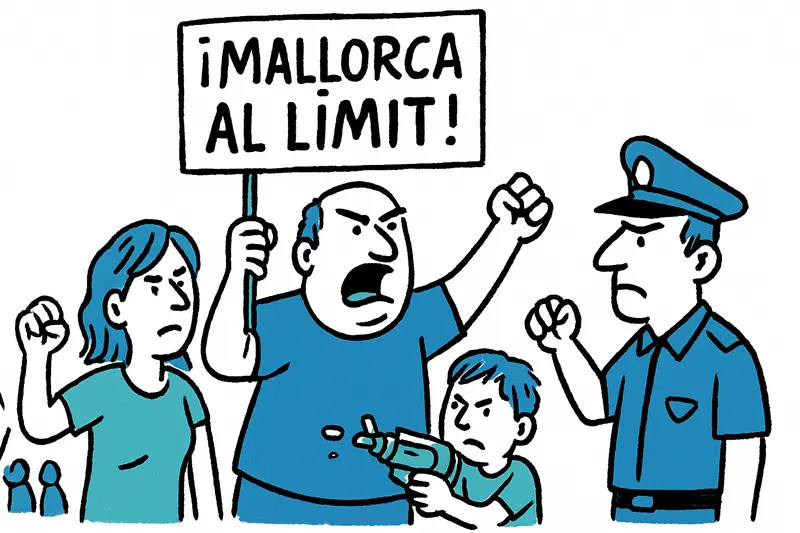
The mobilization on July 26 is not a bolt from the blue, as discussed in Reality Check: Why Mallorca Can Hardly Escape Massification. The organizers of the platform “Menys Turisme, Més Vida” chose the slogan “Mallorca al límit” because many people feel that way: spaces, prices and habits are being repurposed step by step. The demonstration is expected to start at 7 p.m. at Plaça d’Espanya and will march along Avingudes, Rambles and Born to the closing rally at Ses Voltes, as covered in Mallorca at the Limit: Will This Weekend Break the Visitor Maximum?. That a German-born singer will intone the Balanguera is symbolic: it is about the feeling of home.
What the numbers and individual cases say
Last year more than 19 million visitors came to the Balearic Islands, a point also examined in After Eleven Years at the Top: What Mallorca's Tourism Radar Really Needs to See. Such figures create pressure: on the housing market, on traffic and on public infrastructure. Examples that have recently inflamed the mood are no coincidence: a cancelled school trip because buses that had been booked were suddenly used for tourist trips; drastic increases in berth fees in Port d'Andratx after a re-awarding of concessions, compared by those affected to displacement; isolated paint attacks on real estate and apartment offices as a symptom of anger. That is the backdrop to the demonstration.
What is missing in the public discourse
The debate often revolves around tax increases or new expert reports. Three things are missing: first, binding figures on seasonal load and local bed capacity; second, clear priorities in concession awards (public interest versus return); third, honest scenarios for those who live and work here. The discussion is about “Less” or “More”, but rarely about concrete allocation rules: Who owns the waterfront? Who owns the berths? Who pays for the burden on infrastructure?
An everyday scene
Imagine Plaça d’Espanya on a hot summer evening: delivery vans maneuver between tourists with rolling suitcases, a schoolchild splashes with a water pistol in the shady schoolyard because the bus was needed this year for tourist excursions. At the harbor of Port d'Andratx, llaut owners quietly discuss the new fee schedule while motorboats with gleaming hulls pass by. These small images show that it is not only about abstract numbers but about real trade-offs between everyday life and profit.
Concrete solutions
A few proposals that could make the debate more factual without changing everything overnight: 1) Bed quotas and clear zoning: new tourist beds should be tied to capacity limits and local expectations. 2) Regulate short-term rentals and earmark revenues for social housing; part of the tourist tax should be legally ring-fenced into a housing and infrastructure fund. 3) Make public awarding criteria for ports and concessions transparent and consider social scales for berth fees so that local boat owners are not automatically displaced. 4) Transport priorities for commuters at peak times (reservations, dedicated bus lanes) and stronger control over booked transport resources. 5) Promote economic sectors outside the classic holiday economy: crafts, agriculture, digital businesses — targeted incentives, but no subsidies without control mechanisms. 6) A binding timetable for implementation instead of endless reports; interim steps with measurable indicators.
Why it will be difficult
Politics is a slow business, and the legislative term is drawing to a close. What begins as “round tables” often ends in debates without decisions unless clear majorities and control bodies are created. Economic interests also stand against local needs — that is no secret. But ignoring the issue is not a solution: social pressure finds its expression on the streets, as during the General Strike for Palestine Makes Palma Quieter — and Raises Questions.
Pointed conclusion
Sunday's demonstration is not a purely symbolic act. It is a warning signal, a stress test and a wake-up call at the same time. Those who seriously want Mallorca to remain livable must be concrete now: provide data, make decisions and distribute the consequences in a socially just way. Otherwise all that will remain in the end is the sight of gleaming boats and empty neighborhoods.
Frequently asked questions
What is the Mallorca protest really about and who does it aim to help?
How does tourism pressure affect housing and living costs in Mallorca?
Where did the Mallorca protest route go and what should people expect on the day?
What concrete policy ideas are proposed to address Mallorca's tourism pressure?
What data is missing in discussions about Mallorca's seasonal load and capacity?
Who owns the waterfront and berths, and how does that affect locals?
How could transport be improved for residents and workers during Mallorca's peak tourist times?
What realistic steps could Mallorca take to keep livability while supporting the local economy?
Similar News

When the Wallet Becomes a Danger: Attack in Peguera and Lessons for Mallorca
In Peguera, two women are said to have stolen the wallet from a 75-year-old German couple. When the victim intervened, t...
Plata stays Plata: Young people take over, Llonguets remain
A small bar on Carrer de l'Argenteria will continue: Tolo Serra hands the place over to young Mallorcans at the end of t...

Unnoticed in the Luggage Compartment: How a Boy Traveled More Than 100 Kilometers in a Team Bus
A minor traveled in the undercarriage of a team bus for more than 100 kilometers until his cries for help were heard. A ...

Cap Vermell Grand: Second Michelin Key – a Gift for the East
The Cap Vermell Grand in Capdepera has been awarded its second Michelin key. For the region this elevates the luxury off...
Eurowings lets four aircraft carry names – a friendly idea that also reaches Mallorca
Eurowings is launching a campaign: four Airbus A320s are to carry the first names of people who help others in everyday ...
More to explore
Discover more interesting content

Can Cap de Bou

Townhouse Lleo 72
