
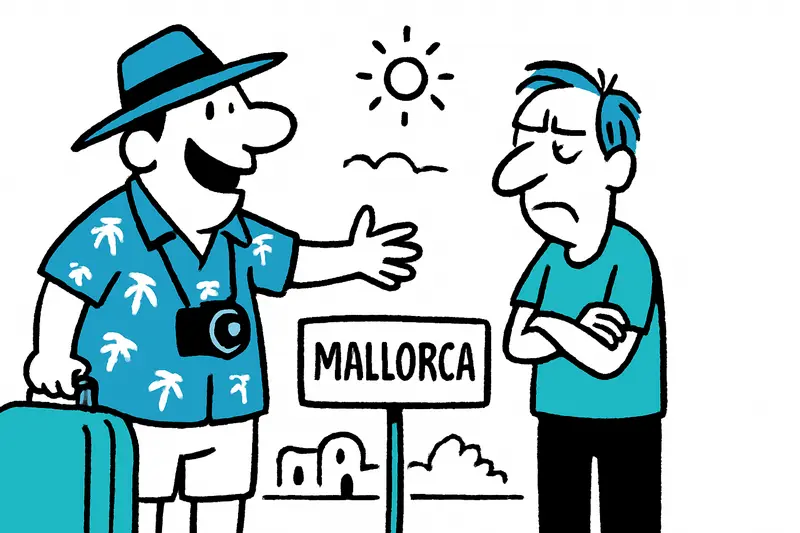
When the island breathes: Why the survey shows tourism and housing on Mallorca are no longer party issues
A survey of 800 Mallorcans shows: Across party lines, unease about mass tourism is growing. Housing remains the most pressing problem. A reality check with a view to Palma, Sóller and the streets where moving vans are already parked in the morning.
When the island breathes: Why the survey shows tourism and housing on Mallorca are no longer party issues
Key question: Is it enough to complain about too many holidaymakers – or does Mallorca now need tough, practical steps against housing shortages and overtourism?
The figures are clear: a survey commissioned by the regional party Més of 800 island residents, echoed in a new survey showing three out of four Mallorcans find visitor numbers too high, paints a picture you can hardly miss on a morning on the Paseo de Mallorca or in the evening in a bar in Santa Catalina. Almost all camps – from Més to the PSIB, from the conservative PP to Vox – see the problem. 95.7 percent of Més voters support limiting tourist accommodations; among PSIB supporters it is 79.1 percent. Even within PP and Vox, support for reducing tourist rentals is above half, at 52.6 and 54.8 percent respectively.
Housing tops the list of concerns, and this echoes reporting on the growing gap between luxury properties and homelessness. The survey shows broad backing for market-intervening measures: rent caps receive support from 91.7 percent of Més voters, 88.8 percent of PSIB voters, and also find backing among PP (57.8 percent) and Vox (67 percent). The response makes clear that this is not just annoyance about crowded beaches, but concrete everyday realities for people who live here, work here and raise their children here.
What the results do not explain is the how. Public debate often revolves around assigning blame – more tourists, private investors or failures in urban planning. Far less persistent is the question of which instruments at which level (city, island, Balearics) can actually be effective and what side effects they might have. What is missing is a sober inventory: which flats are actually rented short-term? How many licences for tourist accommodations are legal and how many illegal? How many building permits have converted former housing into holiday apartments?
A glimpse into everyday life: on a sunny Tuesday morning in Palma you can see the traces. Delivery vans on the Avinguda de Gabriel Roca unload suitcases for several holiday apartments; on an old townhouse in Sa Gerreria a sign reads "En venta" (for sale), while next door a removal van is parked and furniture is being carried into a new building with a glass facade. At the Olivar market, vendors discuss rising water and electricity costs – as if these were only distant consequences of tourism, when in fact they affect exactly the tenants who voiced their worries in the survey.
Critical analysis: the survey marks a shift from ideological debates to structural questions. The political consensus about the problems is remarkable, but it is not an automatic blueprint for solutions. Political agreement can be a façade: support for rent regulation does not mean municipalities or the government have the resources and the political will to implement measures effectively. There are legal constraints, market incentives and vested interests that can block simple remedies.
What is missing in public discourse: transparency and enforceability. Many proposals remain at the level of good intentions. Public debates often crowd out everyday concerns – noise, access to childcare, commuting times – that are existential for many people. Nor is it examined systematically enough which instruments serve as international models and what is legally possible here on Mallorca, a topic considered in analysis of rising square-meter prices, full short-term rentals and empty town centres.
Concrete approaches that could work: a tiered package of measures with short- and medium-term effects. First: a mandatory register of all tourist accommodations with clear sanctions for illegal rentals and regular inspections by municipalities. Second: targeted incentives for owners to rent out flats long-term – for example tax breaks or renovation grants in exchange for long-term rentals to locals. Third: stronger promotion of publicly subsidised housing, tied to allocation criteria that prioritise local workers and families. Fourth: spatial planning that makes conversion of housing into holiday apartments more difficult and identifies gaps for social housing. Fifth: traffic and parking concepts that dampen guest surges while improving quality of life in historic neighborhoods.
These measures must be locally managed, legally secured and financially supported. A mosaic of municipal regulations, island-wide standards and a clear role for the Balearic government would be more realistic than a single nationwide quick fix.
Conclusion: the survey is a wake-up call. The island community signals that the cracks left by overtourism and housing shortages are visible across party lines. Now it is about turning agreement in concern into agreement in action. That requires more than protest signs: it needs practical instruments, patient implementation and the willingness to make uncomfortable decisions. Otherwise many of the people who keep Mallorca alive will remain spectators in their own city.
Frequently asked questions
Why are so many people in Mallorca saying tourism has gone too far?
Is housing the biggest problem for people living in Mallorca?
Do people in Mallorca support rent caps and limits on tourist rentals?
What could Mallorca do to reduce illegal holiday rentals?
What measures could make housing more affordable in Mallorca?
How does overtourism affect everyday life in Palma?
What is happening in Sa Gerreria in Palma?
What role could local councils and the Balearic government play in Mallorca’s housing crisis?
Similar News

Rental Car Theft in El Arenal: What This Incident Reveals About Our Gaps
A teenager steals a running rental car in El Arenal, flees on foot, climbs over walls and is caught by the Guardia Civil...

Red Rope in Palma's Library: What Helps Against Selfie Tourism — and What's Missing
Palma's city library cordoned off an area with a red rope to keep selfie tourism away from reading and working activitie...

Fort San Carlos: Museum, Harbor Dispute — and a Conflict That Demands Answers
The military museum at Fort San Carlos sits right on Palma's harbor, with unexpectedly quiet rooms filled with cannons a...

Old Town Under Pressure: When a Doorway Becomes a Sleeping and Shower Place
For months a woman has been living with a parasol, a clothes rack and personal belongings next to the social welfare off...

When Shopping Weighs Heavier: Mallorca Demands a Tax Pause on Food and Fuel
Rising prices are putting pressure on households and agriculture. The Balearic Islands are calling for temporary tax rel...
More to explore
Discover more interesting content

Can Cap de Bou

Townhouse Lleo 72
