
Tarjeta Ciudadana invalid from tomorrow: A guide for Palma residents
Tarjeta Ciudadana invalid from tomorrow: A guide for Palma residents
The grey Tarjeta Ciudadana will no longer be valid on public transport from June 1. Residents who want to continue traveling for free will need the Tarjeta Única or the TIB's Tarjeta Intermodal. What matters now — and what's missing from the discussion.
Tarjeta Ciudadana invalid from tomorrow: What Palma residents need to know
Key question: Are the changes to the new Tarjeta Única truly citizen-friendly — or does the deadline cause confusion at the bus stop?
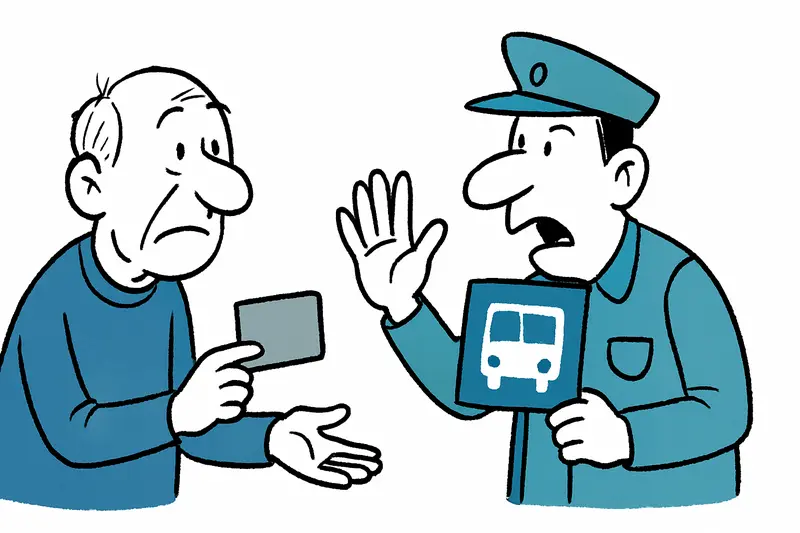
From tomorrow, buses and trains in Mallorca will no longer accept the grey Tarjeta Ciudadana. For people registered as residents on the island this means: anyone who wants to continue traveling free of charge by bus and train must in future present the new unified Tarjeta Única (see Una tarjeta para todo: llega un billete único para el transporte público de Mallorca) or the TIB's Tarjeta Intermodal. Since October, when the transition began (Tarjeta Única en Mallorca: comienza la transición — ¿alivio o nuevos obstáculos?), more than 175,000 of these new cards have already been issued; according to the information now available, the remaining balance on the old card should be automatically transferred to the new card in June.
It sounds straightforward — in practice the change meets many people at the bus stop at Plaça d'Espanya or as they board on the Paseo Marítimo. I have seen elderly women with full shopping bags feeling for the grey card in their wallet in confusion. A boy on his way to school wondered why his mother suddenly queued at the ticket machine. These everyday moments show: a system change affects people directly, not just the technology behind it.
Critical analysis: the facts are clear, but the organisation appears fragile in places. It is positive that 175,000 cards have already been issued — yet uncertainty remains until the deadline about how people without the new card can continue to travel for free at short notice, how quickly replacement processes at ticket offices will run, and how clearly information has been communicated at all relevant points (buses, stations, online portals). The automatic transfer of remaining balances is a relief, but it does not solve the problem for people who have not yet received or activated the new card.
What is often missing from the public discourse are concrete instructions for different groups. Pensioners react differently from commuters, families with children differently from international residents who may not be familiar with local administrative procedures. There is a lack of a clear overview: exactly where can I still get the new card today (see Una tarjeta para toda Mallorca: desde octubre menos papeleo en la cartera)? What do I do if my balance was not transferred? Are there transitional rules if ticket inspections on buses become stricter from tomorrow? Practical answers like these should be offered in accessible language and in several languages — not just as a legal notice, but as step-by-step help.
Concrete proposals that would help immediately: 1) Short term: mobile information booths at heavily used stops and stations (e.g. Plaça d'Espanya, Estació Intermodal) with staff who can issue cards or answer questions. 2) Transparent checklists online and printed in municipal offices that state which documents are required, how long replacement takes, and how remaining balances can be checked. 3) Clear transition rule: anyone who, during controls, explains that they had the old card and have applied for the new card should be granted a short grace period instead of an immediate fine. 4) Publicly accessible hotline and active social media response teams during the first weeks of the transition.
An everyday scene to finish: on a warm morning you hear the rattling of buses, vendors at the corner shout their last tomatoes onto the street, an EMT driver checks a card at the counter — and an elderly woman breathes a audible sigh of relief when the staff member explains that her balance will soon be transferred automatically. Moments like these show that a technical transition only succeeds if personal contact works.
Concise conclusion: the switch to the Tarjeta Única and the Tarjeta Intermodal is necessary and is not starting from scratch — the 175,000 issued cards are a good sign. What matters now is that authorities and transport companies close the remaining gaps in a practical way: more visible help at stops, clear information tailored to different user groups and humane transition rules. Otherwise the obvious goal — uncomplicated, free travel for residents — will remain stuck in practice.
Frequently asked questions
What is the weather usually like in Mallorca in early spring?
Can you swim in the sea in Mallorca in spring?
What should I pack for Mallorca in March or April?
Is Mallorca a good destination for hiking in spring?
What is Palma de Mallorca like in spring?
Is Sóller worth visiting in spring?
What is Port de Pollença like outside the summer season?
When is the best time to visit Mallorca if you want mild weather?
Similar News

Born conflict: Who owns Palma's most elegant promenade?
The city ordered bars on Passeig del Born to dismantle their terraces ahead of a planned sit-in. Residents, restaurateur...

Unidentified body near Tolleric: How can a person be overlooked in the middle of the island?
An older man was found dead in a patch of woodland near the cliffs of Tolleric. He had no identification, showed signs o...
Water shortage in Mallorca: Reserves shrinking, answers lacking
Despite rainfall, reservoir volumes remain low: Gorg Blau falls, Cúber rises slightly — together only 39.9 percent. Key ...
Arrest in Frankfurt after Mallorca Flight: What the Case Reveals About Gaps in the System
A 67-year-old Dutchman was arrested during a check in Frankfurt. Behind the scenes is an international warrant from Spai...
Chairs gone, debate remains: Who can really use Palma's Born in the evening?
The city had terraces on Passeig del Born dismantled shortly before a planned public action. A conflict between restaura...
More to explore
Discover more interesting content

Boat Tour with BBQ along Es Trenc Beach
Private transfer from Mallorca Airport (PMI) to Pollensa
