
Minibus plunges from ramp near Sa Pobla: Why an accident in Mallorca is not just a question of speed
Minibus plunges from ramp near Sa Pobla: Why an accident in Mallorca is not just a question of speed
On Saturday evening near Sa Pobla a minibus breached a guardrail and fell from an access ramp onto the highway. The 45-year-old driver was seriously injured. What failed here — and what we can do so it does not end this way again.
Minibus plunges from ramp near Sa Pobla: Why an accident in Mallorca is not just a question of speed
Saturday evening on the Inca motorway: lost control, vehicle fell, driver injured
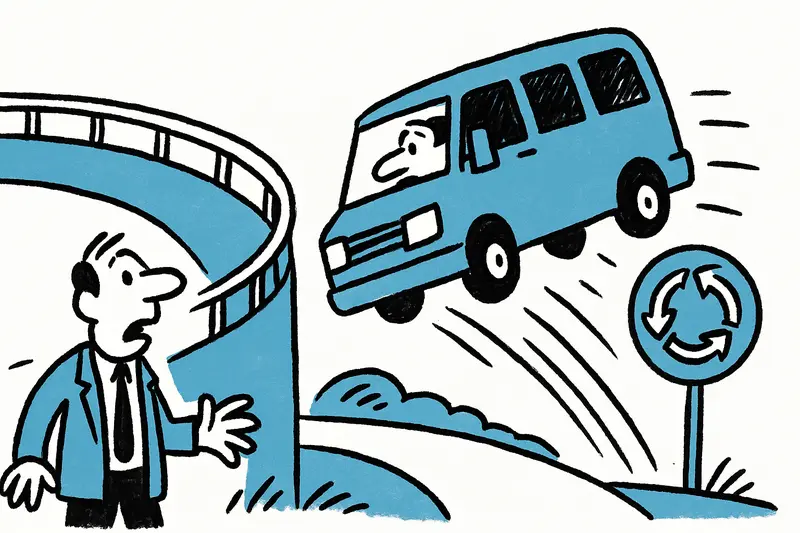
On Saturday around 6:45 pm something happened at the on-ramp near Sa Pobla that residents unfortunately know from many conversations, as detailed in Three serious accidents in one night: What's wrong with Mallorca's country roads?: A minibus lost control while entering the roundabout, broke through a guardrail and plunged down the ramp onto the fast road heading north. Several people on the scene later reported that the driver had been driving very fast. The 45-year-old man was trapped and had to be freed by the fire brigade before emergency services took him to hospital, as in Serious Accident Near Porto Cristo: When a Holiday Day Becomes a Test of Emergency Response. Guardia Civil, the Sa Pobla local police, the Mallorca fire brigade and the ambulance service 061 were on site; one right-hand lane was temporarily closed.
Key question
Why do such driving errors so often end in tragedy at exactly these spots? Is it solely due to speed — or a chain of road design, guardrail, ramp and the response time of rescue services?
Critical analysis
Witness statements that it was "very fast" suggest that speed played a role. But speed alone does not explain why a vehicle can break through a guardrail and fall several meters. The ramp and roundabout form a mixing point: local traffic meets motorway speeds. Here geometry decides — curvature of the ramp, width, road grip — whether an error ends fatally or with minor consequences. The construction of the guardrails and their anchoring is also relevant: not every guardrail is designed to decelerate or redirect heavy vehicles in a controlled way; some act more like an illusion of safety.
What's missing in the public debate
In accidents the conversation often focuses only on "speed". The discussion about concrete infrastructure defects is missing: what repair work on guardrails is necessary? Are there regular inspections of ramp geometry? What is the grip of the surface on access roads? No one is systematically demanding transparent accident and maintenance data for the stretches around Sa Pobla and Inca, similar to calls after the Crash on the Ma-10: Bus collides head-on with a truck — What does this say about our roads?. Without these data, prevention remains piecemeal — prosecutions against speeders help, but do not solve the underlying infrastructure problem.
A daily scene from Sa Pobla
It was a warm evening; cicadas singing in the olive groves, the small kiosk at the roundabout was just closing, a delivery truck drove slowly toward the village. Evenings like this convey calm — until a crash upends everything. Neighbors step into the street, some stay, others call for help. It is precisely this mix of rural tranquility and fast through traffic that makes places like Sa Pobla particularly vulnerable.
Concrete solutions
- Short term: reduce speed at the ramps — install temporary signs or mobile speed cameras, as proposed after the Nighttime crash near Son Banya: Who will stop the speeding on Mallorca's country roads?, highly visible markings and transverse strips to warn drivers early. - Medium term: review and, if necessary, adapt ramp geometry; install high-grip surfaces and rumble strips before the ramp so speeders are slowed down early. - Check and modernize guardrails: use systems that can safely absorb or redirect heavy vehicles; inspect anchorings regularly. - Optimize response and alerting: direct camera linkage between the motorway and the nearest fire station, equip the fire brigade with cutting and stabilization equipment and regular rescue drills at critical ramps. - Long term: traffic engineering study for the Palma–Inca–Sa Pobla route, publish transparent accident statistics, involve citizens in safety checks.
Conclusion
Yes, speed was a trigger for this accident. But the picture is bigger: it is about road engineering, protective systems, enforcement and quick, coordinated rescue response. If we only point the finger at the driver we get short-term satisfaction — in the long term the danger remains. Sa Pobla and other places in Mallorca need targeted measures where village life and the motorway meet. Otherwise the drama will repeat, and next time nobody will expect it.
Frequently asked questions
When is the best time to go to Mallorca if you want warm weather and less rain?
Can you swim in Mallorca in spring or autumn?
What should I pack for a trip to Mallorca?
Is Mallorca good for a beach holiday outside summer?
What is the weather usually like in Mallorca in spring?
Is Palma de Mallorca a good base for a first trip to the island?
What is Pollença like for a quieter stay in Mallorca?
Can you do more than just beach days in Mallorca?
Similar News

German tourist dies in Sa Calobra – a reality check for emergencies on Mallorca's beaches
A 40-year-old tourist died at the Torrent de Pareis. The emergency call, a doctor who happened to be present, a defibril...
Deadly Tractor Accident in Bunyola: What Needs to Be Done Now
In a work accident on an estate near Bunyola, a roughly 40-year-old man lost his life. His wife and a small child were o...
Head-first dive into the shallow part of Cala Fonoll: An accident and the unresolved question of responsibility
A young tourist dove into Cala Fonoll and was seriously injured. Key question: Why are clear warning signs missing at da...
Mistaken identity with fatal consequences: Brutal assault in S'Aranjassa — what's missing in the follow-up?
At S'Aranjassa a visitor to a finca was tied up, beaten and thrown out of a van. Three men have been arrested, including...
High heel slips, car accelerates: accident on Camí de Son Hugo
A woman lost a high-heeled shoe on the forecourt of the sports facility at Camí de Son Hugo. The car accelerated, mounte...
More to explore
Discover more interesting content

Can Cap de Bou

Townhouse Lleo 72
