
Serious Accident Near Porto Cristo: When a Holiday Day Becomes a Test of Emergency Response
A head-on collision between an intercity bus and a minibus near Porto Cristo left nine people injured. Why do such accidents occur on Mallorca's country roads - and what needs to change?
Early morning, sirens and pointed questions: Accident near Porto Cristo
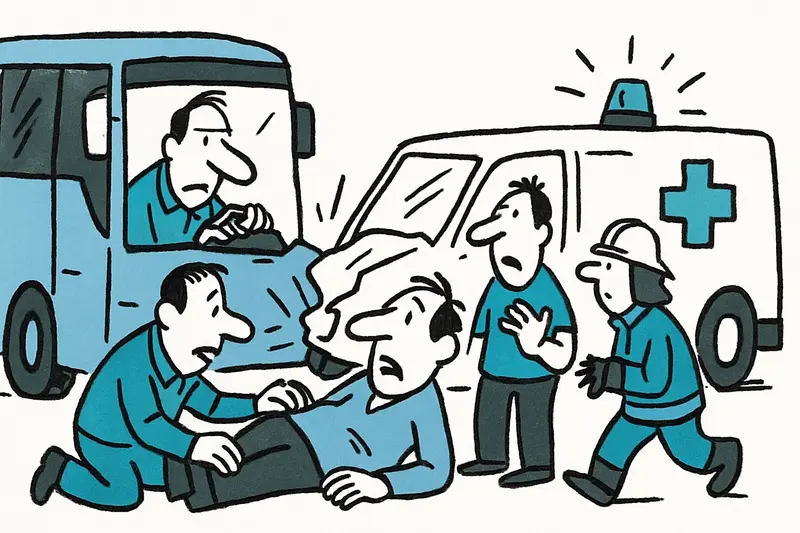
The quiet morning in Porto Cristo was broken yesterday at around 09:15 by sirens, flashing lights and a metallic sound that echoed for a long time. At the small bay, at the junction where anglers and delivery vans usually dominate, an intercity TIB bus and a minibus collided head-on, as reported in Serious accident near Porto Cristo: Head-on collision on the Ma-4010 – several tourists injured. I was not at the scene myself, but neighbors still talk about the bang, the acrid smell of diesel and people staring at their phones — apparently with the same goal: reaching relatives.
The central question
Why do such accidents happen on our rural roads? That is the guiding question hanging over the incident. Not only because German holidaymakers appear to have been affected this time, but because the event reveals fundamental weaknesses: junction design, visibility of traffic signs, possible distraction or individual driver error — and not least the coordination of the rescue chain. Local Spanish coverage can be read at Colisión grave de autobús en Porto Cristo: varios turistas heridos.
What happened and who was affected
According to rescue services, nine people were injured, five seriously. Some of those affected were taken to the Hospital de Manacor; others received life-saving measures on site. The minibus driver was initially trapped and had to be freed by the fire brigade using hydraulic rescue equipment. Eyewitnesses report that the minibus approached the junction without any noticeable braking reaction — an indication, but not proof. The Guardia Civil official site confirms the force cordoned off the site and launched an investigation.
Overlooked aspects
What is often missed in the first minutes: the role of tourist flows and unfamiliar traffic. In Mallorca, many people drive in summer and often year-round who do not know the roads well — rental car drivers, private transfers, tour buses. Added to this are different vehicle types and conditions. Factors such as fatigue, language barriers when giving directions, or simply lack of local knowledge are rarely recorded systematically, but they are relevant. There have been other collisions on regional roads as well, such as Crash on the Ma-10: Bus collides head-on with a truck — What does this say about our roads?.
Another issue is infrastructure. Some junctions on connecting roads are simply not designed for today's traffic volumes. Traffic signs are dirty or poorly lit, sightlines are restricted by vegetation. These local small things can become deadly once several factors come together.
Emergency chain: what went well, what can be improved
The SAMU teams, fire brigade and Guardia Civil were quickly on site — residents and responders praise that. Still, the incident shows that in individual cases we touch on resource limits: how many severely injured people can be optimally cared for at the same time? Is there a need for more specialized trauma teams on the east coast outside the major hospitals in Palma? And how can information be communicated faster and more reliably to relatives and hotels?
Concrete solutions
A few proposals that could advance the local discussion: better signage and sightlines at critical junctions; speed reduction and physical road calming measures (for example speed humps or narrower junction entries) on tourist-heavy routes; mandatory technical checks for buses that regularly operate transfers; compulsory tachographs and "black boxes" in larger intercity buses, with reference to Dirección General de Tráfico (DGT) road safety information; targeted checks by the Guardia Civil, especially during off-peak times; and an information campaign for tourist groups on traffic safety.
In addition, an analysis of past accidents along certain routes would be useful to identify "hotspots." This is not a luxury but prevention: a few measures can reduce many risks.
For those affected, medical care and clarity matter now
Regardless of questions of blame, the injured need rapid, good medical care and transparent information for families. The Guardia Civil is asking witnesses to come forward — tips are now important to reconstruct the sequence of events and prevent similar cases.
In Mallorca we are familiar with loud festivals, relaxed siestas and a colourful mix of tourists. But images like these — sirens, trapped people, the babble of voices in different languages — remain. They should spur us to do more than react with concern: we must answer the question: what can we learn from this accident so that a holiday day does not become a test of emergency response?
Our thoughts are with the injured and their families. If you have observed anything or are affected, please contact the Guardia Civil or the local rescue services.
Frequently asked questions
What happened in the accident near Porto Cristo in Mallorca?
Why do road accidents happen so often on Mallorca’s rural roads?
What should tourists know about driving in Mallorca?
What is the emergency response like after serious crashes in Mallorca?
Which roads around Porto Cristo can be risky for traffic?
What should you do if you witness a road accident in Mallorca?
Are Mallorca buses and transfer vehicles checked for safety?
Why is the Hospital de Manacor important after accidents on Mallorca’s east coast?
Similar News

Maribel: Five Decades of Service – Housekeeper from Peguera Celebrated with a Special Honor
Over 50 years in the hotel business: María Isabel “Maribel” Molinos was honored in Palma at the Nit del Turisme by Unive...
Orange Alert over Parts of Mallorca: Are We Prepared?
Dark clouds and an announced wet spell have triggered an Orange alert in parts of Mallorca. A reality check: what's miss...

Sundair & Co.: Sale speculation and what it could mean for Mallorca
Rumors about a possible sale of the airlines Sundair and Fly Air 41, which belong to Schauinsland-Reisen — and whether b...
Anne Wünsche in Mallorca: A job offer with a catch — who fits the role of personal assistant?
Influencer Anne Wünsche has left Berlin and is urgently looking for a full-time personal assistant in Mallorca. Why the ...
Daily from New York: Palma Between Boom and Strain
United will increase the Newark–Palma route to daily flights in 2027 using Boeing aircraft (231 seats). What does the in...
More to explore
Discover more interesting content

Can Cap de Bou

Townhouse Lleo 72
