
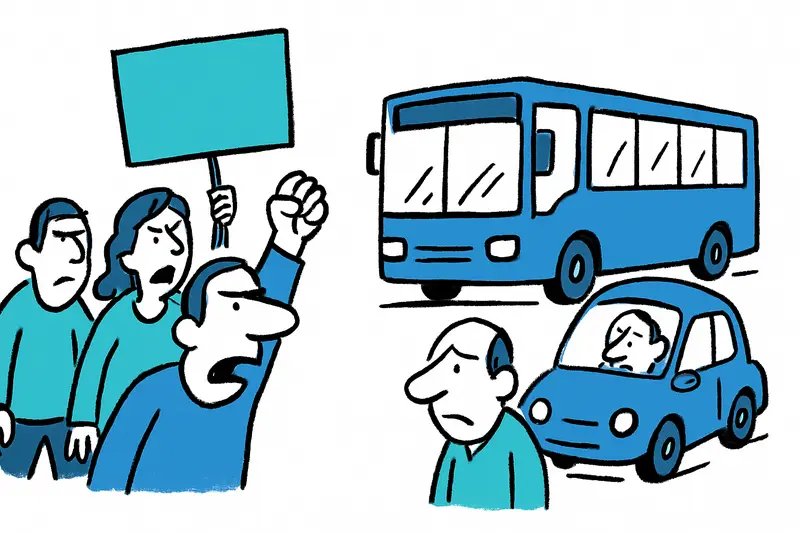
Road closures in Palma: Who is protesting — and who is left behind?
Road closures in Palma: Who is protesting — and who is left behind?
This morning (11:00–approx. 14:30) parts of Palma's city centre are closed: Avenida Jaime III, the Rambla, and several EMT bus lines are being diverted.
Road closures in Palma: Who is protesting — and who is left behind?
Key question: How can protest succeed without unnecessarily blocking the city centre, commuters and shops?
This morning, between roughly 11:00 and 14:30, traffic in Palma's centre is far from normal: Avenida Jaime III and the Rambla are temporarily impassable, the exit toward the Rambla at the Plaça Major car park is briefly closed, and several EMT bus lines — namely lines 3, 4, 7, 20, 25 and 35 — are running diversion routes, as reported in Detours in Palma: Self‑employed demonstration disrupts city center traffic – what to do?.
In short: the protest by self-employed workers is visible and loud. The demands are another matter — here the focus is on the everyday consequences. Suppliers, café and shop employees, tourists with luggage and commuters face questions: When can I still get through? Where can I park? Which bus will still take me to work?
Critical analysis: Demonstrations are part of democratic expression. At the same time, claims and organization sometimes diverge. When a central axis like Avenida Jaime III is blocked, the whole city centre feels it, as other closures have shown in Evening Road Closures in Palma: Between the Right to Protest and Traffic Chaos. Not only does car traffic slow down, supply chains for small businesses and access to public services also suffer. EMT diversions affect people who rely on bus connections — for example hospitality staff or older residents who cannot spontaneously switch to taxis.
What is missing from the public debate: so far the discussion often revolves around the legitimacy of the protest or the participants' demands. Too rarely, however, are pragmatic precautions discussed: How can the city ensure that emergency services, supply chains and school transport are not unnecessarily disrupted? What information do residents and passengers receive in time? And why are there no clear, provisional parking or short-term delivery zones around the closed areas?
Everyday scene from Palma: The Plaça Major smells of freshly brewed coffee. A delivery van is manoeuvring, two businesswomen are arguing beside baskets of fruit, an older man with a newspaper stops and looks searchingly at the cordoned-off Rambla. The cathedral bells are ringing, and the May heat already weighs on the shoulders of pedestrians. Between the smell of sunscreen and city noise it becomes clear: this closure affects not only a demonstration, it affects people at work and in their daily routines.
Concrete solution approaches: First, better advance communication: uniform notices at stops, in the EMT apps and on municipal displays, early enough and with exact time windows. Second, temporary delivery corridors: short-term access permits for delivery vehicles at set times along diversion routes. Third, key contacts for businesses: an online form allowing shops to register short-notice delivery needs. Fourth, coordinated route planning: EMT should publish pre-prepared substitute routes and stop plans for announced actions — similar to a shift schedule, not ad hoc, to avoid the wider service disruptions seen in General Strike for Palestine Makes Palma Quieter — and Raises Questions. Fifth, evaluation after the demonstration: a short public report on impacts and improvements for future actions.
Concise conclusion: The right to demonstrate is inviolable. The art is to link protest and urban life so that the most vulnerable in everyday logistics do not end up paying the price. Palma needs better coordination, clear information and pragmatic solutions — so that the Rambla is not a big puzzle for commuters, businesses and visitors even on protest days.
Frequently asked questions
What is the best time of year to visit Mallorca?
Can you swim in Mallorca in spring and autumn?
What should I pack for Mallorca in shoulder season?
Is Mallorca good for a beach holiday outside the hottest months?
What is Sóller like for visitors in Mallorca?
Why do people visit Palma de Mallorca instead of staying only at the beach?
Is Mallorca a good place for hiking and outdoor activities?
What is the weather like in Mallorca in winter?
Similar News

Missing 24-year-old from Bavaria found on Mallorca
The 24-year-old woman from the Augsburg area who had been missing since August 3 was found on Mallorca. Family members, ...
Heat and Power: Why the Balearic Islands Are Sweating Now — a Reality Check
Weeks of heat waves, rising cooling demand and suddenly flickering lights: Mallorca, Ibiza and Formentera have seen an i...
When the Water Taps Run Dry: Why Tankers Are Not the Solution
In villages like Deià, Valldemossa or on Menorca, municipalities are limiting water use because of drought. Who decides,...
Ryanair Flight Diverted to Barcelona: An In-Flight Emergency and the Questions That Follow
A Ryanair jet from Pisa to Málaga landed in Barcelona after a passenger became acutely ill. Why these cases need more at...
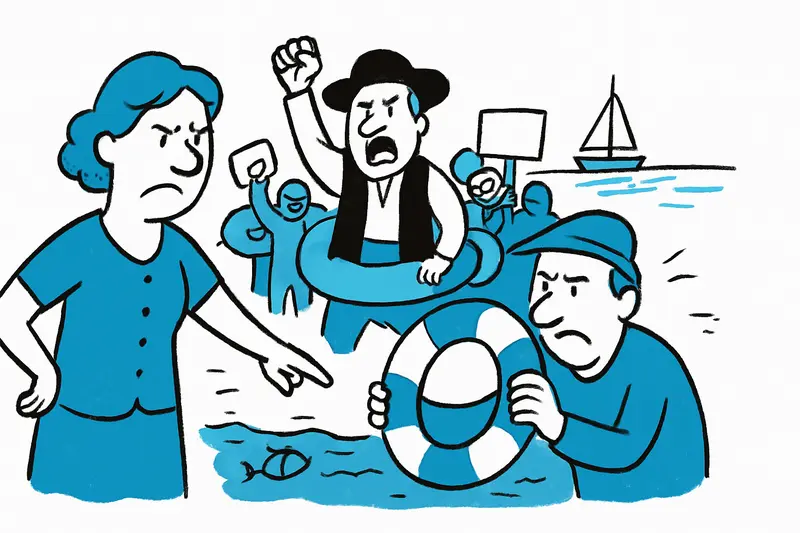
Alarm in Port de Pollença: What now for the polluted bay?
Hundreds of people protested on the beach of Port de Pollença. The environmental organization Arrels Marines demands a p...
More to explore
Discover more interesting content

Boat Tour with BBQ along Es Trenc Beach
Private transfer from Mallorca Airport (PMI) to Pollensa
