
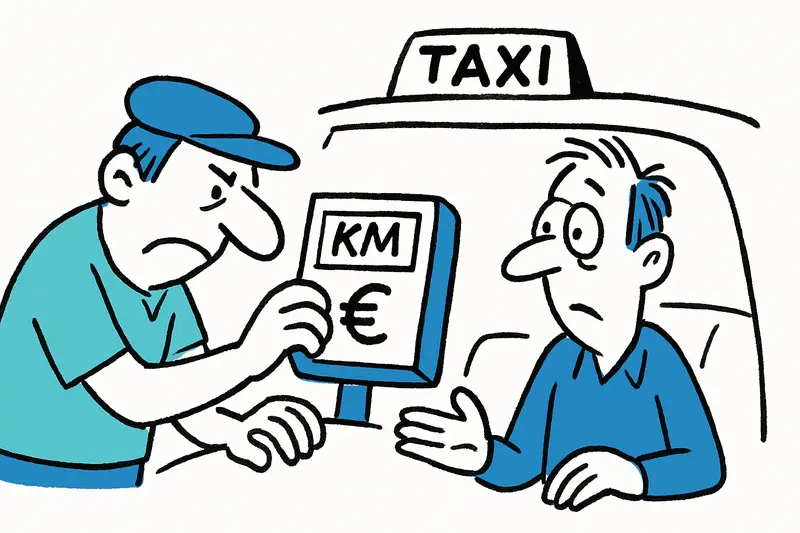
Why taxis in Palma became so much more expensive in 2025
Why taxis in Palma became so much more expensive in 2025
Last year taxi fares in Palma rose by over 15 percent — far above the Spanish average of around 3 percent. What's behind this, who pays, and what's missing in the dispute over the taximeter?
Why taxis in Palma became so much more expensive in 2025
In Palma, a line of people in thick coats squeezes together each morning at the Plaça de Cort, fingers clenched around handbag handles. The taximeter signs blink, radios hiss softly, and the prices on the downtown displays suddenly seem like a different language: last year fares here rose by more than 15 percent.
The figure comes from an analysis by the consumer association FACUA: among 57 Spanish cities, Palma recorded the strongest increase. By comparison, the nationwide rise was around 3 percent. San Sebastián, Lleida and Tarragona remained the most expensive in 2025; Las Palmas, Huelva and Cádiz the cheapest. These facts are the starting point, not the end of the debate.
Key question
Why does the price squeeze hit Palma so hard, and who bears the costs in daily life — visitors or residents?
Critical analysis
A single number does not explain how differently mobility works on the island. In Palma, seasonal swings, airport flows and short inner-city trips collide. Operating costs — fuel, insurance, maintenance — play a role; so do day and night surcharges, which can weigh more depending on trip duration and distance. Demand is also changing: when there are more flights, more groups and more short trips, empty runs occur and drivers face increasing pressure to generate revenue. All of this can lead to higher fares without the price of every single trip being easy to trace, and Queues in Can Valero: Why the Taximeter Update Became a Traffic Problem shows how mandatory updates can create delays and added costs.
What's missing in public debate
The discussion often stays on the surface: outrage about higher sticker prices, calls for cheap offers. Rarely do two perspectives come together: that of the drivers, explaining their operating costs and working hours, and that of users, demanding reliable, transparent prices. Also little debated is the role of digital intermediaries, the composition of fares (base price vs. per kilometer vs. waiting time) and how seasonal peaks are accounted for — including measures such as Unified Taxi Tariff in North and Central Mallorca — Relief for Passengers or a New Problem for Drivers?.
Everyday scene
Monday evening on the Paseig Marítim: an elderly woman wants to go from the port to the market in Santa Catalina. The driver names an amount, she frowns, hands him a larger note. On the passenger seat lies a worn trip log. Outside the wind whistles through the palms, a garbage truck rumbles by. Such simple journeys are suddenly a decision because of rising prices: taxi or bus?
Concrete solutions
- More transparency: uniform display of price components on the vehicle and on the receipt, easy to understand for travelers.
- Review airport mechanics: test flat rates or mandatory fixed prices for routes from the airport into the city to avoid surprises. These steps echo recent proposals in New Taxi Rules in Mallorca: Caps, Ramps and the App — Will the Plan Match the Island's Rhythm?.
- Dialogue between city administration, driver associations and consumer protection: create binding data analysis on cost structure and demand.
- Promote shared rides: incentives for carpooling on short inner-city trips to reduce empty runs.
- Integration with the municipal public transport: combined tickets or supplementary night lines so taxis are not the only option.
Pithy conclusion
The sharp price increase in Palma is not a singular mishap but the result of many small factors: costs, demand and market mechanics. The political response must be concrete and tangible: more insight into the numbers, clear rules at the airport and real alternatives in local transport. Otherwise the debate remains heated and unsatisfying — and the next taxi ride an unpleasant little financial surprise.
Frequently asked questions
Why have taxi fares in Palma gone up so much in 2025?
Are taxis in Palma more expensive than in other Spanish cities?
Do taxi prices in Mallorca change with the season?
What makes taxi rides from Palma airport so unpredictable?
How are taxi fares in Palma calculated?
What can taxi passengers in Palma do if prices feel too high?
Is taking a taxi or bus better for short trips in Palma?
Will taxi prices in Mallorca keep rising in 2025?
Similar News

Nipping Sea Creatures: Why Bathers in Cala Major and Elsewhere Should Be Cautious
In Cala Major, bathers have reported being nipped by small fish. What is behind it, how can problems be avoided — and wh...
Forced eviction in Santa Catalina: When a 65-year-old slept in her car and showered on the beach — a question of responsibility
The story of Pilar López from Santa Catalina represents a problem affecting many Mallorcans: How can an island with a bo...
New traffic rules from October 1: What Mallorca visitors and locals need to know
From October 1, 2026, Spain will implement far-reaching changes to traffic regulations. Important for Mallorca: greater ...

More water than last year: Mallorca's reservoirs breathe easier
September rain refilled the Tramuntana's reserves: overall fill around 35 percent, Cúber at 40.42 percent, Gorg Blau at ...
Three Luxury Hotels in Banyalbufar: Lots of Money, Many Questions
A Danish investor plans three exclusive accommodations in Banyalbufar — including the historic Son Valentí. The announce...
More to explore
Discover more interesting content

Can Cap de Bou

Townhouse Lleo 72
