
Teacher Shortage in the Balearic Islands: Why a Flexible Master's Should Be Only the Beginning
Teacher Shortage in the Balearic Islands: Why a Flexible Master's Should Be Only the Beginning
The teachers' unions are calling for a more flexible teaching master's at the UIB — more places, online options and summer modules. An important step, but is that enough to really save schools in Mallorca, Menorca and Ibiza?
Teacher Shortage in the Balearic Islands: Why a Flexible Master's Should Be Only the Beginning
Key question: Is a merely more time-flexible training enough to remedy the acute teacher shortage in Mallorca and the neighboring islands?
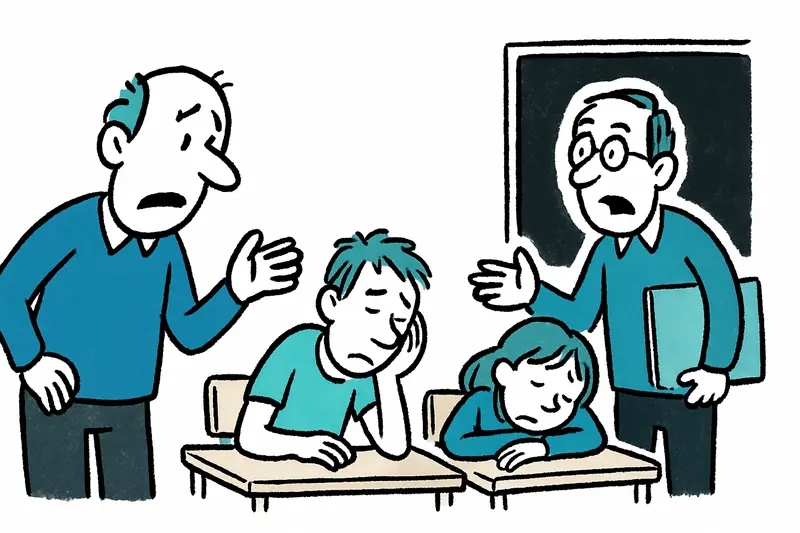
In Palma, shortly after eight in the morning, children at the primary school on Avenida Argentina hop from stone to stone in the schoolyard, while at the corner a teacher folds his tablet with a worried expression. The situation is similar everywhere: classes with gaps, substitute lists, and colleagues carrying more hours than planned. The teachers' unions have now put a clear package on the table: more study places in the teaching master's program at the University of the Balearic Islands, more flexible time models, stronger online offerings — also for Menorca, Ibiza and Formentera — and the option to offer parts of the master's during the summer months. They reject extending the master's to two years because that would increase costs and hurdles for interested candidates, a debate similar to discussions about A Fifth Year for Teacher Training at the UIB: Luxury or Necessity for Mallorca?.
That sounds like tangible proposals. But the debate must not end at the university gate. A flexible course structure can indeed produce graduates faster, but it is not sufficient on its own if systemic causes remain unaddressed: low starting salaries relative to rents, precarious substitute positions without development prospects, and the challenge of attracting or retaining young teachers on the islands.
What is often missing in the public discourse: honest numbers and local retention incentives (see Teacher Shortage in the Balearic Islands: Why So Many Positions Remain Open). Which municipalities have the most serious deficits — Palma, the small villages in the east, or the schools on Menorca? How do school holidays and seasonal work in the hotel industry affect the availability of lateral entrants? And: how many study places can the UIB realistically expand without losing quality?
Accessibility is also critical. Many prospective teachers already work while studying. A master's that runs exclusively in the evenings or online helps; a master's that additionally offers summer modules helps those who can free up time in the high season. But without financial support — scholarships, travel allowances for the smaller islands, affordable internship remuneration — participation remains wishful thinking for many.
Concrete solution approaches can be sketched fairly quickly: 1) A modular master's with on-site and online blocks plus summer intensives so that working professionals and island residents can enroll flexibly. 2) Practical recognitions: faster accreditation of prior pedagogical experience so graduates can be deployed in classrooms sooner. 3) Provisional teaching licenses with accompanying professional development and mentoring in the first two years, so schools are relieved in the short term and young teachers are not left on their own. 4) Regional incentives: housing subsidies for teachers on Menorca, Ibiza and Formentera, travel reimbursements and childcare subsidies. 5) Cooperations between the UIB, municipal administrations and school leadership to manage study place allocation per island in a targeted way.
Some measures can be started immediately as pilots: a summer block at the UIB with open participation places for career changers; a scholarship program for candidates who commit to taking a post on one of the small islands; and a mentoring program that pairs experienced teachers with newcomers. Such pilots quickly provide data — and that has been missing from the debate so far.
Everyday scene: In a café on the Passeig del Born parents discuss the staff shortage after dropping their children off. A taxi driver tells of colleagues whose children are only in school half a day because substitutes are missing. Such impressions give weight to the demand for flexibility but also show: education policy is local and tied to people's daily lives. You can change curricula — without social incentives, turnover remains high.
Conclusion: The unions are right to demand more flexibility. A modular, digitally supported master's with summer courses can lower barriers and produce teaching staff faster. But it is crucial that this measure be part of a larger package: better pay, housing and mobility incentives, recognition of professional experience, and rapid, pedagogically supervised deployment options. Otherwise a flexible master's remains a tool, not the solution.
The Balearic Islands need pragmatic, short-term effective steps — and the political courage to address training and living conditions at the same time. Otherwise we'll be tinkering with the same problems at the start of the next school year, while the schoolyard bell has long since rung.
Frequently asked questions
Why is there a teacher shortage in Mallorca and the Balearic Islands?
Would a more flexible teacher training master's help Mallorca's schools?
What makes it hard for teachers to stay in Mallorca?
Could summer courses at the University of the Balearic Islands help train more teachers?
How do teacher shortages affect schools in Palma?
Do Menorca, Ibiza and Formentera need special incentives to attract teachers?
What support do new teachers in Mallorca need after they start working?
What practical changes could help schools in Mallorca recruit teachers faster?
Similar News

Car on MA-13 near Inca in flames – a safety check for the island
A vehicle caught fire on the MA-13 towards Alcúdia on Tuesday afternoon. The driver was uninjured, the car was destroyed...

Real Estate in Mallorca: Fewer Buyers, Higher Prices — What's Behind It?
Sales on Mallorca are falling, yet prices continue to climb. Why fewer transactions do not equal relief — and what shoul...
Just Bought — Already Trouble: Water Damage in the Heiters' Villa and What Owners in Mallorca Should Know Now
A newly purchased sea-view property — and within days a water damage. What risks lurk in new properties in Mallorca, and...

Rich, Richer, Mallorca? A critical look at the growing super-rich bubble
Numbers: Around 3,600 millionaires in the Balearic Islands hold a combined €27.6 billion. What this concentration of wea...
Chain reaction on the MA-1: Eight injured in rear-end collision near Portopí
On Tuesday morning there was a crash at the Andratx exit to the MA-1 towards Palma: a rear-end collision between a car a...
More to explore
Discover more interesting content

Can Cap de Bou

Townhouse Lleo 72
