
Teacher Shortage in the Balearic Islands: Why So Many Positions Remain Open
At the start of the school year many classrooms stand empty: on the Balearic Islands more than half of the newly advertised secondary teaching posts are unfilled. A look at causes, consequences — and possible solutions.
Teacher shortage in the Balearic Islands: why so many positions remain open
Yesterday morning at the gate of a secondary school in Palma: wind from the bay, seagulls, parents with hot coffee in hand and on a notice board a sobering note that briefly lowers the pulse – several teaching posts are still vacant. This is not a locally limited annoyance, but a structural problem: more than half of the newly advertised teaching posts for secondary education in the Balearic Islands are currently unfilled (More than half of the new teaching positions in the Balearic Islands remain vacant). Similar administrative vacancies are documented in Empty Offices, Full Waiting Rooms: Why More Than 100 Leadership Positions Are Missing on the Balearic Islands.
The central question: why so many gaps here?
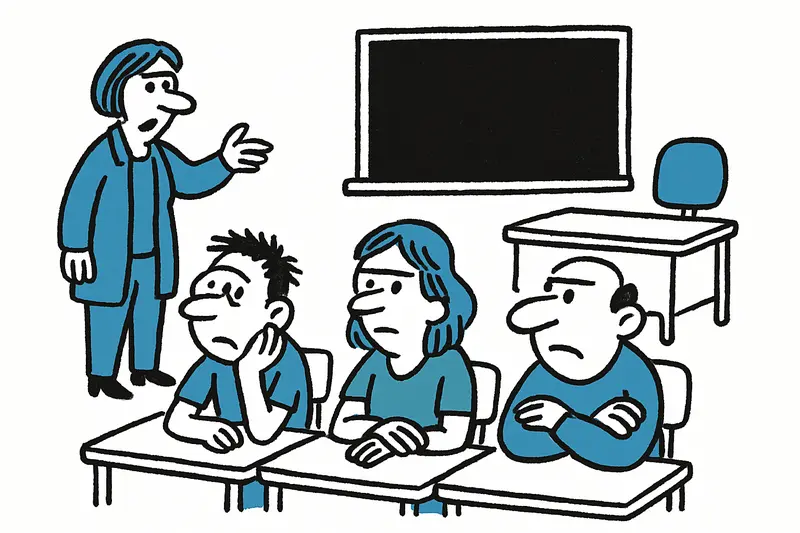
The simple answer leads to the selection exam in June: significantly fewer applicants pass than expected. Official figures show the share of unfilled posts on the islands is more than twice as high as the Spanish average. You can feel it in everyday school life: timetables are rewritten, subjects merged, advanced courses are cancelled or covered for months by rotating substitutes.
Particularly precarious is the situation in the Pityuses – Ibiza and Formentera. The islands have always struggled with the basic problem: small population, high seasonal costs, limited housing options and logistical hurdles. It's not just math or Spanish teachers who are missing, but also specialists in chemistry, physics and foreign languages.
What the public debate overlooks
The discussion often focuses on exam pass rates – but rarely on three other, less visible factors: first, the attractiveness of the teaching profession on the islands (housing costs, temporary contracts, limited prospects). Second, the barriers for foreign or relocated teachers: recognition of degrees, language requirements (Catalan/Spanish) and bureaucratic waiting times. Third, training practices: how practical are the exams and study programs in reality?
Teachers who have worked on Mallorca for years report a mixture of frustration and improvisational skill: "We fill the gaps, but continuity suffers," says a secondary school teacher from Palma. In smaller towns, parents often hear only that solutions are being worked on instead of clear answers. That is little comfort when final exams are approaching and advanced courses are missing.
Substitute teachers as patchwork
Many of the candidates who failed the exams are now being hired as substitute teachers, according to school principals. Pragmatic in the short term, problematic in the long term: substitutes offer flexibility but often do not have the subject depth or pedagogical experience required for demanding courses. This is especially noticeable in upper-level or specialized subjects.
The CCOO union therefore calls for exams to be made more practice-oriented – with simulated teaching situations and longer school internships. That sounds sensible, but is only one building block. Exam reform, better practical training and attractive working conditions must go hand in hand.
Concrete measures – realistic and quickly effective
So what to do? Here are some pragmatic proposals that came up in talks with teachers, school principals and unions and could be addressed immediately:
1. Practice-oriented exams and mentoring programs: A combination of theoretical tests and multi-week internships with final assessment by local teachers.
2. Incentives for the Pityuses: Housing subsidies, temporary rent guarantees during the season, travel reimbursement for commuters between islands.
3. Fast-track courses for career changers: Shortened pedagogical certificates with practical block weeks, supported by experienced mentors.
4. Better recognition of foreign qualifications: Speeding up bureaucracy and targeted language courses (Catalan/Spanish) could unlock talent currently stuck in waiting loops.
5. Digital support: Hybrid teaching where specialist subjects are temporarily supplemented by video lessons from the mainland until local specialists are available.
Who must act?
In the short term, schools improvise – and usually do so successfully. In the long term, the island government is required: more flexible hiring models, targeted support packages for the islands, cooperation with mainland universities and a revision of exam modalities. The demographic pressure is analysed in Three retirees, one apprentice: How the Balearic Islands can close the skills gap. That requires courage, resources and above all speed.
Children must not sit out the latency period of political decisions. Anyone who wants to keep teachers on the Balearic Islands in the future must offer more than a festive atmosphere at school opening: reliable contracts, practice-oriented training and concrete incentives for living on the islands.
I will follow up and ask the education authority, universities and school principals in the coming weeks – so that teaching can really take place where it belongs, with the children.
Frequently asked questions
Why are so many teacher jobs still open in Mallorca and the Balearic Islands?
How does the teacher shortage affect schools in Mallorca?
Which school subjects are hardest to fill in the Balearic Islands?
Why is it especially difficult to recruit teachers in Ibiza and Formentera?
What makes it hard for teachers from abroad to work in Mallorca?
Are substitute teachers being used to cover vacancies in the Balearic Islands?
What solutions are being proposed to tackle the teacher shortage in Mallorca?
What should families in Palma expect when schools cannot fill teacher posts?
Similar News

Daily from New York: How Palma's Air Traffic Is Growing — and What Must Change
United will increase the Newark–Palma service to daily flights in 2027 (Boeing, 231 seats). Strong tourist numbers clash...

When Love Ends in Shards: Destruction in Son Vida and the Questions That Remain
In Son Vida a relationship dispute escalated: a woman destroyed furniture in a luxury villa, later pressed a panic butto...

Who Bears the Burden? Mallorca Between Tenant Protection and Landlord Fears
Madrid's new housing decrees strengthen tenant rights — but on Mallorca concern is growing: will the law drive small lan...
On the Edge: What Mallorca's Airport Loses If a Major Low-Cost Carrier Falters
The company that operates numerous connections from Palma to France and domestically is negotiating with creditors to re...
Ballermann star Frenzy wins 'Villa of Temptation' and donates prize money to Mallorca animal rescue
Ballermann singer Frenzy won the German reality show and donated the remaining prize money — around €14,080 — to an anim...
More to explore
Discover more interesting content

Can Cap de Bou

Townhouse Lleo 72
