
Tents Next to Villas: Nou Llevant Exposes the Gap Between Rich and Poor
In the new residential area Nou Llevant, tents and motorhomes stand only a few meters from million-euro villas. How do such parallel worlds arise — and how can this be changed?
Tents Next to Villas: Nou Llevant Exposes the Gap Between Rich and Poor
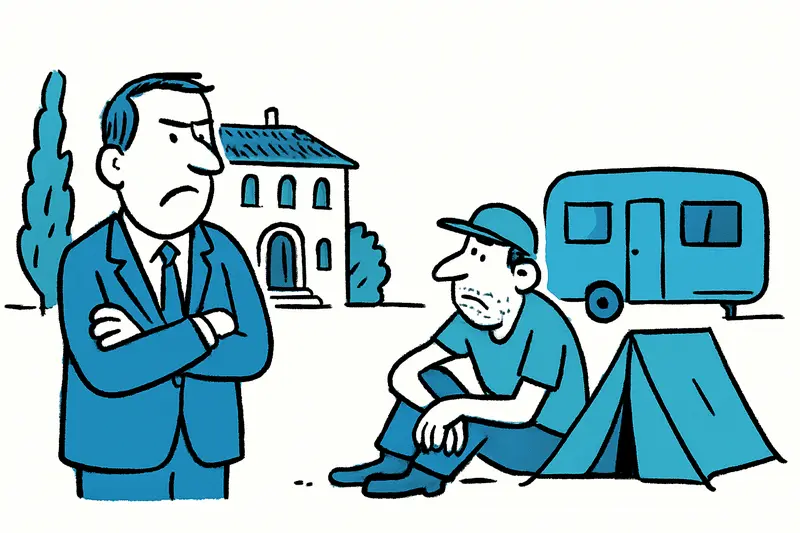
In Nou Llevant, just a stone's throw from Palma's port, I come across a scene that doesn't seem to fit: modern new buildings with glass balconies, parking spaces and security services — and right beside them tents, When Caravans Become the Last Address: How the Housing Crisis Is Changing Mallorca and makeshift clotheslines. Children play among plastic toys and construction greenery, while cruise ships arrive on the horizon. The spatial proximity is brutal: a footpath, a tree, and two worlds touch.
Key question: How can it be that in the middle of an up-and-coming neighborhood families live in tents while apartments worth around one million euros change hands?
Critical analysis
The reasons are not new, but their concentration in Nou Llevant makes them visible. Decades of converting industrial sites and derelict land have created space for lucrative construction projects. Sky-high prices, tents, empty promises: Why Mallorca's housing crisis is no longer a marginal issue — gentrification pushes rents up; at the same time, there is a lack of sufficient social housing and short-term emergency accommodation. The result: people who, because of job loss, precarious tenancy arrangements or missing residency and work papers, cannot find secure housing, set up makeshift camps at the edges of the new wealth.
Administrative inertia adds to the problem. Responsibilities between the Ayuntamiento, the island council and welfare organizations are often unclear. When help does arrive, it is usually piecemeal — warm blankets, a cold-weather bus in winter months — instead of sustainable solutions such as permanent housing or support programs for families.
What is missing from the public discourse
Much is said about noise, nighttime disturbances or the impact on investors. Rarely does the conversation focus on the lived reality of people in the camps: children's school attendance, access to medical care, official recognition of need. FEANTSA research on homelessness in Europe similarly highlights that attention to these everyday challenges is essential. Also underexposed is the question of how new development can be socially integrated — for example through binding quotas for social housing or longer-term rent policies instead of short-term profit maximization.
Everyday scene from Palma
A morning in Nou Llevant: the smell of fresh coffee from a nearby bakery mixes with the oil smell of construction cranes. On Avenida de México vans turn toward the port; on a small green patch behind a bench a woman pulls her child's toy out of a tent while the child runs barefoot through puddles. Streetlights cast night light on tent poles; the siren of an ambulance is not an unusual sound here. These details make the gap not abstract but tangible.
Concrete solutions
Short term: mobile social teams should be deployed more regularly and on a binding basis — with social workers, interpreters and medical staff. A centrally accessible contact point for families where paperwork, school registrations and health checks can be processed would reduce many barriers.
Medium to long term: urban planning must balance housing development socially. That means new projects should be required to include a share of affordable housing; vacant public buildings could be converted into temporary family accommodation, an alternative discussed in Part-time Villages: How Second Homes Are Hollowing Out Mallorca's Communities. A municipal program to convert short-term rental contracts into more stable housing situations would dampen rent spikes.
From a fiscal policy perspective, incentives for investors could be tied to social obligations: tax breaks only when proof of social housing or contributions to a homelessness fund are provided. NGOs and neighborhood initiatives are important partners — microprojects like community kitchens or childcare offers help immediately.
Conclusion — brief and pointed
Nou Llevant is not an isolated case but a showcase: on one street you can see how the island decides. Either we accept that poverty remains next to luxury, or we create rules and infrastructure that make coexistence possible. To ensure this decision does not pass by the campfires of improvised tent cities, bold political directives, reliable help on the ground and the willingness to make room for a life with dignity are needed.
Frequently asked questions
Why are there tents next to new luxury buildings in Nou Llevant, Mallorca?
How bad is the housing crisis in Mallorca right now?
What help do people living in tents get in Mallorca?
Why is it so hard to solve homelessness in Palma, Mallorca?
What is Nou Llevant like in Palma, Mallorca?
Is Nou Llevant in Mallorca becoming gentrified?
What could Mallorca do to reduce the housing gap between rich and poor?
Can children living in tent camps in Mallorca still go to school and get medical care?
Similar News
Why the Striped Breams in Cala Pí Should Be a Wake-up Call
Once again bathers in Cala Pí were surrounded while swimming by small, nippy fish — some wounds bled. Time for clear rul...

Daily from New York: How Palma's Air Traffic Is Growing — and What Must Change
United will increase the Newark–Palma service to daily flights in 2027 (Boeing, 231 seats). Strong tourist numbers clash...

When Love Ends in Shards: Destruction in Son Vida and the Questions That Remain
In Son Vida a relationship dispute escalated: a woman destroyed furniture in a luxury villa, later pressed a panic butto...
Who Bears the Burden? Mallorca Between Tenant Protection and Landlord Fears
Madrid's new housing decrees strengthen tenant rights — but on Mallorca concern is growing: will the law drive small lan...
On the Edge: What Mallorca's Airport Loses If a Major Low-Cost Carrier Falters
The company that operates numerous connections from Palma to France and domestically is negotiating with creditors to re...
More to explore
Discover more interesting content

Can Cap de Bou

Townhouse Lleo 72
