
Theft at Playa de Palma: How safe are tourists at night?
Theft at Playa de Palma: How safe are tourists at night?
At Playa de Palma street vendors snatched a gold chain worth around €5,000 from a tourist. The National Police intervened and arrested two suspects. A reality check on police presence, vendor structures and what is often missing here.
Theft at Playa de Palma: How safe are tourists at night?
Gold chain worth €5,000 ripped off, two street vendors in custody – but the picture is more complex
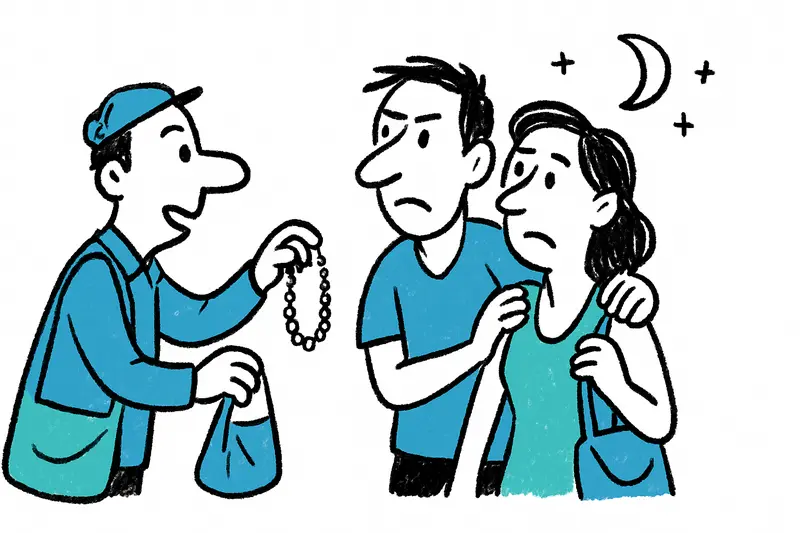
Shortly before two in the morning an evening at the Ballermann ended abruptly for a tourist couple: vendors approached, offered jewelry, one put several chains around the neck of one of the victims – and then in a swift movement pulled another, valuable gold chain from the neck. The National Police, which happened to have an unmarked patrol in the area, intervened. Officers managed to arrest two of the suspected vendors on the spot; the stolen chain worth around €5,000 was recovered.
Key question: How safe do tourists really feel at busy beach stretches like Playa de Palma when it gets late and street vendors are around?
The events of that Friday evening follow a pattern that repeatedly appears here on Mallorca: heavy foot traffic, narrow promenades, loud bars and a business environment where informality and sometimes aggression sit close together. In the hustle of the promenade it is easy to lose track – and for criminals it is all the easier to use sudden movements or distraction tactics.
Critical analysis: The quick arrest shows that police presence works. At the same time, the incident exposes gaps. Unmarked patrols are effective, but not comprehensive. Vendors who start with a short sales pitch and then turn violent often operate in groups; division of labor (seller, receiver, getaway person) facilitates escape. Local public order policies often focus on visible problems – noise, litter, alcohol excesses – and less on targeted strategies against organized pickpocketing or "jewelry trick" methods.
What is too often missing from the public debate: the perspective of residents and honest small traders. Many shop and bar owners are annoyed by aggressive sales practices because they damage the area's image. At the same time there is no clear idea of how permits, controls and sanctions against mobile vendors can be enforced efficiently without punishing the innocent along with the guilty.
A everyday scene from the promenade: It's still warm, the air smells of fries and the sea, a bus brings night owls from Palma to Can Pastilla. Spanish, German and British voices intermingle; bass rumbles from a beach bar in the distance. Between sunbeds and loungers a couple looks suspiciously at a vendor waving a bag of cheap jewelry. This is often how the story begins, which in this case ended in a robbery.
Concrete solutions that could help here:
- Targeted presence at peak times: instead of sporadic unmarked patrols, regular visible patrols at hotspots during evening hours.
- Training for police and public order officers: rehearsing scenarios (distraction, division of labor, quick escape routes) increases the chance of stopping acts immediately.
- Faster coordination between authorities: shortening reporting chains from victims to police, public order office and tourism authority.
- Information for tourists: clear guidance at offices, from hosts and at transport stops on how to behave when faced with aggressive sellers – and how to secure valuables.
- Regulation of street vending: controlled vending zones with a clear identification mark for permitted vendors, combined with sanctions for aggressive or fraudulent practices.
Legally the case is clear: anyone who violently rips a chain from a person's neck commits robbery. The on-site arrest – two alleged vendors remained nearby and were taken into custody – makes criminal prosecution possible. Whether the perpetrators are part of a larger group is a question for the investigation, not for speculation at the bar next door.
Support for the victims is also important: taking statements, securing traces, interviewing witnesses – and using interpreters if needed. For tourists a simple measure would help: when refusing offers create distance, hold your arm to the side, do not display valuable items in your hand. But that does not absolve the authorities of their responsibility.
My conclusion: this incident shows two sides at once. On the one hand: police reaction can succeed quickly. On the other hand: prevention remains piecemeal. Those who are out at Playa de Palma at night feel a mix of holiday cheer and a small risk – and hope that authorities, residents and businesses will together find more sustainable rules. Without this work the promenade remains a space where the mood can quickly turn – from bustle to alarm.
A final appeal: More visible patrols, clear rules for street vendors and a serious information campaign for visitors would make nightlife at Playa de Palma safer – and that is in the interest of everyone who lives and works here.
Frequently asked questions
Is Playa de Palma safe for tourists at night?
How can I protect my valuables from pickpockets on Mallorca’s promenade?
What should I do if I’m confronted by street vendors offering jewelry?
What should I do if a theft happens on Mallorca's promenade?
Are there measures or policies to prevent jewel theft by street vendors in Mallorca?
Where can I find clear safety information for tourists in Mallorca's nightlife areas?
When is Playa de Palma most active at night and how can I stay safe during those hours?
What general safety tips help visitors enjoy Mallorca’s beaches and promenades safely at night?
Similar News
Smoking Weed at the Ballermann: Why a Ten-Euro Joint at Playa de Palma Ends in Handcuffs
A street purchase for 10 euros at Playa de Palma led to an arrest. Why a simple joint on holiday can have serious conseq...

Push-ups on the Sea: Why Prone Paddlesurf is Taking Off in Mallorca
Those who crawl belly-down across the water aren't signaling for an ambulance but curiosity: prone paddlesurf — long, na...

When Bouncers Run Amok: Emmy Russ and the Question of Safety at the Ballermann
An incident at the Megapark involving reality TV figure Emmy Russ raises broader questions about the oversight of securi...

Helpfulness at Ballermann: Vacationer from Kiel Receives His Wallet Back
An honest finder from Flensburg and the cooperation of German authorities reunited a lost wallet with its owner at Playa...
Castell d'Alaró: Sale amid expropriation procedure – who decides about the castle?
The Ordinas family is offering their share of Castell d'Alaró for sale at €3.4 million, even though the island council h...
More to explore
Discover more interesting content

Boat Tour with BBQ along Es Trenc Beach
Private transfer from Mallorca Airport (PMI) to Pollensa
