
Thief takes salon security — and even steals the camera
Thief takes salon security — and even steals the camera
In Palma a man stole the tip jar and the surveillance camera from a massage salon. A neighbor filmed the act and handed the video to the National Police. What this reveals about security gaps in small businesses.
Thief takes salon security — and even steals the camera
Key question: How safe are small businesses in Palma really if even the camera becomes prey?
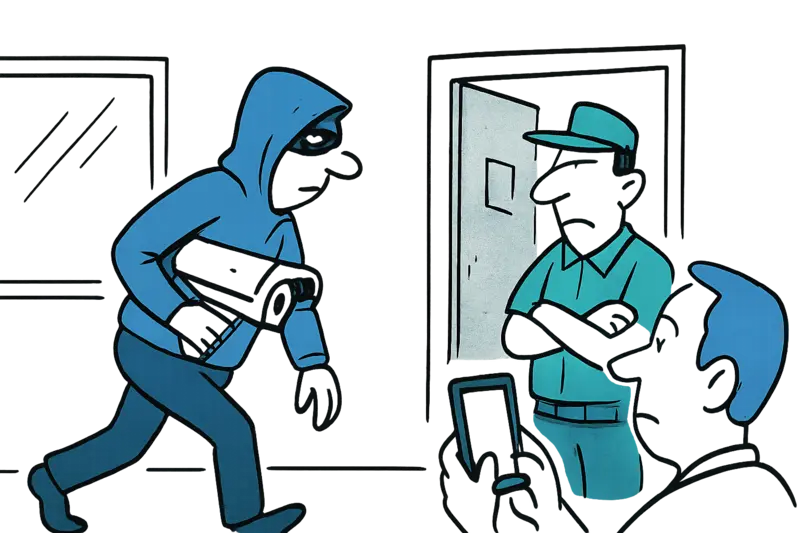
On early Sunday evening, around 6:35 p.m., a massage salon on Miquel Marquès Street near Parc de ses Estacions was burgled: a tin with tips — apparently containing only coins — disappeared from the shop, and — unusually — the surveillance camera itself was stolen. While the man acted with his hood pulled up, a second person reportedly kept watch over the entrance. The two then fled towards Calle Aragón; the man is said to have changed into a light green sweatshirt en route.
A resident filmed the scene with his mobile phone and handed the footage to a patrol of the National Police. The videos could help investigators identify the suspects. For the salon owner the material loss is small, but the frustration over the damaged security equipment is much greater.
Critical analysis: Not just a petty theft
At first glance it's a banal shoplifting story. But the combination of a stolen camera and a second person keeping watch shows a deliberate approach: whoever removes surveillance equipment tries to destroy traces and create time windows for follow-up offenses. That a neighbor could film at all was lucky; often clear lines of sight are missing or people keep their distance out of fear of confrontation.
What is missing from the public discourse
We talk a lot about organized crime in major tourist hotspots, but rarely about the everyday vulnerabilities of small businesses; even a recent raid in Palma that uncovered a gang using specialized keys and disguises tends to dominate headlines while routine risks go unnoticed: insecure camera mounting, lack of cloud backups, unlocked tip containers, poor lighting in front of shops. The question of how quickly and easily private individuals can hand over evidence to the National Police also rarely comes up, even though it is crucial, as shown in a suspicious incident at a Palma gas station involving a wallet and surveillance video.
Another blind spot: support for operators in prevention. Many salons only break even; expensive security technology or regular consultations by the police are not affordable.
Everyday scene from Palma
Imagine Miquel Marquès that Sunday: mild light, scooters in the distance, an elderly woman with a shopping bag, children’s voices from the park. A man on the balcony takes out his phone and films two figures in front of the shop — not out of voyeurism, but because he sensed something unusual. The click of the phone mixes with the rumble of a nearby bus line; the witness later walks a few steps to the police patrol to hand over the file. That's how neighborhood solidarity works today: digital and immediate.
Concrete solutions
- Mount cameras higher and place them in vandal-resistant housings so they are harder to grab. - Switch to cloud backups so recordings are not stored only on site. - Make tip jars lockable or handle tips electronically; a visible sign can deter offenders. - Improve lighting at the entrance; good visibility of the sidewalk and display window reduces risk. - Expand cooperation with the National Police: short consultations for small businesses on simple, inexpensive security measures. - Promote neighborhood networks: groups in messaging apps or local watch rounds can report suspicious activity quickly. - Check municipal subsidy programs that could help small businesses with grants for security investments.
Concise conclusion
The case on Miquel Marquès is more than a curious minor crime: it exposes how vulnerable small firms are when offenders deliberately destroy traces. The response cannot be limited to prosecution — as cases like a cash robbery in Playa de Palma that revealed security gaps show — practical prevention, technical assistance and a functioning exchange between neighbors and the National Police are needed. And yes: sometimes a person with a phone on a balcony is enough to ask the right question — namely, who protects our neighborhoods when the camera itself becomes the loot.
Frequently asked questions
What is Mallorca's climate like year-round?
When is the best time to swim in Mallorca?
What should I pack for a Mallorca trip?
How can I get around Mallorca without a car?
Which beaches in Mallorca are family-friendly?
Are there good hiking options in Mallorca?
What cultural tips should I know when visiting Mallorca?
Is Mallorca safe for travelers?
Similar News
From Workshop to Luxury Villa: What a €19.5 Million House Reveals About Palma's Market
A historic town house on Carrer de la Pelleteria was converted into a 1,000-sq m residence and is on the market for €19....

FC Germania Mallorca: Why does the lead always slip away in stoppage time?
After the 1-2 at C.A. Pal ne da Tesa questions arise: are these coincidences, a shortage of personnel, or a deeper probl...
Hidden War Bunkers in Palma: Remember, Preserve, Reveal?
Beneath Palma's paving lie remnants of a forgotten shelter system from the Civil War. Consolidation, ethics and tourism ...

Death in the Gorge: Key Questions on the Safety of Rallies on the Ma-10
A Porsche plunged into a ravine during the 550 Challenge near Mortitx. Who bears responsibility, what safety gaps were r...

Eighth BAF surge: Why freight costs in Mallorca are rising now — and what it means for us
Fuel surcharges (BAF) for ferries between the mainland and the Balearic Islands rose by around eight percent in October....
More to explore
Discover more interesting content

Can Cap de Bou

Townhouse Lleo 72
