
From Workshop to Luxury Villa: What a €19.5 Million House Reveals About Palma's Market
From Workshop to Luxury Villa: What a €19.5 Million House Reveals About Palma's Market
A historic town house on Carrer de la Pelleteria was converted into a 1,000-sq m residence and is on the market for €19.5 million. What does this say about housing, preservation and the urban landscape in Palma?
From Workshop to Luxury Villa: What a €19.5 Million House Reveals About Palma's Market
A historic building on Carrer de la Pelleteria has been transformed into a 1,000-square-meter residence – a fine example of renovation, but also a symptom
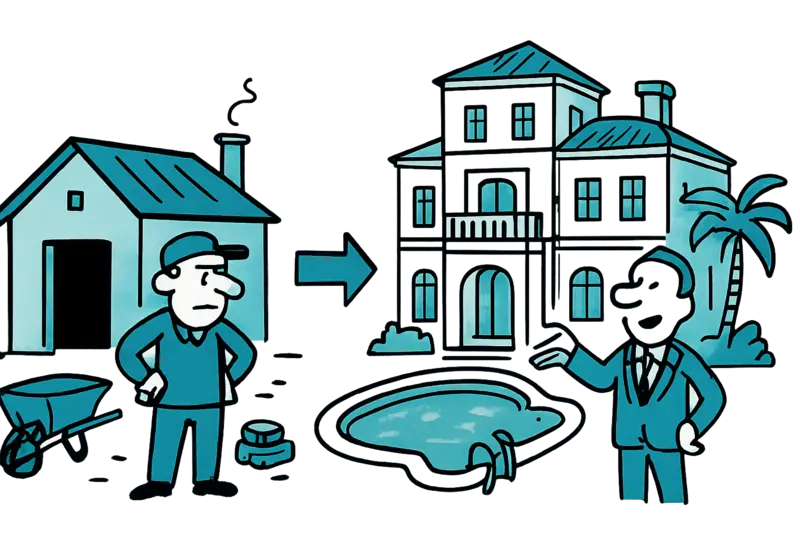
On Carrer de la Pelleteria, where vendors set up their stalls in the morning and scooters purr quietly through the lane in the evening, there now stands a house listed on the market for €19.5 million. Architects have turned a former mixed-use dwelling and workshop into a four-story city villa with a pool, sauna, cinema room, library and a roof terrace. The project highlights reused Marés stone, herringbone parquet, Pinyolet floor in the entrance area and a new core with stairs and elevator as its centerpiece.
Guiding question: What does the conversion of historic buildings into high-priced luxury apartments mean for life in Palma – and for the people who live and work here?
Critical analysis: On the one hand, the craftsmanship is evident: the structural framework and historic components were preserved, courtyards were opened to light, and a careful material concept combines old and new. Such interventions can save urban spaces when handled sensitively. On the other hand, the price exposes the problem of recent years: units in the old town are increasingly being turned into investment assets (Price Shock in Palma's Old Town: Townhouse Doubles Price Within Months, From Squat Blot to Luxury Address: Who Benefits from the Conversion in Camp d'en Serralta?). When townhouses are sold as exclusive family residences or investments, affordable housing is removed from the market and the social mix of entire neighborhoods changes.
What is often missing from the public debate is the fine line between preservation and gentrification. It is not enough that historic masonry remains; what matters is who has access to the interiors, how neighborhoods are serviced and whether local tradespeople and small shops can continue to exist. The C-shaped demolition that brings more light into the courtyard is architecturally appealing – but it also makes the property more attractive to buyers with substantial capital, not to young families or local businesses.
Everyday scene from Palma: Someone drinking a café con leche on a Tuesday midday at Plaça Cort will often see construction workers with dust on their shoes, vans carrying stone slabs from Binissalem and neighbors cursing street closures. In the Pelleteria itself, alongside the song of cicadas, you can hear the trowel striking as lime plaster is applied. These sounds are part of the city – and at the same time they grow quieter when projects prioritize luxury returns over neighborhood life.
Concrete solutions: 1) Use municipal conditions more strongly: those who modernize protected fabric could be required to secure a certain share of units at socially sustainable rents or as subsidized housing. 2) Improved transparency in the sale of historic buildings: information about buyer structures and intended uses should be more accessible. 3) Local support for trades and small businesses: grants or rental quotas for shops that contribute to a neighborhood's identity would counteract a pure luxury turn. 4) Link building permits and change-of-use approvals to binding neighborhood agreements – for example accessibility guarantees for residents, parking solutions and restrictions on noisy work hours.
The case on the Pelleteria can also show how renovation can go well: preserving the historic exterior staircase, integrating a planted courtyard and using durable, local materials are small-scale examples of architectural social responsibility. The problem is not the quality of the work, but the question of distribution: who benefits from this quality?
Punchy conclusion: Luxury renovations like the 1,000-square-meter residence are often impressive in terms of aesthetics and craftsmanship. Yet they are also an indicator that Palma is becoming a city shaped for the few (Palma at Two Prices: Why the Same Square Meter Can Suddenly Be Luxury). If city policy and civil society do not actively counteract this trend, places like the Pelleteria will lose their unique mix of craft, everyday life and neighborhood spirit. A pretty courtyard alone is not enough to keep a city livable.
Frequently asked questions
What does it mean when historic buildings in Palma are converted into luxury homes?
What does the €19.5 million Pelleteria project in Palma illustrate about the city's housing market?
What municipal steps could help balance luxury renovations with affordable housing in Mallorca's cities?
What everyday scenes in Palma show the impact of big renovations on local life?
What signs indicate gentrification in Mallorca's historic towns?
How are historic Palma buildings being adapted for modern use while preserving character?
When is the best time to visit Mallorca to explore architecture and neighborhood life without crowds?
What should buyers think about when purchasing a historic Palma property in terms of access, services, and who benefits?
Similar News

FC Germania Mallorca: Why does the lead always slip away in stoppage time?
After the 1-2 at C.A. Pal ne da Tesa questions arise: are these coincidences, a shortage of personnel, or a deeper probl...
Hidden War Bunkers in Palma: Remember, Preserve, Reveal?
Beneath Palma's paving lie remnants of a forgotten shelter system from the Civil War. Consolidation, ethics and tourism ...

Death in the Gorge: Key Questions on the Safety of Rallies on the Ma-10
A Porsche plunged into a ravine during the 550 Challenge near Mortitx. Who bears responsibility, what safety gaps were r...

Eighth BAF surge: Why freight costs in Mallorca are rising now — and what it means for us
Fuel surcharges (BAF) for ferries between the mainland and the Balearic Islands rose by around eight percent in October....
O'zapft is! Island Oktoberfest in Santa Ponca: Ten Days of Bavaria on Mallorca
From October 23 to November 1, Santa Ponca will turn blue and white again: Hofbräu beer, Schuhplatteln, a dirndl contest...
More to explore
Discover more interesting content

Can Cap de Bou

Townhouse Lleo 72
