
Tight curves, fast bikes: When Tramuntana roads become danger zones
Tight curves, fast bikes: When Tramuntana roads become danger zones
Bus drivers sound the alarm: On routes like Sa Calobra and Formentor, the coexistence of scheduled buses, rental cars and fast cyclists is becoming increasingly risky. Who protects residents, visitors and road users?
Tight curves, fast bikes: When Tramuntana roads become danger zones
Key question: How much safety can be expected on winding mountain roads — and who needs to rethink their approach?
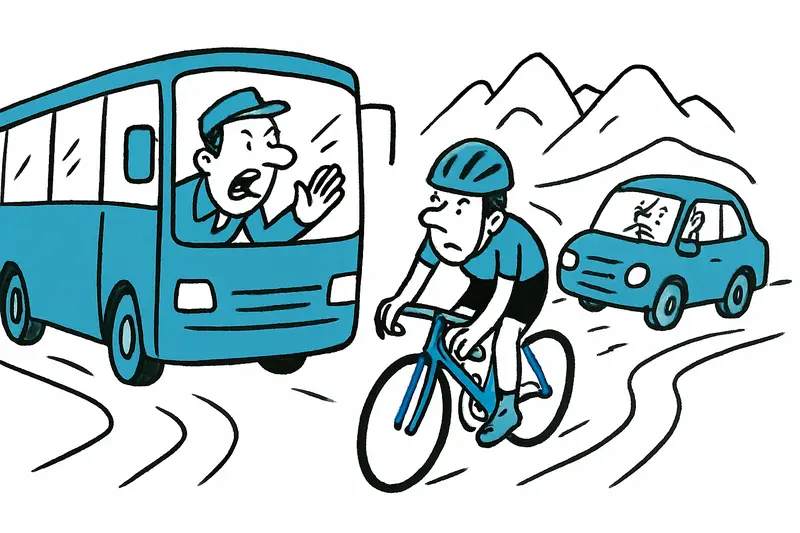
In recent weeks bus drivers in the Serra de Tramuntana have made clear what many locals have long sensed: some stretches have become a playground for risky maneuvers. The criticism comes from the drivers' association ACTUA and concerns mainly the access roads to Sa Calobra, but also Cap Formentor, Sa Foradada and the Coll de sa Batalla.
The main point is simple: on narrow sections without a verge, scheduled buses increasingly encounter cyclists who are riding at high speeds or braking suddenly to take photos. Added to this are rental cars that stop or drive in the middle of the lane because drivers do not know the route. The result is braking maneuvers, traffic backups and occasionally close evasive actions — all in full view of hikers, café tables at the roadside or tour groups. Context on risks for two-wheeled riders and possible measures is discussed in Why Mallorca Remains Dangerous for Bikers — and What Could Really Help.
Critical analysis: it's not just about inconsiderate drivers. The Tramuntana is a protected area, the roads grew historically and are often simply too narrow for today's mixed traffic. When a bus running a full schedule and a fast road cyclist meet within sight, safety is often decided by centimeters. Timetables and peak tourist times are not coordinated; neither are traffic layouts designed for the increasing bicycle and rental-car traffic. Practical guidance for driving these switchbacks is available in Mallorca's Curves without a Racing Heart: Staying Safe on the Tramuntana & Co..
What is missing from the public debate: discussions often revolve around assigning blame — cyclists versus motorists versus bus drivers. Rarely discussed are the responsibilities of tour operators, rental companies and travel agencies that pass on route recommendations and schedules to tourist groups. The perspective of residents, who live daily with noise and parking problems, is also underrepresented. A fact-based debate would also need to include accident statistics and measurements of traffic density — which are currently lacking. Local reporting that examines specific incidents can be found in Cars on Their Roofs near Valldemossa: A Wake-Up Call for Greater Safety on Mountain Curves.
Everyday scene from the Tramuntana: On a Tuesday morning on the MA-2141 towards Sa Calobra a scheduled bus roars, the engine whines, the driver changes gears repeatedly. Two road cyclists in bright jerseys overtake a pair in a rental car, which suddenly pulls over to the left — a woman gets out and points her camera at the sea. Honking, a brief jolt, the bus passes with only a few centimeters to spare. Residents carrying fruit crates into a finca shake their heads; a dog barks.
Concrete solutions that can be tested quickly:
- Time windows for bicycle traffic: Fixed morning or afternoon phases for guided bike tours or record attempts — outside peak coach hours. This reduces encounters with scheduled vehicles.
- Reserved bus passes and pull-outs: Small ID signs or a booking system for buses at narrow sections, combined where possible with clearly marked lay-bys for passing.
- Temporary one-way regulations on peak days: On heavily frequented days, sections could be converted to one-way and opposing traffic diverted via side routes.
- Cooperation with rental companies and tour operators: Clear route guidelines, GPS updates and information obligations for rental customers — so fewer vehicles stop in critical curves.
- Signage, road surfaces and visibility improvements: More mirrors, warning markings and reduced speed limits at hazard points, as well as road surface repairs.
- Enforcement and education: Targeted checks against risky overtaking, combined with information campaigns for cyclists on correct behavior on narrow mountain roads.
A possible compromise would also be a shuttle system to popular destinations like Sa Calobra on peak days: park-and-ride in valley towns, then a shuttle bus instead of numerous individual cars and irresponsible stopping. Such solutions cost money but are often cheaper than regular accidents or long traffic jams.
Conclusion: The Tramuntana is not a racetrack, but it is not a parking lot either. Anyone who wants island guests and locals to continue traveling safely must rethink traffic for this landscape. Technical measures, coordinated time windows and binding rules for providers can provide short-term relief. In the long term, however, a plan is needed that respects the special natural and spatial conditions of the Serra de Tramuntana — and not just slogans, but concrete rules for all road users.
Frequently asked questions
What is the weather usually like in Mallorca in spring?
Can you swim in Mallorca outside the summer months?
What should I pack for a trip to Mallorca in shoulder season?
Is Mallorca a good destination for hiking in spring?
What is Palma de Mallorca like in the cooler months?
Is Sóller worth visiting in the spring?
When is the best time to visit Mallorca for mild weather?
What are Port de Pollença and the north of Mallorca like in the off-season?
Similar News

Mueller continues expanding in Mallorca: Artà in 2026, Can Picafort in early summer 2027
The drugstore chain Mueller is opening two new stores in Mallorca: a 1,400 m² shop in Artà on 5 November 2026 and a bran...
The Painter Who Lived Mallorca: Franz Taussig and His Century-Old Secret
A hundred years ago a young Viennese arrived in El Terreno, sketched the island and called himself Francis Caron. Today ...

Airport dispute: Bridge, forecasts and the question of responsibility
A video by the Spanish transport minister has ignited the dispute over DORA figures, capacities and local governance pow...

The Painter Who Invented Himself: How a Young Viennese Drew Mallorca
A hundred years ago a 19-year-old draftsman arrived in El Terreno. His diary and sheets, long known under the pseudonym ...
Released with Conditions: The Plus Ultra Suspicion and a Mallorcan Finca as Residence
A Dutch entrepreneur, sought in connection with the Plus Ultra case, was extradited to Spain after his arrest in Germany...
More to explore
Discover more interesting content

Can Cap de Bou

Townhouse Lleo 72
