
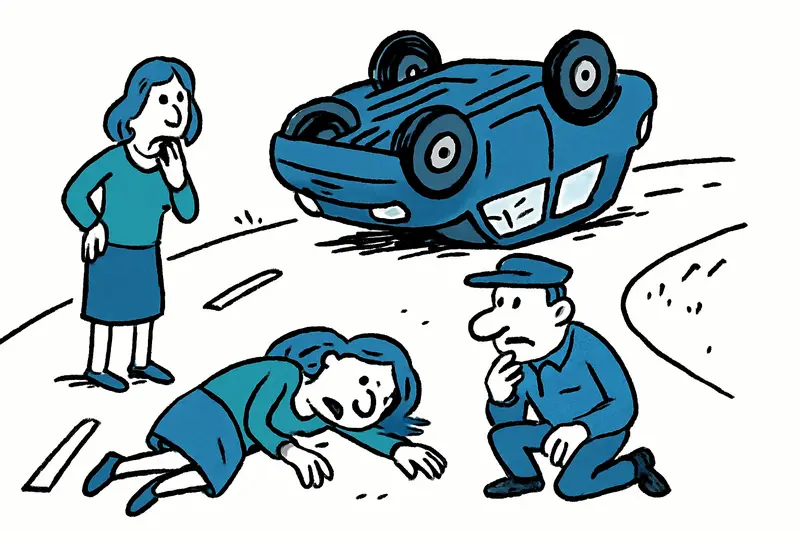
Cars on Their Roofs near Valldemossa: A Wake-Up Call for Greater Safety on Mountain Curves
A car ended up on its roof in a tight hairpin on the road to Valldemossa. The early-morning incident raises the question: was it driver error — or does the route reveal weaknesses we have long overlooked?
Car on its roof in Valldemossa — 7:40 a.m. at a sharp hairpin
On Saturday morning, before the church tower had chimed twice on the plaza, a car overturned near Valldemossa on the narrow stretch of road to Valldemossa. The air smelled of sea and damp pine resin, fine sprays hung in the bends — not an ideal mix when taking a tight mountain hairpin in headlight beams. Locals heard the crash, then the typically hectic sounds of radios and saws from the emergency crews.
Quick help, one woman taken to hospital
Local police and firefighters arrived quickly, secured the scene and freed the driver. She received first aid on site and was then taken to hospital for further checks. According to current information, the injuries are not life-threatening. No other vehicle was involved — a single-vehicle accident that nevertheless raises the question of how well our mountain roads are actually protected. A neighbor handed the responders hot coffee — a small gesture but a great relief in that cool morning quiet.
Key question: driver error — or the system?
The important question here is not only "who was behind the wheel?" but: Does the incident point to structural defects on a route used daily by locals and visitors? The answer has consequences for traffic planning, tourism and the everyday safety of island residents.
At first glance, several factors seem plausible: the blinding darkness of the early hour, wet patches from sea mist or dew, narrow lanes without continuous guardrails, and drivers who underestimate the handling of a winding mountain road — especially if they are driving a rental car — rental-car driving tips for the Tramuntana.
Less illuminated aspects of the debate
The public discussion quickly focuses on speed — rightfully so. But there are points that are often overlooked:
Road surfaces and maintenance: Some sections in the Serra de Tramuntana show signs of years of weathering. Fine salt deposits, resin and other residues can reduce grip — especially in bends, where even a small lateral force can make the difference.
Information gaps for tourists: Rental customers rarely receive concrete advice on how a winding mountain route feels different from the highway. A short information sheet when picking up the vehicle or a brief video on local driving practices could prevent misjudgments.
Old protective walls and guardrails: Many walls along the route are historic monuments or simple concrete structures that do not meet modern standards. They may look like part of the landscape but do not always provide sufficient protection in the event of a rollover.
Interesting: officially this road is not listed among the island's most dangerous — yet accidents continue to occur here, often at dusk.
What could help quickly — concrete proposals
We need measures on several time horizons. In the short term, without months of planning:
Immediate measures:
- Refreshing and clearly contrasting road markings; reflective bollards at critical hairpins; - Temporary speed restrictions during morning and evening twilight and increased police presence at peak times; - Cooperation with rental companies: information leaflets about mountain roads, tyre pressure and weather conditions when handing over vehicles.
Medium-term steps:
- Commissioning anti-skid treatments on heavily used bends and improved drainage so dew and spray run off more quickly; - Technical upgrading of guardrails where protective walls are insufficient — with sensitive planning to preserve the landscape character; - Multilingual awareness campaigns at tourist centres and digital information boards along the route.
Longer-term visions:
- Intelligent traffic monitoring that issues warnings on repeated speed violations or sends automated notices to road users; - Seasonal control of through traffic in adverse conditions and the expansion of safe stopping points for panoramic views, so drivers do not stop in risky places.
The community matters — and a small scene that remains
What helped today was not just technology: it was the people on site who came to the scene, the firefighters with wet jackets, the neighbour with a blanket and that cup of coffee. Such moments show that safety issues here are not decided only by authorities but in everyday life: through attentiveness, neighbourliness and information sharing.
The warning remains concrete: those who know the mountain roads are aware of their pitfalls. For everyone else, a simple rule that is quietly repeated on many slopes applies: keep your eyes open, downshift, and don't take the hairpins too fast.
Update: Police are reviewing witness statements and possible video recordings. If evidence of systemic weaknesses emerges, the discussion about prompt technical improvements will gain momentum again; similar concerns have been raised in reports of three serious accidents in one night. Until then: drive carefully — the Tramuntana forgives little.
Frequently asked questions
Is it safe to drive the mountain road to Valldemossa in Mallorca?
What should I be careful about when driving on Mallorca’s mountain curves early in the morning?
What are the risks of driving a rental car in the Tramuntana mountains?
Why do accidents happen on Mallorca’s mountain roads even when speed is not extreme?
What should tourists know before driving to Valldemossa?
Are Mallorca’s mountain roads well protected with guardrails?
When is the best time to drive through the Tramuntana in Mallorca?
What practical safety tips help on Mallorca’s winding mountain roads?
Similar News
After the Fatal Rally Crash: A Reality Check for Mallorca
The death of L’Osteria co-founder Klaus Rader at the Rally 550 Challenge raises questions about safety on Mallorca's cou...
Who really protects Mallorca's coasts? A reality check after the viral beach video
A viral online video compared developed coasts in Turkey with Mallorca's beaches and praised the island. A good moment t...
Arenal: How Two Strangers Stole Jewelry from a 91‑Year‑Old — and What We Should Learn
In El Arenal two young women managed to gain the trust of a 91‑year‑old and steal jewelry from her apartment. A family f...
Cool Night, Mild Days: Autumn Shows on Mallorca – Good for Land and People
The Tramuntana brought the coldest night in months: around 8 °C, 11–12 °C in the lowlands. Daytime temperatures rise aga...
Llucmajor bets on a new waste contract – is it enough to end the waste crisis?
The municipality of Llucmajor has signed a €36.6 million contract with Urbaser for eight years. After summers of overflo...
More to explore
Discover more interesting content

Can Cap de Bou

Townhouse Lleo 72
