
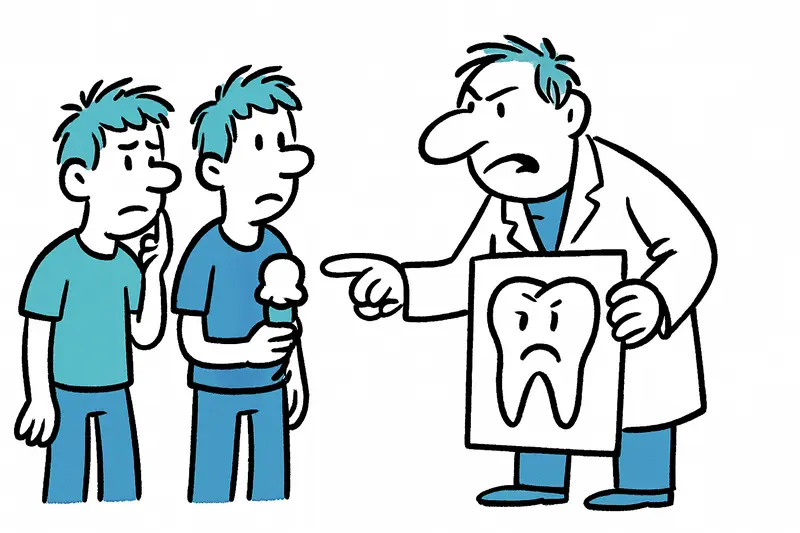
Tooth Decay in Mallorca: Almost Half of Adolescents Affected – A Reality Check
Tooth Decay in Mallorca: Almost Half of Adolescents Affected – A Reality Check
A study of 718 schoolchildren shows: cavities and tartar are widespread on Mallorca. Why this is alarming and what concrete measures can help now.
Tooth Decay in Mallorca: Almost Half of Adolescents Affected – A Reality Check
Study of 718 children shows prevalence of cavities and tartar — and raises unanswered questions
A school-based survey on Mallorca found that about 46 percent of adolescents have experienced cavities in their permanent teeth during their lifetime. Tartar was detected in around 53 percent of 15-year-olds. A total of 718 children in three age groups were examined: five to six years, twelve years and fifteen years. The research team stresses that adolescence is a phase when brushing and dietary habits are formed.
Key question: Why do dental problems among children on a relatively affluent island like Mallorca increase so markedly during these formative years — and what is missing in daily life to change this?
The figures show a clear trend: in the youngest group, cavities were about eight percent, rising to around 27 percent at twelve years and to nearly 46 percent among 15-year-olds. Tartar was found in roughly 30 percent of twelve-year-olds. Such increases with age suggest that preventive measures either start too late or do not operate widely enough.
In short: it is not just about holes in teeth. Poor oral health affects eating, sleep, self-image and can reduce school attendance and concentration. At the same time, follow-up treatments are expensive for families and burden the public health system. Parents of young children feel this particularly strongly: when a child wakes up at night with toothache, it becomes part of everyday life for the whole family — not just a statistic.
What is often missing from public discussion is the perspective of accessibility and prevention. There is a lot of talk about hospitals and emergencies, but less about regular preventive care for primary school children, the role of schools as prevention sites, or socioeconomic inequalities in access to pediatric dentists. Also rarely discussed are concrete, easy-to-implement programs such as free fluoride treatments in schools or mobile dental clinics for remote areas.
A typical morning in Palma: in front of the Mercat de l'Olivar children sit with ice cream, scooters and mopeds whizz by, vendors call out, seagulls screech — and in a side alley there is the sign for a pediatric dental practice. Pleasure and consequent problems sit very close together. Parents say there is no time for a dentist appointment between school and leisure; appointments are often only available in the afternoons or not on short notice.
Practical solutions suitable for the island could look like this: regular, mandatory dental check days in schools (at least once a year), school programs with supervised brushing times for the youngest children, fluoride applications or varnishes in cooperation with health centers, financial support for preventive oral care for socially disadvantaged families, and a network of mobile units (a "dental bus") for rural communities.
At the municipal level, pharmacies, health centers and schools could collaborate better: simplified referrals, standardized information sheets in multiple languages and parent evenings on hidden sugar traps. For parents, concrete, immediately implementable tips are important: brush teeth twice a day with fluoride toothpaste, offer water instead of sugary drinks for snacks, and schedule dental visits already during kindergarten age.
Initiatives that could kick-start change include cooperation between town halls, public health offices and dental associations, pilot projects in neighborhoods with notable rates, and systematic collection of oral health data in school examinations. Measurable goals would help: reduction of the cavity rate among 12-year-olds by X percent in five years, comprehensive school checks by 2028, for example.
The study of 718 children provides valuable numbers — but it is also a wake-up call: comprehensive strategies are still missing that organize prevention in a timely, systematic and socially equitable way. More data, better coordination and concrete, locally adaptable programs are needed so that the next generation does not grow up with teeth in need of repair.
Conclusion: The figures are not destiny. If municipalities, schools, health institutions and families work together, habits can change and dental damage can be reduced. Otherwise Mallorca will remain a holiday paradise — but for many children leave unwanted marks on their teeth.
Frequently asked questions
What do the Mallorca adolescent tooth decay findings reveal?
What practical steps can schools in Mallorca take to prevent tooth decay?
How can families in Mallorca reduce cavity risk for children?
Why is preventive care especially important for adolescents on Mallorca?
What local programs could improve dental access for rural communities on Mallorca?
What signs should Mallorca parents look for to spot tooth decay in children?
How can Palma and nearby communities improve awareness and referrals for pediatric dental care?
When should Mallorca families start dental checkups and preventive care?
Similar News

Savannah off Mallorca's West Coast: Film Yacht and Floating Piece of Architecture
The 83.5-meter megayacht Savannah, known from a Netflix thriller, was sighted Tuesday off Mallorca's west coast. A touch...

When Fewer Houses Change Hands but the Tills Still Ring: The Skewed View of Mallorca's Property Tax
The number of apartment sales in the Balearic Islands is falling sharply, while revenues from the property transfer tax ...
Vacant stalls next to the Teatre Principal: demolition plans raise questions
The small, long-vacant sales stalls on the steps to the Teatre Principal are to make way for the new Plaça Major project...

Twelve years after the raid: Arrest in Spain raises questions
A 70-year-old was apprehended in Zaragoza — twelve years after an armed bank robbery in Aachen. Why did the manhunt take...

Five Years of 'Under Four Eyes': How a German Author Listens to Mallorca Week by Week
For five years the column 'Under Four Eyes' has appeared every Thursday. Talia Christa Oberbacher writes about hammock m...
More to explore
Discover more interesting content

Boat Tour with BBQ along Es Trenc Beach

Private transfer from Mallorca Airport (PMI) to Pollensa
