
Attention Rental Car Drivers: Why Mallorca's New Towing Rule Is Dangerous
Attention Rental Car Drivers: Why Mallorca's New Towing Rule Is Dangerous
The DGT is severely restricting tow truck operations in the Balearic Islands. If you suffer bodywork damage on the Ma-20 or Ma-13, you'll spend longer in traffic — and often be left alone. A reality check.
Attention Rental Car Drivers: Why Mallorca's New Towing Rule Is Dangerous
Key question: What does the latest directive from the traffic authority DGT mean for drivers on Mallorca — and who will step in in future when a rental car with bodywork damage is stranded in the middle of the Ma-20?
Critical analysis: More minutes on the carriageway, more risk
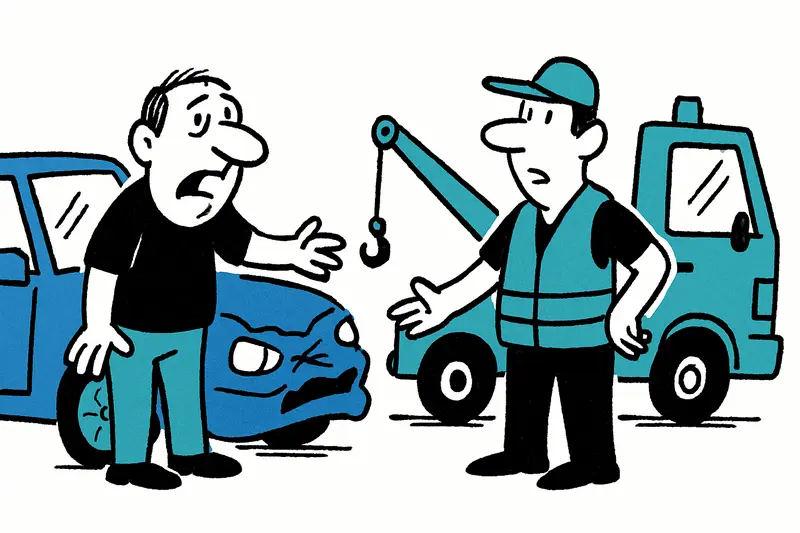
Since the DGT narrowed the criteria for requesting tow trucks after accidents, practice on our roads has changed. Previously, a call from the duty traffic police was often enough and a tow truck would arrive within a short time, the scene would be cleared and traffic could flow again. Today, however, vehicles more often remain on the road — a lane blocked, speeds drop, horns mix with the whine of motorcycles, and cars queue up at the Ma-20 entrances. This increases the risk of secondary accidents, consumes time and energy from commuters, taxi drivers and holidaymakers alike.
The DGT's decision officially aims to reduce costs; those cost debates intersect with broader trends such as pricing for hire cars (Why Rental Cars in Mallorca Have Become Noticeably More Expensive — and What You Should Know). But cost alone is a poor measure when weighed against road safety and rapid assistance. Officials argue that not every minor bodywork damage justifies a tow service. That is formally understandable — but the rule overlooks that Mallorca during high season faces the load of a metropolis: narrow access roads, tourists unfamiliar with the area, many rental cars without their own towing equipment.
What is missing from the public debate
Public discussion so far has paid too little attention to three practical consequences: First, the responsibility of rental car providers. Many rental agreements include insurance and breakdown assistance, but how quickly and in which cases this really applies often remains unclear. Second, the capacity of the police: If officers on site are not allowed to authorize tow trucks or can only request them in a limited way, their operational scope is massively reduced. Third, the role of private recovery services and municipal authorities. Who covers the cost when a tourist vehicle blocks a motorway lane — and who decides on priority?
Everyday scene from the island
A concrete picture: Friday, late morning, full sun over the Paseo Marítimo, a rental car and a hired scooter collide at the exit toward the Ma-20. The female driver, freshly arrived at Son Sant Joan, stands helpless beside her car. Officers direct traffic, the radio in the patrol car hisses. The tow truck, so it is said, is not allowed to come — the damage is "minor." The exit remains partially closed. The queue toward the airport grows, businesspeople will be late for appointments, buses arrive delayed. No one feels truly responsible.
Concrete approaches — pragmatic and local
1) Clear minimum standards for rental car providers: mandatory visible emergency information in German and English in the vehicle, including a phone number for rapid towing and roadside assistance with guaranteed response times in urban areas (e.g. Palma, Port d'Alcúdia), and alignment with V16 Mandatory in Mallorca: What Drivers Really Need to Know. 2) Local emergency towing pools: the Rental Car Cap: Between Traffic Calming and Holiday Stress – What Mallorca Must Consider Now could include framework agreements with towing companies that automatically prioritise motorway and bypass incidents at night and on weekends — financed by a levy on rental companies/businesses. 3) Flexible deployment criteria: the DGT should develop regionally differentiated guidelines together with the Guardia Civil de Tráfico and Policía Local — the Ma-20 requires different rules than a country road near Santanyí. 4) Mobile authorisation for on-scene officers: officers on site must again be able to request tow services in acute cases without waiting for a multi-stage approval process. 5) Transparency requirement: every decision not to dispatch a tow service should be documented and statistically evaluated — that way it becomes clear whether the rule actually saves money or merely shifts costs elsewhere.
Practical examples of how it can work better
In some municipalities this already works: a combined hotline coordinates police, municipal vehicles and private tow operators; frequent accident hotspots have reserve teams that intervene within 20 minutes. This would be feasible on Mallorca — the island is small and distances are short. Political will and clear organisation are decisive, not a blanket order to cut tow services.
Punchy conclusion
Restricting tow deployments may save money on paper. In reality it costs minutes, increases risk on the road and shifts burdens onto drivers, municipalities and rental companies. Those who now rely solely on budgetary arguments overlook the audible consequences: the nervous honking on the Ma-20, the frustrated voices on the tourist information phone, the silence of an empty parking lot when guests arrive late at their holiday accommodation. It's not just about tow trucks — it's about rapid assistance, clear responsibilities and ensuring that Mallorca's traffic system functions even when a vehicle breaks down.
Frequently asked questions
What does Mallorca's new towing rule mean for rental car drivers?
Why is leaving a damaged car on the road in Mallorca a safety problem?
What should I do if my rental car breaks down on the Ma-20 in Mallorca?
Does rental car insurance in Mallorca always include towing and roadside assistance?
Are tourist drivers in Mallorca affected more by towing delays than local drivers?
What can Mallorca rental companies do to reduce the impact of towing delays?
Why is the Ma-20 in Mallorca especially sensitive to towing delays?
Is Mallorca likely to introduce local towing rules for busy roads and accident hotspots?
Similar News
High heel slips, car accelerates: accident on Camí de Son Hugo
A woman lost a high-heeled shoe on the forecourt of the sports facility at Camí de Son Hugo. The car accelerated, mounte...
Phone Scam: How Two Hotel Employees at Playa de Palma Lost Thousands of Euros
One morning in September, two reception employees at Playa de Palma were pressured by alleged alarm-company staff — in t...
When the Wallet Becomes a Danger: Attack in Peguera and Lessons for Mallorca
In Peguera, two women are said to have stolen the wallet from a 75-year-old German couple. When the victim intervened, t...
Plata stays Plata: Young people take over, Llonguets remain
A small bar on Carrer de l'Argenteria will continue: Tolo Serra hands the place over to young Mallorcans at the end of t...
Unnoticed in the Luggage Compartment: How a Boy Traveled More Than 100 Kilometers in a Team Bus
A minor traveled in the undercarriage of a team bus for more than 100 kilometers until his cries for help were heard. A ...
More to explore
Discover more interesting content

Can Cap de Bou

Townhouse Lleo 72
