
Serious Traffic Saturday: Cyclist Dies in Selva, Motorcycle Crash in Sóller Tunnel
Two serious accidents on Saturday morning kept emergency services busy on Mallorca: an 83-year-old cyclist died near Selva, and about an hour later a 19-year-old motorcyclist crashed in the Sóller Tunnel. Why such accidents repeat and what is missing.
Serious Traffic Saturday: Cyclist Dies in Selva, Motorcycle Crash in Sóller Tunnel
Two crashes within hours – emergency services continuously deployed, safety questions remain
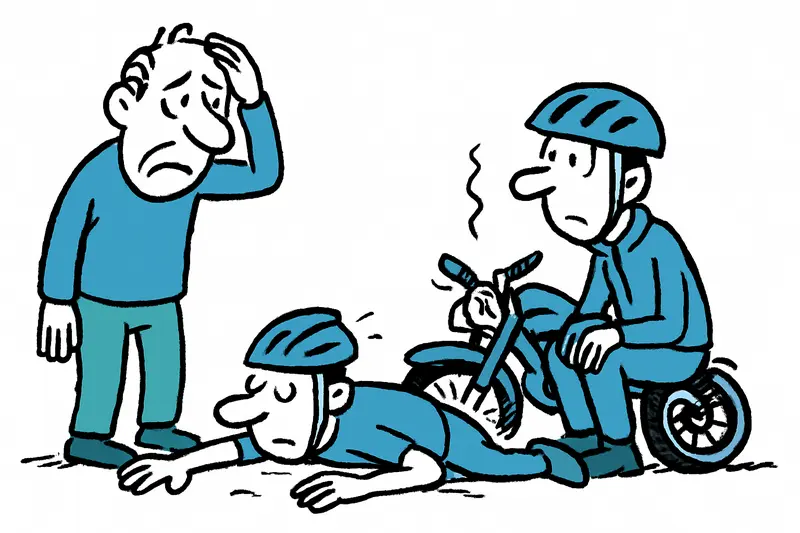
On Saturday morning there was hardly room for routine on Mallorca: around 9:30 a.m. a serious collision occurred on the Ma-2112 between Inca and Mancor de la Vall, at the junction towards Biniamar. A Renault Kangoo struck an 83-year-old cyclist at about kilometre marker 2.6. Emergency services and police arrived quickly, but the elderly man succumbed to his injuries around 10:20 a.m. The van driver tested negative for alcohol and drugs; initial investigations by the Guardia Civil suggest that the stop sign at the junction may not have been observed. Investigations are ongoing.
Only about an hour later a 19-year-old motorcyclist lost control of his vehicle in the Sóller tunnel and collided with the right tunnel wall. He was seriously injured, intubated and taken to Son Espases hospital; his condition was reported as critical. The tunnel remained closed for almost two hours; this incident follows other recent fatal crashes reported locally, notably Third traffic death in a few days: Do Palma's night streets need to be safer? Numerous units – local police, the Guardia Civil and emergency service 061 – managed the operation and the recovery. Long queues formed on the access roads, commuters sat in their cars, buses were delayed, and the bend on the outskirts of Sóller slowly filled with honking vehicles.
Key question: Could these accidents have been prevented, and what needs to change on our country roads and in tunnels?
A sober look reveals several levels: technology, infrastructure, rule compliance and education. On a narrow country road like the Ma-2112, mistakes have immediate and serious consequences. Stop signs are clear legal requirements; see DGT road safety guidelines, but in reality an overlooked stop at a narrow junction between olive groves and stone walls often marks the difference between a scare and a catastrophe. In tunnels, other factors come into play: lighting conditions, lane width, guardrails, speed and the sudden reactions of individual road users.
The public discourse often lacks the everyday perspective: people talk about numbers and blame, less about the small things we see every day – faded white lane markings, dust and leaves in curves, outdated or poorly positioned signs that are hard to see in low sun. In the Tramuntana this happens frequently; instances nearby include Second fatal accident on the Camí de la Síquia — Why does this stretch remain dangerous? the sun dazzles, the wind blows pine needles onto the road and suddenly you face a danger spot.
An everyday scene: on the Ma-2112, shortly before Selva, locals often stop in the morning at the small bar across the road, the smell of coffee mixing with the petrol smell from parked delivery vans. Cyclists, mostly older residents, use this route for errands. No one wants to stop when they are in a hurry – that's understandable. And yet that is precisely the problem.
Concrete solutions would be realistic and affordable: improving the visibility of traffic signs with reflective films and higher placement, regular road marking maintenance, targeted clearing of sightlines, speed indicators at critical junctions and more mobile controls on access roads to villages. For tunnels, automated systems to monitor speed and run-off incidents should be expanded, combined with clear guidance for emergency communication. Measures for older road users are also needed: information campaigns in village centers, free bicycle checks and joint practice sessions that municipal traffic advisers could offer.
The system also includes medical aftercare: a fast, well-coordinated transport to hospital saves lives; in both cases the injuries were severe. The presence of 061 and the cooperation between the Guardia Civil and local police work – the response times show that. Nevertheless, technology helps: EU eCall information, cameras at critical points and better traffic control during recovery operations would reduce jams and further risks.
What is missing from the public debate is a sense of responsibility beyond assigning blame. It's not just about who missed a sign. It's about the sum of small deficiencies: infrastructure, maintenance, education and personal behaviour. If we do not look at these together, we remain at single events – and repetition is programmed. The summer rise in motorcycle fatalities has also been highlighted in Too Many Deaths on Motorcycles: How Mallorca Can Stop the Summer Trend
Conclusion: these two accidents are tragic reminders of how sensitive traffic on Mallorca is. The emergency services acted professionally, but we must not rely solely on their dedication. Politicians, municipalities and citizens must start with small steps: visible signs, better markings, more attention for older cyclists and technical upgrades at accident hotspots. Only then can we prevent a normal morning on the Ma-2112 or an exit towards Sóller from becoming a catastrophe.
Late on Saturday afternoon the mood in Selva remained subdued; the bar at the junction seemed quieter than usual, conversations were spoken more softly. A small village that knows how thin the line between everyday life and disaster can be.
Frequently asked questions
How dangerous are Mallorca’s country roads for cyclists and drivers?
What should drivers watch out for on Mallorca tunnel roads?
What is the best time of year for cycling in Mallorca if you want safer roads?
What should older cyclists in Mallorca keep in mind on rural routes?
Why is the road between Inca and Mancor de la Vall sometimes considered risky?
What happened in the Sóller tunnel accident in Mallorca?
Why do traffic jams build up so quickly near Sóller after an accident?
What road safety improvements could help reduce accidents in Mallorca?
Similar News
First Day, First Consequences: What Palma's Rent Freeze Really Means
A new decree stops a planned eviction in Palma — but what really changes for tenants and landlords? A reality check with...
When Housing Becomes a Matter of Survival: Mallorca Between Rental Frenzy and Everyday Life
The case of 87-year-old Maricarmen showed that on Mallorca many people's lives are poised between affordable and uninhab...
Autumn in Mallorca: When Melancholy Gets a Window
Why autumn quietly tightens here — and how to make use of the mood: walks, culture, candles and the light from Palma to ...
Near-miss on Lanzarote: Landing Ryanair Jet and Iberia Takeoff — what really went wrong
On Lanzarote there was a dangerous incident: A Ryanair flight (FR5910) from Dublin landed on runway 03 while an Iberia E...
Eurowings introduces new Premium Business seats on Mallorca routes
From December 1, selected Eurowings flights to Palma and other destinations will feature eight particularly generous sea...
More to explore
Discover more interesting content

Can Cap de Bou

Townhouse Lleo 72
