
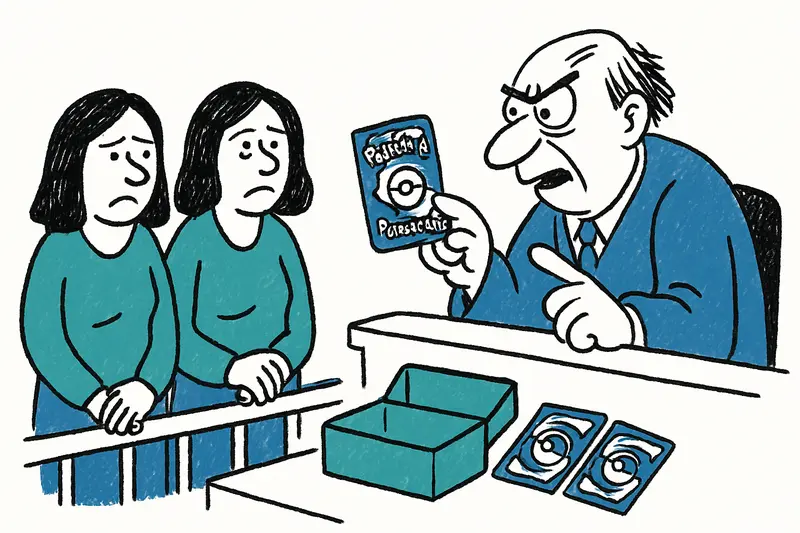
Counterfeit Pokémon Cards in Palma: Who Bears the Responsibility?
During a raid in Palma the Guardia Civil seized 1,500 card sets — Nintendo estimates €345,000 in damages. Who is to blame: sellers, supply chains, or the controls at distribution centers?
From the Parcel Distributor to the Courtroom: An Unusual Trial
In the early morning, when the sun still lay low over the rooftops of Palma and delivery vans rolled steadily along the driveways, the Guardia Civil acted (Big Blow Against Product Counterfeiting: What Mallorca's Role Really Reveals): Around 1,500 card sets were seized at a parcel center on the island in 2022. Now two women are on trial — the charge: distribution of unlicensed Pokémon cards. Nintendo estimates the damage at €345,000 and demands harsh penalties. Yet the public prosecutor surprisingly requests acquittal. So who is right — and what does the case reveal about procedures on our island?
The Central Question: Intent or a Chain of Logistical Errors?
The trial revolves around a simple but decisive question: Did the defendants knowingly circulate counterfeit goods, or is this a chain of misunderstandings along global trade routes? The files contain indications of atypical packaging, missing licensing features, and unusual holograms. But proving intent is difficult: there are often many stages between shipment, interim storage and the end customer — especially when goods come from abroad (see Raid at Playa de Palma: Nearly 6,000 Counterfeits — What’s Really Behind It).
Often Overlooked: The Role of Local Logistics
International delivery flows converge at hubs in Palma. Parcel centers are busy places: the hum of conveyor belts, the click of scanners, the voices of couriers sorting parcels. When goods are held up in such distribution centers, this is not automatically evidence of criminal conduct by the recipients. Rather, we repeatedly find that a lack of transparency in supply chains and limited resources for random inspections create problems (Palma: Van with 700 Counterfeits Seized — Controls in Focus).
Little Considered: The Situation of Small Female Retailers
The two defendants are described as businesswomen active in retail. In Palma’s streets one sees many small shops, stalls and online sellers working with tight margins. Procurement errors — such as misleading supplier information or missing documents — can threaten their livelihoods. That makes the question of guilt and responsibility more complex: Is this pure criminality or structural vulnerability in a system that offers little protection for small retailers? Recent on-the-ground reports have highlighted large-scale inspections and seizures that affect small traders (Raid at Playa de Palma: Nearly 6,000 Counterfeits — What’s Really Behind It).
Evidence, Expert Reports and the Limits of Forensic Methods
The court and experts must now determine whether the items are technically counterfeit. Print quality, paper, holograms and serial numbers are being examined. Such analyses are precise, but they do not automatically show who manufactured the counterfeits or who knowingly distributed them — as shown in cases where large consignments and vehicle loads required further investigation (Packages Full of Counterfeits: Van with Over 700 Fakes Stopped in Palma). Legally, that is the crux: without reliable leads to the origin, doubts remain — and the public prosecutor therefore does not seek a conviction.
Concrete Opportunities and Proposed Solutions for Mallorca
The case provides an opportunity to improve local procedures. Some practical approaches:
1) Increased training for parcel center staff: if employees know the typical signs of counterfeit goods, they can report suspicious cases earlier.
2) Better information requirements for online sellers and marketplaces: clear documentation of origin helps make supply chains more transparent.
3) Cooperation between rights holders, authorities and local retailers: joint inspection procedures and fast communication channels reduce harm to the innocent.
4) Education for collectors and buyers: those who know embossing, seller codes and holograms can more easily spot dubious offers — especially at flea markets or in online groups.
What This Means for Buyers and Collectors on the Island
For the collecting community this means: suspicion is warranted, panic is unnecessary. When buying, still ask for receipts, research sellers and prefer established sources. Daily bargains are found on the streets of Santa Catalina or along the Paseo Marítimo — but too cheap can be costly.
A Final Look: The trial in Palma will show how the justice system handles cases that sit between global supply chains and local commerce. Whether the outcome is punishment or acquittal — what matters is that the debate does not end at the courthouse door, but leads to clearer rules and more protection for small retailers and buyers. The island, with the sound of scooter engines and the cry of seagulls at the harbor, deserves functioning procedures — and people who are not easily suspected without cause.
Frequently asked questions
How can you tell if Pokémon cards bought in Mallorca might be counterfeit?
Who is responsible if counterfeit goods pass through a parcel centre in Palma?
Why is it so difficult to prove intent in counterfeit goods cases in Mallorca?
What should small retailers in Palma do to avoid problems with counterfeit products?
Are parcel centres in Mallorca responsible for checking fake goods?
Can expert reports prove where counterfeit cards were made?
Is it safe to buy Pokémon cards at flea markets in Mallorca?
What does the Palma counterfeit cards case mean for buyers on Mallorca?
Similar News

Smoke over the UIB: Who is responsible for the fire on the roof?
On Saturday afternoon a fire broke out on the roof of the Arxiduc Lluís Salvador building at the University of the Balea...

Short Getaway with Sea View: Inmood Aucanada among Spain's Top Hotels for Dinner Breaks
A small hotel on the coast of Alcúdia was highlighted by a Spanish experience platform as particularly suitable for shor...
Cala Pi crowned Mallorca's most beautiful beach: A morning at the rocky cove
The travel portal Holidaycheck praises Cala Pi as Mallorca's most beautiful beach: a narrow, romantic cove, clear water,...
Injured captain, big plans: Germania Mallorca before the away match in Consell
The newly founded FC Germania Mallorca travels to Consell on Saturday. Captain Bastian Müller is out injured, but coach ...
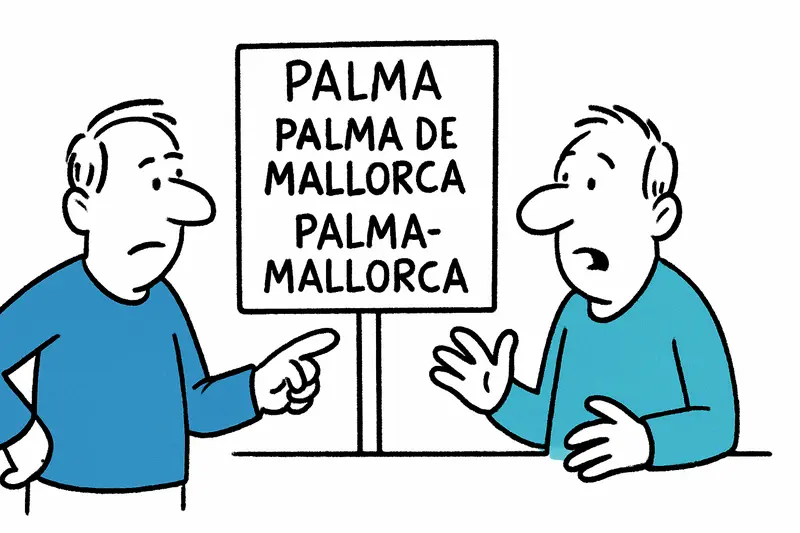
Palma, Palma de Mallorca, Palma‑Mallorca: What is it really about?
The debate over the city's name is more than grammar: it concerns identity, law and branding policy. A sober reality che...
More to explore
Discover more interesting content

Can Cap de Bou

Townhouse Lleo 72
