
When Trucks Can No Longer Overtake: What the New Rule Means for Mallorca
When Trucks Can No Longer Overtake: What the New Rule Means for Mallorca
A new regulation allows banning trucks over 7,500 kg from overtaking in certain zones and time windows. What does this really achieve — and what is missing in the debate on Mallorca?
When trucks are no longer allowed to overtake: what the new rule really means for Mallorca
The headline sounds radical, but the law is precise: traffic authorities will now be allowed to prohibit overtaking for heavy vehicles from 7,500 kilograms on selected road sections and during defined time windows. On Mallorca this affects the routes where commuters, tourists and freight traffic meet daily — for example on the Ma-13 towards Inca or on the outskirts of Palma on the Ma-20, a pressure detailed in Mallorca at the Limit: Will This Weekend Break the Visitor Maximum?. The announcement immediately triggered heated debates. Truck drivers, logistics companies and everyday commuters argue about whether the ban really reduces congestion or merely creates new problems.
Key question
Does a selective overtaking ban for heavy vehicles improve traffic flow and safety on Mallorca — or does it just shift congestion to other places and times?
Critical analysis
The idea is simple: when a slower heavy vehicle is overtaken, it creates a moving barrier, cars brake, and risky overtaking maneuvers follow. Statistics cited in the official release do indeed show an increased frequency of rear-end collisions in such situations. But the rule is no panacea. It only works where it is applied intelligently and monitored. A general, blanket ban would be absurd — which is why the regulation is deliberately selective. The problem lies in implementation: which sections will be chosen? Who evaluates the traffic studies? And how will logistics schedules react? Without clear, binding criteria there is a risk of patchwork solutions that create confusion and push diversion routes onto side streets.
What is missing from the public debate
The debate often turns polarised: safety versus interference with goods transport. However, three points are rarely discussed: first, transparency of the data basis — the underlying accident analyses should be locally accessible so municipalities can understand why a section is affected. Second, coordination with companies that deliver in the early morning or at night: flexible time windows instead of rigid bans could reduce conflicts. Third, the side effects for small village streets: if trucks are forced to keep right, some drivers may seek alternative routes through places like Petra or Sa Cabaneta, diminishing quality of life there.
Everyday scene from the island
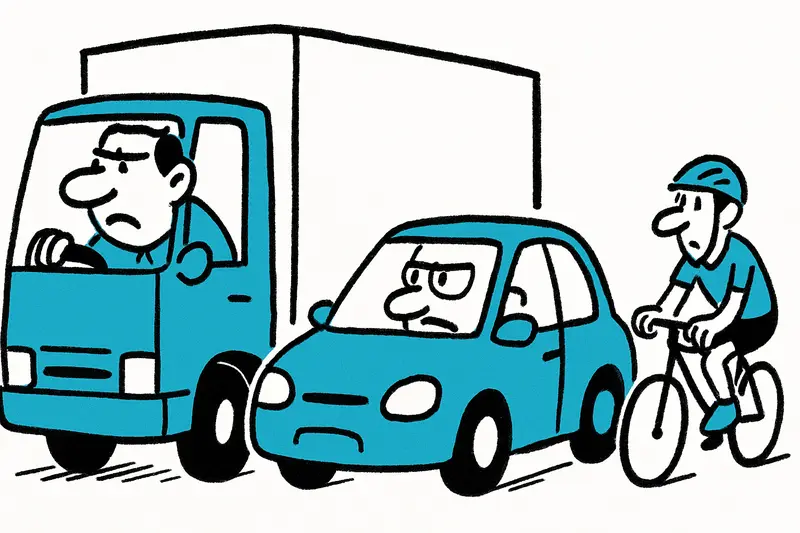
On a late Friday afternoon, just after 5 p.m., the Ma-13 at Pont d'Inca slows down. Behind two articulated lorries a line of cars forms, a city bus honks softly, bicycle couriers move onto the hard shoulder, and on the bench at the roundabout two workers sit with thermos flasks, watch the brake lights and shake their heads. The air carries the faint smell of diesel and freshly cut olive groves. These are the scenes authorities cite to justify their measure — but they also show that interventions in traffic affect people on the ground.
Concrete solutions
Those who want improvement need more than prohibitions. Proposals that could work on Mallorca include: clear, publicly viewable criteria for selecting sections (accident frequency, bottlenecks, traffic density), variable signage and digital boards that indicate time-limited bans, and camera-based enforcement instead of constant police presence. Authorities should also negotiate binding delivery windows with logistics associations, following similar coordination described in New Taxi Rules in Mallorca: Caps, Ramps and the App — Will the Plan Match the Island's Rhythm? and consider incentives for night deliveries where noise regulations allow. Technically useful measures would be better marking of overtaking lanes and the creation of short passing bays at critical points so that an overtaking truck does not paralyse all traffic.
Practical questions about enforcement
Without consistent monitoring the new authority will be ineffective. Options include fixed cameras with automatic classification of vehicle types, mobile checks by the Guardia Civil, or cooperation with the island's traffic management systems and lessons from V16 Mandatory in Mallorca: What Drivers Really Need to Know. It is important that sanctions are known and proportionate — fines alone are not enough if they are not actually enforced.
Pithy conclusion
The rule allowing trucks over 7,500 kg to be banned from overtaking in certain periods and zones is, in theory, a sensible tool. Whether it helps on Mallorca depends on careful implementation: transparent data, coordinated time windows, technical signage and real enforcement. Without these, the measure risks shifting symptoms instead of solving problems — and disturbing the peace in small villages behind the motorway that many residents dearly value. Authorities should now respond less with prohibition signs and more with schedules and dialogue: plan instead of ban, measure instead of guess. Then a radical headline can become a pragmatic solution that is not only safer but also fairer on Mallorca.
Frequently asked questions
Will trucks be banned from overtaking on Mallorca?
Which roads in Mallorca could be affected by the new truck overtaking rule?
Why would Mallorca restrict overtaking by heavy trucks?
Could the new truck rule in Mallorca create more traffic elsewhere?
What should drivers expect on the Ma-13 near Inca if truck overtaking is restricted?
Can traffic rules push heavy vehicles onto smaller village roads in Mallorca?
How can Mallorca enforce a truck overtaking ban effectively?
What other measures would help traffic on Mallorca besides banning truck overtaking?
Similar News

Magaluf: Watchtower Alarm – Lifeguards Pull Unconscious Beachgoer from the Water
After a drama in the late afternoon, two lifeguards at Magaluf beach rescued an unconscious 44-year-old man. He was stab...

Turquoise in the City: How dangerous is the color play of the Sa Riera?
The Sa Riera in Palma suddenly turned turquoise — a pretty motif, but behind the effect lies a discharge of saline waste...

Jeckliner at Sunnesching: Cologne spirit sets sail from Palma
In September 2027 the Mein Schiff 2 briefly becomes a floating carnival stage: four days with Cologne bands, comedy and ...
Finally Home: Mike and Leyla Heiter Buy Villa with Sea View in Mallorca
The reality TV couple Mike and Leyla Heiter have bought a house in Mallorca with a roof terrace and sea view. An Instagr...

Arrest after series in Palma: Who protects apartments from repeat offenders?
The National Police arrested a man in Palma who investigators say may have broken into several apartments. In one incide...
More to explore
Discover more interesting content

Can Cap de Bou

Townhouse Lleo 72
