
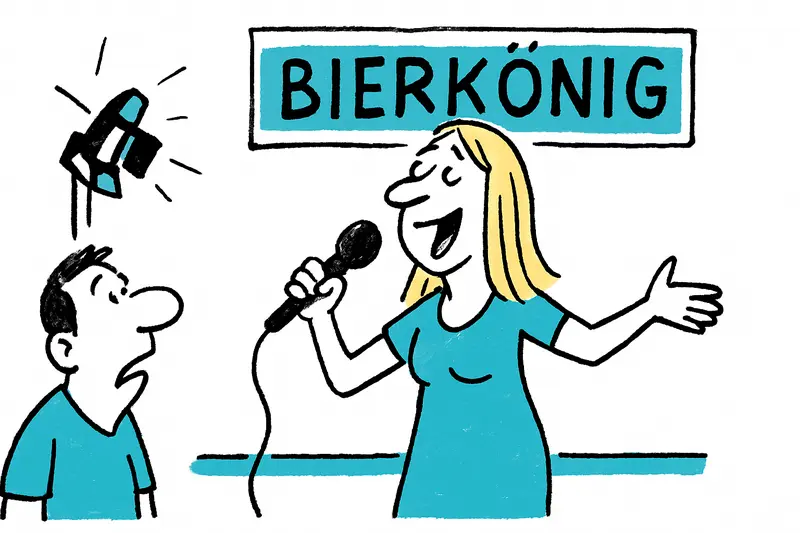
TV tip: A Wollny daughter on the Bierkönig stage – why Mallorca briefly takes notice
TV tip: A Wollny daughter on the Bierkönig stage – why Mallorca briefly takes notice
Estefania, a daughter from a well-known large family, stops in Palma and sings at the Bierkönig season opening. A light summer evening, a loud crowd – and a small boost for the island's economy.
TV tip: A Wollny daughter on the Bierkönig stage – why Mallorca briefly takes notice
Evening entertainment meets island life: When TV reality meets Playa de Palma
On Thursday evening at 8:15 p.m., another episode of German TV entertainment with a Mallorca connection lands on screens — this time stopping at Playa de Palma. Estefania, a daughter from that well-known large family who are a fixture on television, performs at the Bierkönig's season opening, a scene reminiscent of pieces such as Beerstreet Boys: When Ballermann Meets Schlager — a Loud Love Letter to the Playa. For the moment this is more than a TV gag: it is a small story about audience, stage and what happens here on the Schinkenstraße every summer.
The club, just a few hundred metres northeast of Balneario 6, is not small: the spaces are large, the bars numerous, the taps so many that you can easily imagine lines of beer pipes running through the halls. The venue is open almost continuously and has attracted people from all over Europe for decades, and local coverage highlights a wide range of events, from club nights to festive markets like the Inselradio Christmas Market: Five Days of Christmas Scents in Front of the Studios. The venue is open almost continuously and has attracted people from all over Europe for decades. For Palma's catering and event scene, such an appearance is a welcome sign of life in the shoulder season — lights, music, visitors, a bit of turnover for drivers, waiters and souvenir sellers.
Arriving on the Schinkenstraße, you do not only hear the music. There is the smell of fried snacks, tourists speaking German, Dutch and English. Taxis close their doors, buses disgorge groups, and the servers in the bars carry trays across the asphalt. Nights like these are little hard‑working moments: stage builders, sound engineers, security staff, waiters — for many people on the island the start of the season means jobs and planning security.
The story of the venue is part of local memory: the Bierkönig opened its doors many years ago and has since established itself as a meeting point. The former operator took over the place decades ago; events from his life belong to the island's chronicle. The large building offers space for many guests, and the operators rely on a constant presence on the beach — even in the middle of the week.
What does this mean for Mallorca? First of all: media appearances with Mallorca motifs are small advertising impulses. A TV crew, a family with fans, short clips of the nightlife — all of this arouses interest and prompts people to check flights and hotels. For business owners on the Playa de Palma this can make the difference between a quiet and a well‑visited evening. At the same time it shows: Mallorca remains a stage where events take place that attract people.
Of course such a broadcast also provokes discussions among locals. Some smile at the appearance, others criticise the kind of tourism associated with it. Both reactions are understandable. If you walk along the Passeig Mallorca in the late afternoon, you see locals enjoying the quiet and at the same time international groups searching for their Mallorca experience. The island balances between these two worlds every day.
My tip to neighbours here: these shows can be used. Local artists could make contacts, musicians offer local gigs, businesses organise guest appearances. And those responsible in gastronomy and tourism could develop smaller, sustainable concepts so that good evenings are not only loud but also economically sensible.
In the end it remains a lively piece of television entertainment that for a moment throws the spotlight on Palma. For the people on the Playa de Palma it means: stage set, audience comes, and for a few hours the Schinkenstraße is once again the focus for music, laughter and the business behind it.
Frequently asked questions
How can a TV appearance like Estefania Wollny at Bierkönig impact Mallorca's tourism?
What happens at the Bierkönig season opening on Playa de Palma?
How does Mallorca's nightlife media coverage affect local businesses and workers?
Where is the Bierkönig located, and why is it iconic on Schinkenstraße?
What are typical reactions from locals to televised Mallorca nightlife events?
Are there opportunities for local artists or businesses to benefit from televised Mallorca events?
What should visitors expect in terms of atmosphere when events like this take place on Playa de Palma?
Why is Mallorca described as a stage where events attract people, and what does that mean for residents?
Similar News
Almost four in ten purchases by foreigners – Who still owns Mallorca?
The share of foreign property buyers in the Balearic Islands climbed to 37.19 percent in the third quarter. At the same ...

Night ride against the flow: Cyclist on the Vía de Cintura hit by car
An approximately 60-year-old cyclist was struck by a car on the Vía de Cintura at around 23:15 near the roundabout of Ma...

After the eviction in Lloseta: Knife attack raises questions about safety and housing policy
Upon returning to the recently cleared house in Lloseta, two men were stabbed by a 28-year-old. The incident exposes gap...

Villa Cortina in Formentor: From Demolition Order to Luxury Listing — How Much Landscape Protection Is Left?
The controversial Villa Cortina in Formentor is back on the market — nine years after a disputed legalization. What does...

Meliá Takes Over Beach Hotel in Cala Millor – a Boost for the East Coast
The long-established hotel company Meliá took over a 171-room property in Cala Millor on November 1. Direct beach access...
More to explore
Discover more interesting content

Can Cap de Bou

Townhouse Lleo 72
