
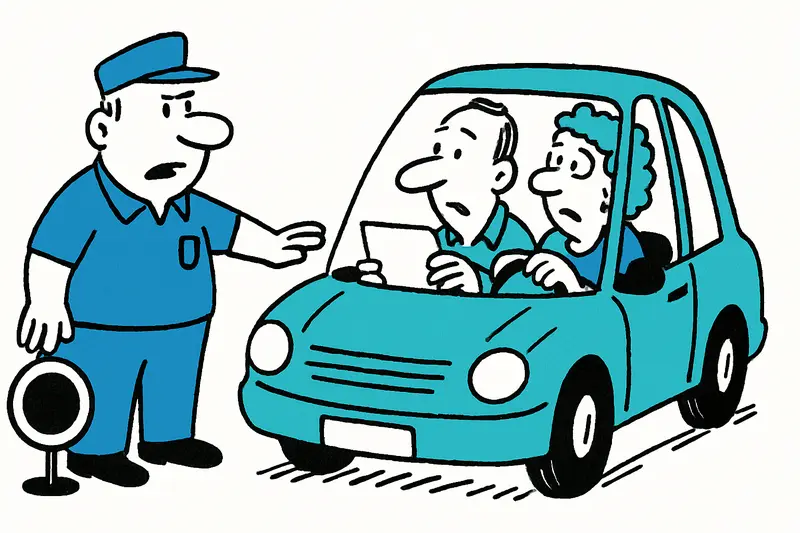
U-turn in Palma: German license plates now allowed into the low-emission zone — but under what conditions?
The city of Palma responds to criticism and opens the low-emission zone to vehicles with foreign plates — after registration, with deadlines and restrictions. A reality check for holidaymakers and second-home owners.
U-turn in Palma: German license plates now allowed into the low-emission zone — but under what conditions?
Key question: Does the new regulation create a real balance between air protection and the everyday life of visitors and residents — or does it remain a patchwork that continues to cause confusion?
On March 24, the city of Palma announced a change to the access rules for the low-emission zone in the historic center: vehicles with foreign license plates, including German ones, will in future be allowed entry under certain conditions. The route to this is via registration on mobipalma.mobi, as reported in Palma tightens ZBE control: Drivers with foreign license plates now need an extra permit and requires documents such as passport or NIE, driving license, vehicle registration document, proof of ownership and proof of entry (for example a ferry ticket). Leased and rental cars additionally need a contract confirmation.
At first glance this sounds like a compromise. In daily practice, when turning from the Passeig Mallorca into the old town, between the market halls and the street cafés, drivers quickly notice: the details matter. The permit is limited (30 calendar days from the requested entry date) and must be applied for at least five days before entry. In addition, there are graduated rules for emissions stickers in the coming years: until the end of 2026 B, C, ECO and 0 are allowed; 2027–2029 only C, ECO and 0; and from 2030 only ECO and 0, unless a special permit is granted.
Critical analysis
The administration cites a clarification by the national traffic authority on the recognition of emissions stickers from various EU countries as the trigger. That explains the formal cut-off, but not the practical implementation. Problem 1: The five-day deadline is a no-go in the holiday world. Many arrivals are spontaneous or change at short notice. Problem 2: The required documents make sense, but are difficult to provide completely in reality: not everyone who owns a holiday apartment has a ferry receipt — flight tickets do not always clearly count as proof of entry. Problem 3: Those who have already received fines are left in limbo; the announcement does not mention automatic withdrawal of older notices, an issue highlighted in Why Palma's Environmental Cameras Unsettle Tourists and Part-Time Residents.
Furthermore, a simple, reliably explained exception rule for delivery traffic, craftsmen or medical trips is missing. On the street in front of the Mercado de l'Olivar I hear vans honking and tradespeople discussing every day — they need clear, quickly accessible solutions, not bureaucratic loops.
What is missing from the public debate
The public debate focused heavily on equal treatment and less on enforceability. Important questions remained unspoken: How will checks be implemented technically? Who evaluates the registration data, how long will it be stored and how transparent is the data processing? Is there a lenient transition rule for tourists who unknowingly drive into the zone? And last but not least: how can fine procedures be accelerated or revoked when registration has become possible?
Everyday scene
Imagine a Saturday afternoon at El Born: delivery vans manoeuvre, scooters weave between taxis, and small espresso cups clink on saucers in the café. A German family gets out of a rental car, frantically leafs through papers and calls the car rental — is that enough to avoid fines? These scenes were common in recent months and still are.
Concrete solutions
1) Short-term leniency: The city should consider whether fines from the period before the rule change can be lifted or suspended on a case-by-case basis as long as registration is possible. That would create more fairness and strengthen trust.
2) Simple proof options: Accept standardized digital proofs (for example a booking confirmation for a holiday apartment with arrival date) in addition to ferry tickets. Many tourists could thus provide proof more quickly and without detours.
3) Fast online solution: The registration must be mobile-friendly, multilingual and provide automatic confirmation; waiting loops and bureaucratic hurdles deter people. A clear FAQ with concrete case examples (rental, leasing, second home) would clarify a lot.
4) Transparency in enforcement: City council and police should publicly explain which technology is used to identify foreign plates, how long data is stored and what data protection guarantees exist. That creates acceptance.
5) Special rules for key groups: Craftsmen, care services, medical trips and delivery traffic need a separate, accelerated procedure — for example an annual permit with proof of activity.
Conclusion
The current U-turn is not a unilateral act of reason but a reaction to legal clarifications and pressure from everyday life and tourism, as reported in Palma locks out holidaymakers: Low-emission zone with side effects. It is a step in the right direction, but remains incomplete. Those who want to drive into the old town in future without trouble should complete the registration in good time and have all required documents ready. The city, on the other hand, must debureaucratize the implementation, treat past fines fairly and communicate transparently. Only then will a technical correction become a practical solution for the streets of Palma.
Frequently asked questions
Can German cars enter Palma’s low-emission zone now?
How do I get permission to drive into Palma’s historic centre?
What documents are needed for Palma’s low-emission zone permit?
How much time do I need to apply for Palma’s ZBE permit?
Which emissions stickers are allowed in Palma’s low-emission zone?
Can tourists with a rental car drive into Palma’s old town?
What happens if I already received a fine for driving in Palma’s ZBE?
Is Palma’s low-emission zone difficult for visitors to use?
Similar News
Magaluf: Watchtower Alarm – Lifeguards Pull Unconscious Beachgoer from the Water
After a drama in the late afternoon, two lifeguards at Magaluf beach rescued an unconscious 44-year-old man. He was stab...
Turquoise in the City: How dangerous is the color play of the Sa Riera?
The Sa Riera in Palma suddenly turned turquoise — a pretty motif, but behind the effect lies a discharge of saline waste...

Jeckliner at Sunnesching: Cologne spirit sets sail from Palma
In September 2027 the Mein Schiff 2 briefly becomes a floating carnival stage: four days with Cologne bands, comedy and ...
Finally Home: Mike and Leyla Heiter Buy Villa with Sea View in Mallorca
The reality TV couple Mike and Leyla Heiter have bought a house in Mallorca with a roof terrace and sea view. An Instagr...

Arrest after series in Palma: Who protects apartments from repeat offenders?
The National Police arrested a man in Palma who investigators say may have broken into several apartments. In one incide...
More to explore
Discover more interesting content

Can Cap de Bou

Townhouse Lleo 72
