
Who Protects the Island's Image? The Sparkasse Poster at the Airport and the Open Wound Called 'Malle'
A huge red advertising banner on the Son Sant Joan parking garage puts the island on the defensive again: Who decides how Mallorca is presented at its gateway — Aena, Madrid, or the island itself?
Who Protects the Island's Image? The Sparkasse Poster at the Airport and the Open Wound Called 'Malle'
An advertising slogan, plenty of tinder — and an administration representing divided interests
At the exit of the Son Sant Joan terminal: suitcases roll on the tarmac, the heat hangs like a sheet over the access road, taxi drivers wave, families search for their names on signs. Directly opposite, a huge red banner adorns the facade of the parking garage — unmistakable, in German, with a play on words that many here perceive as a provocation. It advertises a German bank app, using a colloquial name for the island, and has triggered strong reactions in Palma and across the island. Similar controversies have been covered in Posters, Provocation, Polarization: How Mallorca's Streets Become a Campaign Ground.
Central question: Who is allowed to shape the narrative at Mallorca's main gateway — private advertisers, the airport company from Madrid, or the local community?
The facts are few: The ad is in German, promotes a Sparkasse app and plays on a slogan that associates Mallorca's reputation with party culture. Balearic authorities and the island council are calling for its immediate removal; hoteliers see an increase in stereotypes that they have been trying to fight for years. The airport operator, accountable to Madrid, considers the message pure product advertising and points out that such ads do not create new travel flows.
Critical analysis: The confrontation strikes a nerve. Debates about image and authenticity also appear in the cultural sector, as in When Pictures Lie: Why Mallorca's Art Market Must Rethink Now. It's not only about word choice but about control over the island's image. Mallorca has deliberately invested in rules, campaigns and controls to curb excessive behaviour. A large motif right at the arrival point therefore does not land as a harmless advertising space but as a signal: what is permitted here. The debate reveals a structural problem — responsibilities are fragmented. Son Sant Joan is managed by a state-owned company, while the island administration has only limited influence. That creates a vacuum of action that private advertisers fill.
What is often missing from the public discourse: a clear listing of how advertising spaces at the airport are approved. Are there guidelines to safeguard the destination's image? What role do local interest groups and industry associations play before a motif is hung? So far, blame is mainly being passed between Madrid and Palma, with little transparency about contract durations, selection procedures or content review mechanisms. A recent case study is discussed in Poster Dispute in the Balearic Islands: How Much Provocation Can Public Space Tolerate?.
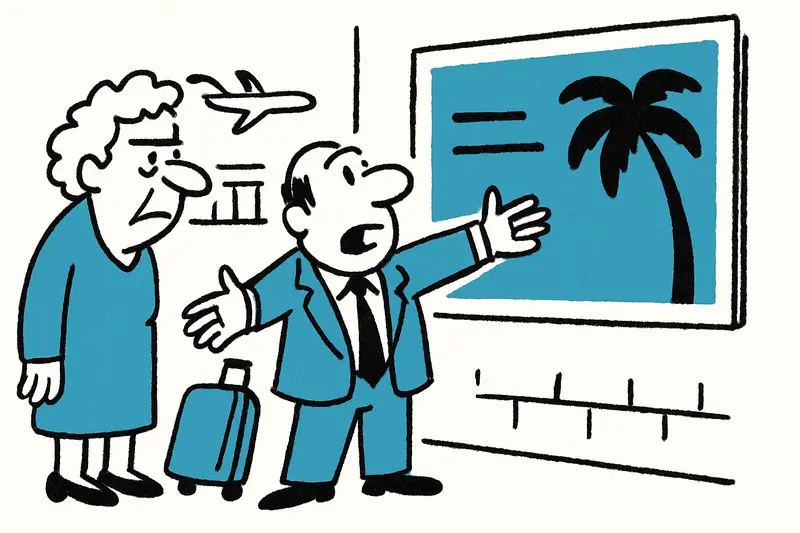
An everyday scene illustrates the conflict: A 60-year-old woman from Inca waits at the baggage belt, hears announcements in Spanish and German, sees the red banner as she leaves the building and frowns. For her, Mallorca is not 'Malle'; she works in a restaurant in Santa Catalina, pays taxes, looks after guests seeking peace and quality. Her anger is practical — it affects her daily life, her income and the image of her neighborhood.
Concrete proposals: 1) A binding advertising guideline for the airport, negotiated between Aena, the Balearic government and the island council, containing principles to respect local values. 2) A temporary moratorium on large-format motifs with an external content check until the guidelines are in place. 3) Establishment of a standing oversight body with representatives from the tourism sector, citizen groups and airport management to assess ads for image risks. 4) Contract clauses in space rentals that regulate content: termination rights in cases of obvious harm to the public interest. 5) Greater transparency: make advertising contracts, durations and responsible parties public so debates do not rage retrospectively.
Legally the balance is delicate: advertising freedom on one hand, protection of the public interest on the other. Unilateral removal without clear rules creates legal uncertainty; passive watching damages the trust of residents and hoteliers. That is why binding rules are needed instead of spontaneous protests.
What matters now: not a symbolic quick decision, but structured negotiation. The island must signal that its administrations act together — even if competencies lie with Madrid. At the same time, advertisers should become more sensitive: a slogan that is meant to be funny in one country lands as a label on an island like Mallorca and has economic consequences.
Conclusion: The red banner at the airport is more than an advertising motif; it is an alarm signal. It reveals a lack of coordination between local interests and the operator of the main gateway. Anyone serious about positioning Mallorca as a quiet, respectful destination should not only voice criticism but negotiate concrete rules and control mechanisms — before the next motif sets the air alight again.
Frequently asked questions
What is the weather like in Mallorca in winter?
Can you swim in Mallorca outside summer?
What should I pack for a trip to Mallorca in the cooler months?
Is Mallorca a good place to visit in autumn?
What is Palma de Mallorca like in the off-season?
Is Sóller worth visiting outside the main tourist season?
What is Port de Pollença like in cooler weather?
How reliable is public transport in Mallorca during the low season?
Similar News
Palma under the microscope: 87 arrests over forged passports – what now?
The National Police stopped 87 people at Palma airport this year with allegedly forged documents. Why are controls alone...

When a Taxi Fare Dispute in Magaluf Turned Bloody: How Safe Are Passengers and Drivers?
In Magaluf a dispute over the fare escalated: a tourist, now 18, is accused of having seriously injured a taxi driver in...
Why Mallorca Has Become So Terribly Expensive — A Reality Check
Rents are exploding, staple food prices are rising, wages are lagging behind. A look at the causes, what is missing from...
When Paradise Becomes Unaffordable
Hotel rooms, paella and the weekly grocery shop: Mallorca is becoming more expensive for many. Who pays the bill — guest...
End at Ballermann: What Is Lost with the Dino Mini Golf at Playa de Palma
On October 25 the dinosaur mini-golf course at Playa de Palma will close after more than 30 years. Why the city is recla...
More to explore
Discover more interesting content

Can Cap de Bou

Townhouse Lleo 72
